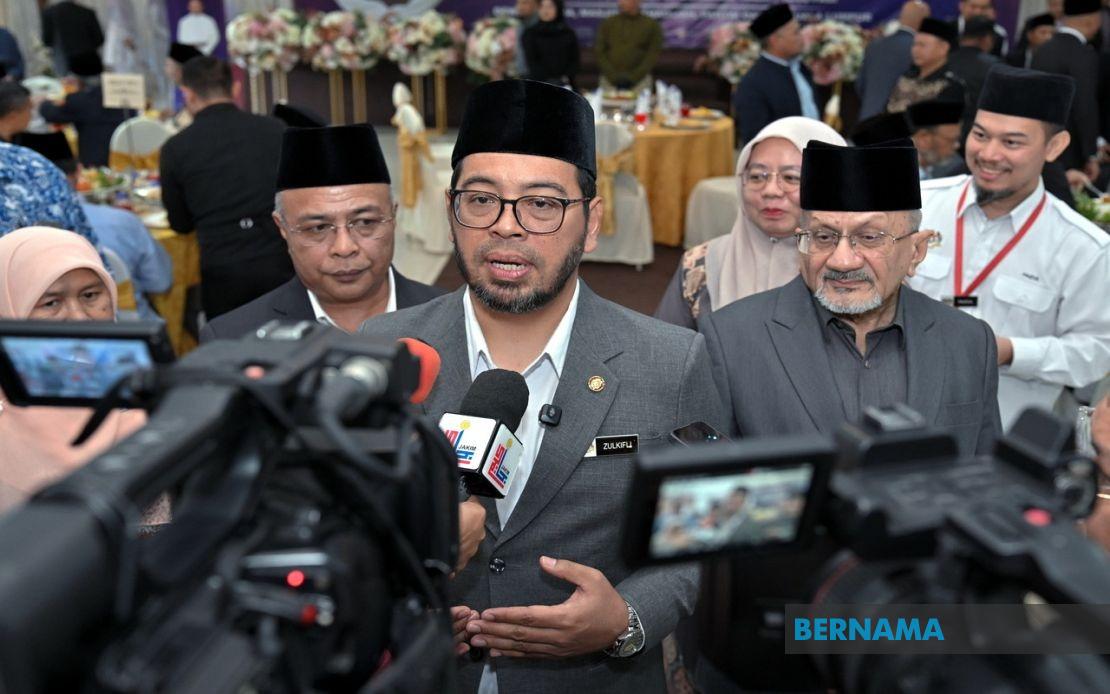
The construction of Masjid Warisan in front of the Tun Razak Exchange tower will proceed as originally scheduled, according to Dr Zulkifli Hasan, Minister in the Prime Minister's Department (Religious Affairs). Speaking to reporters in Kuala Lumpur on June 23, Zulkifli emphasised that the project represents a long-standing commitment and will be implemented as planned, describing it as an initiative to strengthen the role of mosques as spaces for social harmony and community cohesion.
The announcement comes amid a period of scrutiny surrounding the mosque project. Several parties had previously called for the initiative to be scrapped, citing concerns that its construction could potentially create social friction or generate public dissatisfaction in the surrounding area. However, Zulkifli's firm statement signals that the government remains committed to the development despite these reservations and will not be deterred by the criticism.
To address lingering doubts, Zulkifli invited anyone with reservations about the mosque's construction to engage directly with the Federal Territories Islamic Religious Council (MAIWP) for clarification and further information. This approach reflects an attempt to foster dialogue and transparency around the project, allowing concerned residents or stakeholders to better understand the initiative's objectives and anticipated benefits.
The minister drew on international precedent to contextualise the mosque within the broader urban landscape. He noted that major cities throughout the world host mosques as integral parts of their civic infrastructure, and that the Islamic call to prayer serves as a source of spiritual calm and tranquility for communities. This framing positions the Masjid Warisan not as an anomalous addition to Kuala Lumpur's skyline, but rather as a natural and enriching feature consistent with global urban planning practices.
The broader religious governance landscape in Malaysia's federal territories also underwent changes on this occasion. Zulkifli presented appointment letters to members of the Federal Territories Mosque and Friday prayer surau committee for the 2026-2029 term, a ceremony held at Masjid Al-Khadijah in Kampung Pantai Dalam. This appointment process reflects the structured administrative framework through which Islamic religious institutions are managed and overseen at the federal level.
The selection process for these committee positions was notably rigorous. A total of 3,010 nominations had been submitted for the 2026-2029 session, representing candidates from 91 mosques and 124 Friday prayer surau across the Federal Territories. From this substantial pool, 2,914 candidates ultimately secured positions after undergoing a comprehensive integrity vetting procedure. This screening process involved three key government agencies: the Royal Malaysia Police, the Malaysian Anti-Corruption Commission, and the Insolvency Department.
Such extensive due diligence in appointing mosque committee members underscores the significance placed on governance standards within Malaysia's religious institutions. The involvement of anti-corruption and police authorities suggests that the vetting process is designed to ensure that individuals managing religious spaces meet stringent standards of integrity and trustworthiness. The exclusion of approximately 96 candidates from the final selection indicates that the screening mechanism is neither perfunctory nor ceremonial, but rather functions as a genuine assessment tool.
The Masjid Warisan project carries particular symbolic weight given its location in the immediate vicinity of the Tun Razak Exchange, a prominent financial and commercial hub in central Kuala Lumpur. The juxtaposition of a new mosque alongside a major modern development reflects Malaysia's approach to balancing economic modernisation with spiritual and communal values. This coexistence of commercial and religious spaces in one of the nation's most visible locations sends a message about the integrated role of Islam within contemporary Malaysian society.
For Malaysian readers and the broader Southeast Asian context, the Masjid Warisan development represents more than a simple construction project. It exemplifies ongoing discussions about urban space, religious identity, and communal harmony in increasingly diverse and densely populated cities. As Malaysia continues to develop its urban centres, the question of how to accommodate religious institutions alongside commercial and residential growth remains relevant across the region.
The government's determination to proceed despite public opposition also reflects a conviction that religious institutions serve essential social functions beyond purely spiritual practice. By framing the mosque as a centre for social harmony and cohesion, Zulkifli positions Islamic institutions as contributors to broader goals of national unity and stability. This perspective may resonate with efforts across Southeast Asia to leverage religious institutions as platforms for interfaith dialogue and community building in increasingly pluralistic societies.

