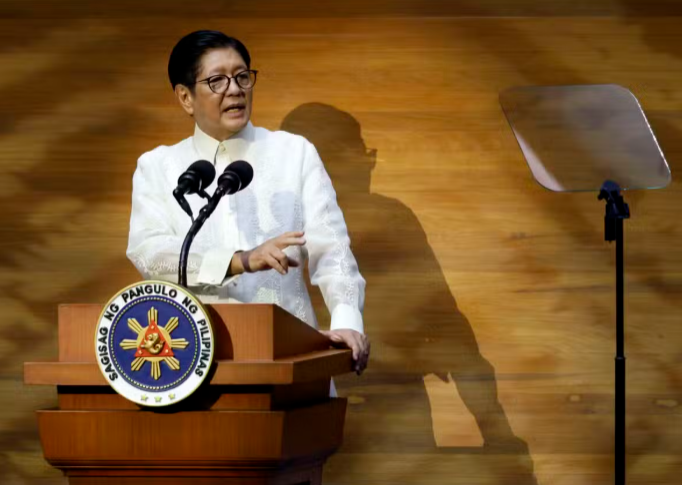
President Ferdinand Marcos has drawn a stark line between his personal relationships and his constitutional duties, declaring that even his own family members will face consequences if implicated in corruption. Speaking before Congress during his fifth State of the Nation Address on July 27, Marcos referenced the mounting investigation by the Office of the Ombudsman into his cousin, former Speaker and Leyte Representative Martin Romualdez, who stands accused in connection with a massive flood control project scandal involving billions of pesos. The pronouncement, though painful for the family, underscores Marcos's attempt to demonstrate that his administration's antigraft crusade operates without exception or preferential treatment.
The flood control scandal has emerged as a defining element of Marcos's governance narrative since he first publicly exposed alleged anomalies during his 2024 State of the Nation Address, delivering the now-famous rebuke "Mahiya naman kayo" (Have some shame) to those implicated. Following that speech, he established Executive Order No. 94, creating the Independent Commission for Infrastructure to conduct sweeping investigations into questionable flood control projects spanning the previous decade. This commission completed its fact-finding mandate in February, producing nine referrals that recommended both criminal and administrative charges against 65 individuals, including lawmakers, contractors, and current and former Department of Public Works and Highways officials, alongside representatives from the Commission on Audit.
The scale of accountability has been substantial. At least 45 individuals now face criminal charges before the Sandiganbayan and regional trial courts. This cohort includes two incumbent lawmakers, two former representatives, 33 former DPWH officials, and eight contractors. Among the most prominent cases are those of Senator Jinggoy Estrada and former Senator Ramon "Bong" Revilla Jr., both now detained. The inclusion of sitting lawmakers in such investigations sends a notable signal about the administration's willingness to pursue high-profile political figures, though Malaysian observers might note that Southeast Asian anticorruption campaigns have historically encountered obstacles when implicating sitting legislators.
Marcos emphasised the investigation's thoroughness and impartiality, stating his administration had examined evidence methodically and pursued each lead wherever it led. He noted that the government had recovered, frozen, or preserved nearly P25 billion in funds and assets linked to the accused individuals, with more than P800 million already returned to the National Treasury. Beyond financial recovery, the administration has blocked payments for defective, fake, or nonexistent projects, preventing taxpayer money from flowing to corrupt officials and their favoured contractors. This recovery rate represents a tangible outcome that extends beyond criminal prosecution into the recovery of misappropriated public resources.
Romualdez's response to the President's public acknowledgment of the investigation reflects the delicate balance such proceedings require within political families. In a statement, the former Speaker expressed respect for Marcos's position despite the personal pain inflicted on their family, insisting he had never solicited special treatment or favours. He maintained his innocence and committed to facing the charges through due process, asserting that evidence would ultimately vindicate him. This measured response appears calculated to avoid antagonising the President while preserving his legal standing and family relations, a strategic approach familiar in Philippine political circles.
The broader anticorruption framework reveals important structural reforms aimed at preventing future infrastructure scandals. Secretary Vince Dizon, who heads the reconstructed DPWH, has implemented personnel changes including the recruitment of new graduates and contract workers, alongside comprehensive reviews of infrastructure projects spanning planning, costing, and implementation phases. These institutional adjustments acknowledge that corruption investigations alone cannot prevent future misconduct without complementary systemic changes. For Malaysian readers familiar with debates surrounding public procurement transparency and infrastructure governance, such dual approaches—simultaneous prosecution and reform—represent emerging best practices in combating institutional graft.
The investigation's complexity has extended to tracking accused individuals across borders. Former House Appropriations Committee Chairman Zaldy Co remains in Europe after authorities failed to apprehend him within the court-prescribed deadline, resulting in the archival of his graft case. This jurisdictional challenge illustrates persistent difficulties Southeast Asian nations encounter when pursuing financial crimes that span multiple countries, a concern particularly relevant for the region given interconnected commercial and political networks. Conversely, former Public Works Secretary Manuel Bonoan was dropped as a respondent after being accepted as a state witness, suggesting the prosecution strategy incorporates plea arrangements and cooperation incentives.
Marcos framed the anticorruption campaign as fulfilling a campaign promise and demonstrating administrative competence. He asserted his government had succeeded where previous administrations had failed by not only exposing wrongdoing but actively pursuing those responsible through legal mechanisms. The President emphasised that the investigation operated "without favor or bias toward anyone," a declaration addressing persistent concerns in Philippine politics about selective justice and political interference in criminal proceedings. This rhetorical positioning attempts to situate his administration as departure from previous patterns of impunity or politically motivated prosecutions.
The speech's emphasis on anticorruption consumed substantial time, becoming one of the defining themes of Marcos's ninety-minute address, the longest since he assumed office in 2022. This prominence suggests the administration views the campaign not merely as a prosecutorial priority but as a cornerstone of its political legitimacy. By publicly referencing his cousin's investigation and acknowledging its painful personal implications, Marcos sought to demonstrate resolve and impartiality—qualities that resonate with public frustration over endemic corruption in Philippine governance. For Malaysian observers accustomed to similar anticorruption initiatives, such high-profile messaging serves multiple purposes: reassuring the public of governmental commitment, intimidating potential future offenders, and establishing political credibility.
The remaining legal proceedings now rest with the Office of the Ombudsman and the Department of Justice's National Prosecution Service, with cases advancing through the judiciary. Marcos expressed confidence in the courts' fair judgment, framing the administration's role as investigative rather than prosecutorial. This delegation reflects constitutional separation of powers but also insulates the executive branch from accusations of judicial manipulation should outcomes prove controversial. For regional practitioners of governance and law, the Philippine model demonstrates how administrations can pursue aggressive anticorruption campaigns while maintaining formal deference to independent institutions, though questions regarding genuine independence and political pressure often accompany such arrangements in Southeast Asian contexts.
The flood control scandal extends beyond individual culpability to implicate systemic failures in infrastructure governance. Projects spanning the previous decade contained defects, fabrications, and nonexistent components that consumed billions in public resources. The investigation's scale—touching 65 individuals across multiple agencies—suggests corruption operated institutionally rather than through isolated bad actors. This pattern resonates across Southeast Asia, where infrastructure projects frequently encounter similar allegations of systematic misallocation. Marcos's framing of the crisis as a governance failure requiring institutional reform alongside criminal prosecution offers a template other regional governments might examine as they confront comparable challenges.
The anticorruption campaign arrives amid broader governance concerns in the Philippines, including questions about presidential authority, congressional oversight, and institutional independence. Marcos's willingness to pursue relatives and political allies—or at least to publicly acknowledge investigations into them—represents either a genuine commitment to impartial justice or sophisticated political theatre aimed at projecting such commitment. Malaysian and Southeast Asian readers recognising the region's complex political landscapes will appreciate the ambiguity inherent in such declarations. What remains unambiguous is the unprecedented scale of charges filed and assets recovered, outcomes that exceed rhetorical declarations and constitute measurable consequences for those implicated in the flood control scandal.

