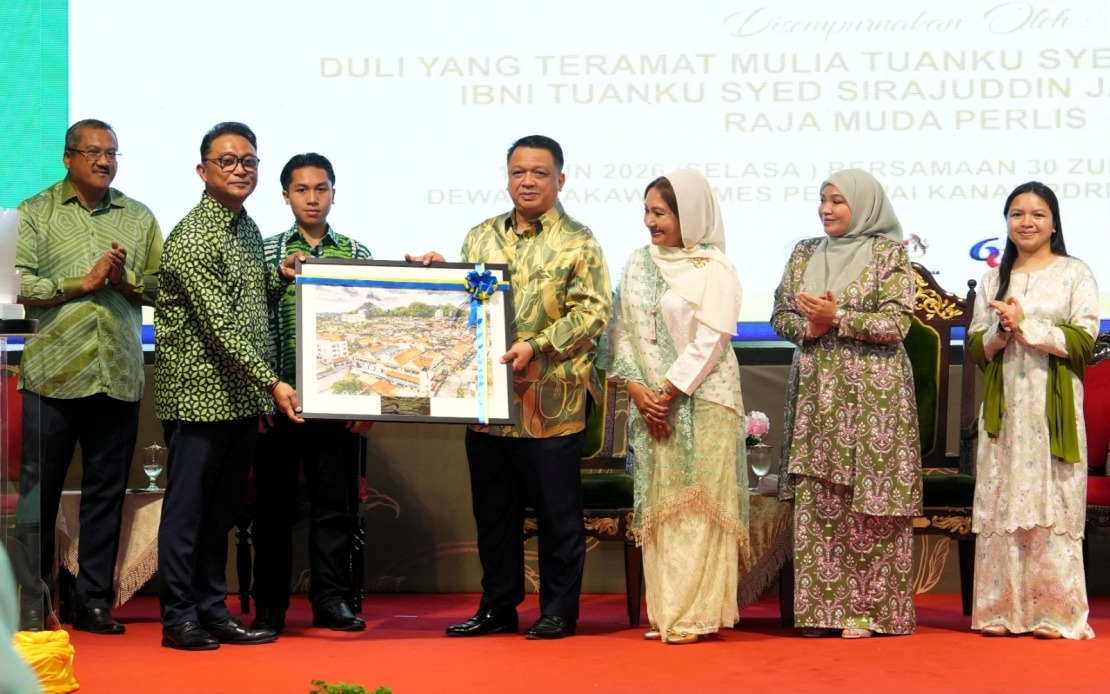
The Majlis Amanah Rakyat (MARA) division in Perlis is leveraging substantial financial backing to reshape the entrepreneurial landscape of the northern state, having received an allocation exceeding RM125 million throughout the 12th Malaysia Plan period spanning 2021 to 2025. According to MARA director-general Datuk Zulfikri Osman, this investment represents a deliberate commitment to cultivating a thriving ecosystem of locally-grown enterprises across Perlis, with particular emphasis on expanding opportunities for underrepresented business communities.
The distribution of these funds reveals a strategic priority towards gender inclusion in economic participation. More than 58 per cent of the total allocation has been channelled directly to benefit female entrepreneurs, addressing persistent gaps in women's access to capital and business development support. The mechanisms through which this support reaches women business owners encompass multiple pathways: direct business financing facilities that reduce borrowing constraints, non-repayable business grants that lower startup barriers, and comprehensive competency-building programmes designed to equip female entrepreneurs with contemporary management and technical skills. This multifaceted approach acknowledges that financial access alone proves insufficient without accompanying capacity development.
The tangible outcomes of this sustained intervention have begun materialising across Perlis's commercial landscape. MARA-supported entrepreneurs operating in the state have collectively generated cumulative sales surpassing RM1 billion across the entire five-year planning cycle, a figure that validates the premise underlying the initial allocation. Looking forward to 2025, projections indicate that entrepreneurs backed by MARA will contribute approximately RM215 million in annual sales to the state's economy. While this represents a single year's performance, the trajectory carries significant implications for Perlis's gross state income, particularly given the state's ongoing efforts to diversify economic bases beyond traditional sectors.
The contribution extends beyond headline sales figures to encompass broader economic dynamics. MARA's entrepreneurs and the businesses they establish create employment opportunities throughout supply chains and supporting service sectors, generating multiplier effects that ripple through local communities. For a state like Perlis, which faces geographical constraints and limited industrial capacity compared to more developed regions, this organic growth in locally-owned enterprises provides a counterweight to economic centralisation patterns that typically favour larger federal territories.
Internationalisation efforts have added another dimension to MARA Perlis's success narrative. The Gate to Global initiative, a programme facilitating market entry for Malaysian entrepreneurs into overseas territories, has enabled select MARA-backed businesses in Perlis to establish footholds in international markets. Several of these enterprises have achieved impressive scaling, with monthly sales now exceeding RM20 million—figures that position them among Malaysia's significant export contributors and demonstrate that entrepreneurial talent exists in northern Malaysia when provided with appropriate support structures and market access pathways.
Regional networking events have functioned as catalysts for business expansion and relationship-building. The World Halal Products Exhibition, hosted in Hat Yai across the 2023 to 2025 period, provided Perlis entrepreneurs with proximity to Southeast Asian buyer networks and distribution channels. This particular exhibition format leveraged Malaysia's positioning as a global halal products authority while capitalising on Perlis's geographical proximity to Thailand's eastern seaboard. Entrepreneurs participating in these events accumulated over RM5 million in cumulative sales, though this figure likely understates the true value of connections forged and future business pipelines established during these exhibitions.
The Women in Search of Excellence (WiSE) programme represents an institutional innovation in how MARA operationalises its commitment to women's entrepreneurship. Introduced in 2023 under the patronage of the Raja Muda of Perlis, Tuanku Syed Faizuddin Putra Jamalullail, the initiative has evolved from a standalone programme into a structured platform addressing multiple dimensions of entrepreneurial success. Beyond financing, WiSE encompasses capacity enhancement workshops covering contemporary business management, financial literacy, digital marketing, and supply chain optimisation—recognising that modern entrepreneurship demands skill sets extending far beyond traditional commerce.
The platform also prioritises network expansion, acknowledging that social capital and business relationships often determine access to opportunities as much as financial resources. By convening women entrepreneurs periodically and creating structured networking opportunities, WiSE combats the isolation that disproportionately affects female business owners in smaller states and rural areas. Peer learning mechanisms embedded within the programme framework enable entrepreneurs to troubleshoot challenges collectively and share market intelligence, creating informal knowledge commons that institutions cannot replicate through formal training alone.
For Malaysian policymakers and state governments beyond Perlis, MARA's experience in the northern state offers instructive lessons regarding entrepreneurship-led development strategies. The emphasis on women entrepreneurs addresses labour force participation objectives while tapping into largely underutilised pools of potential business founders. The integration of domestic market support with international market access—achieved through Gate to Global and regional exhibitions—suggests that state-level entrepreneurship initiatives need not remain insulated from global value chains. Instead, structured pathways connecting local entrepreneurs to international opportunities can rapidly scale the impact of development funding.
The sustainability of these outcomes depends substantially on whether institutional support persists beyond the current planning cycle. The RM125 million allocation represents significant commitment, yet the ongoing nature of entrepreneurship means that business maturation and growth require continued access to refinancing, skills upgrading, and market intelligence. Whether MARA Perlis maintains momentum and expansion of support under subsequent development plans will determine whether the foundations laid during the 12th Malaysia Plan period translate into irreversible transformation of the state's entrepreneurial culture and economic structure.
Looking ahead, the geographical positioning of Perlis as a gateway to Thailand and broader Southeast Asian markets presents underexploited opportunities. As regional integration deepens through frameworks such as the ASEAN Free Trade Area, entrepreneurs based in Perlis could leverage their location as a springboard for establishing operations across the broader Mekong region. MARA's entrepreneurship support, when combined with state government trade facilitation and regional cooperation initiatives, could position Perlis as an entrepreneurship hub serving not merely local and national markets but the entire Southeast Asian region. The RM125 million investment should therefore be understood not merely as a historical allocation but as seed capital for a more ambitious repositioning of Perlis within Malaysia's entrepreneurial ecosystem.