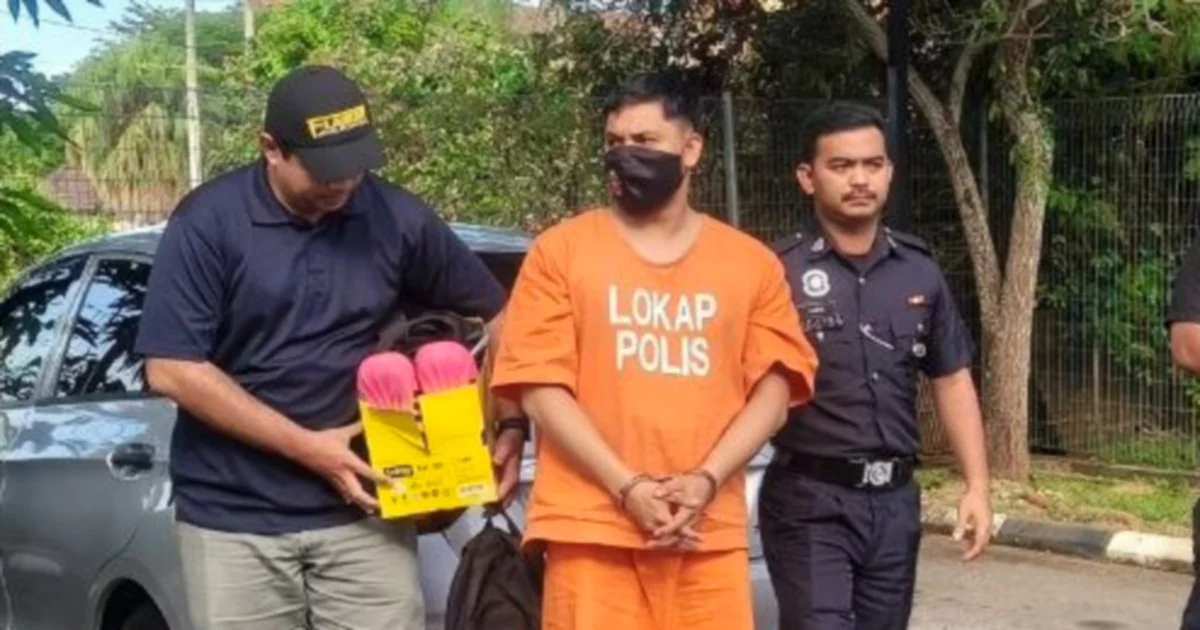
A former information technology engineer in Besut has been ordered to pay RM18,000 in fines after pleading guilty to three counts of identity card misuse in the magistrate's court. The financial penalty carries an alternative custodial sentence of 18 months should the accused fail to settle the amount within the prescribed timeframe, underscoring the seriousness with which the court treated the breach of trust and violation of personal privacy involved in the case.
The Budi95 subsidy scheme, a government initiative aimed at providing financial assistance to eligible citizens, has emerged as a target for fraudulent activities in recent months. This particular case highlights how scammers exploit the system by leveraging others' personal documentation to claim benefits they are not entitled to receive. The scheme, designed with the intention of supporting those genuinely in need, becomes vulnerable when individuals misuse the identity information of others for personal gain.
Using another person's identity card to claim government subsidies represents a multi-layered breach: it violates the privacy and legal rights of the individual whose identity has been appropriated, undermines the integrity of a welfare programme intended for legitimate beneficiaries, and constitutes fraud against public resources. The accused's background as an IT professional adds particular significance to the case, as individuals with technical expertise may possess greater capacity to manipulate systems or circumvent administrative safeguards designed to prevent such abuses.
The magistrate's court's decision to impose this penalty reflects growing judicial concern over subsidy fraud schemes. Such cases have proliferated across Malaysia as digital integration in government services has expanded, creating both convenience for legitimate users and opportunities for those seeking to exploit the system. The presence of an alternative jail sentence signals that courts are prepared to escalate consequences for repeat offenders or those unwilling to comply with financial penalties.
From a broader policy perspective, this conviction underscores vulnerabilities in identity verification processes that support government assistance programmes. The fact that an individual could successfully exploit the Budi95 system using three separate identity cards suggests potential gaps in cross-referencing mechanisms or real-time verification systems that might otherwise flag suspicious claims. Whether these weaknesses stem from outdated database infrastructure, human error in the processing chain, or deliberate circumvention through technological means remains a critical question for programme administrators.
The case carries implications for Malaysia's ongoing efforts to digitalize and streamline government services. While digitalization theoretically enhances efficiency and reduces bureaucratic friction, it simultaneously creates new attack surfaces for fraud. The balance between accessibility for genuine beneficiaries and security against bad actors requires constant recalibration. Neighbouring Southeast Asian nations implementing similar subsidy programmes have encountered comparable challenges, making this incident relevant to broader regional conversations about welfare system integrity.
For residents in Terengganu and surrounding areas, this conviction serves as a reminder that such fraudulent activities are subject to serious criminal consequences. The three-count charge structure suggests that the accused attempted to access the Budi95 benefits on multiple separate occasions using different individuals' identity documents, indicating systematic rather than isolated wrongdoing. Authorities have evidently treated this as a deliberate and sustained effort to illicitly obtain government resources.
The financial penalty of RM18,000 likely reflects a calculation based on the total quantum of subsidies fraudulently claimed. It may also incorporate considerations of deterrence, both specific to this individual and general to the broader population. The substantial amount signals that subsidy fraud is not treated as a minor transgression but as a serious economic crime that depletes public finances and crowds out legitimate beneficiaries from available resources.
Moving forward, this case may prompt welfare programme administrators to review their verification protocols, strengthen identity authentication requirements, and implement enhanced monitoring systems to detect patterns of suspicious claims. The Budi95 programme's continued viability as a social safety net depends on public confidence that benefits genuinely reach intended recipients and that the system is protected from systematic exploitation. Public awareness of prosecutions such as this one can reinforce that message and potentially deter would-be fraudsters.
For Malaysians navigating government assistance schemes, the takeaway is unambiguous: the authorities will investigate and prosecute those who seek to claim benefits using others' personal information, regardless of their professional background or technical sophistication. The court's swift resolution of this case through guilty plea and immediate sentencing demonstrates an efficient response to fraud detection. Whether this pace of prosecution can be sustained across the full spectrum of subsidy-related offences remains to be seen, but this Besut conviction demonstrates that such cases do reach adjudication and result in meaningful penalties.

