The Prime Minister's Department (Religious Affairs) has pledged to amplify its engagement with young Malaysians in response to concerns raised by the Sultan of Perak, Sultan Nazrin Shah, regarding the escalating threats posed by extremism and the spread of false information in digital spaces. The commitment represents a significant policy pivot toward leveraging religious leadership as a countermeasure to polarisation and radicalisation affecting the nation's youth demographic.
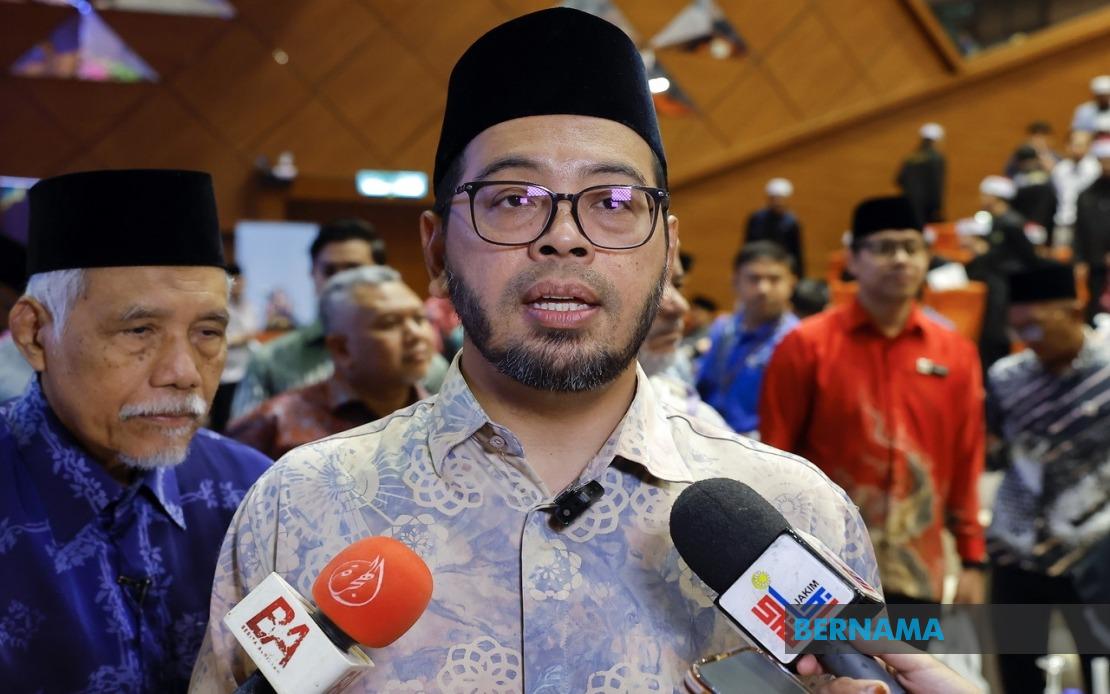
During remarks made at the National and International Tokoh Ma'al Hijrah Premier Lecture 1448/2026 in Putrajaya on June 18, Minister in the Prime Minister's Department (Religious Affairs) Dr Zulkifli Hasan underscored his ministry's determination to translate Sultan Nazrin Shah's royal message into concrete programmes and initiatives. He indicated that the Sultan's call would serve as a foundational principle guiding the department's strategic direction moving forward.
The Sultan of Perak had previously articulated, just days before the minister's statement, that religious leaders occupy a unique and critical position in society to address contemporary challenges confronting Malaysian youth. His Royal Highness framed the issue not merely as a religious concern but as a broader societal imperative, given the multifaceted pressures young people navigate in the modern era.
According to Sultan Nazrin Shah's assessment, today's younger generation faces unprecedented challenges extending well beyond traditional religious or moral spheres. Climate anxiety, ongoing geopolitical conflicts, economic precarity, the fragmenting effects of digital polarisation, and eroding confidence in established institutions collectively create an environment where youth vulnerability to extremist narratives and misinformation campaigns increases substantially.
The royal address reflects a recognition that digital platforms have fundamentally altered the landscape of information dissemination and belief formation among young Malaysians. Unlike previous generations, contemporary youth encounter competing narratives, unverified claims, and increasingly sophisticated propaganda in real-time, often without adequate guidance or critical frameworks to evaluate source credibility or distinguish fact from fiction.
Dr Zulkifli Hasan's reaffirmation that his ministry will mainstream and operationalise the Sultan's messaging signals an acknowledgment that religious institutions must evolve beyond traditional preaching to encompass digital literacy, critical thinking, and counter-narrative development. The approach suggests integrating religious teachings with practical tools enabling young people to navigate online information ecosystems responsibly.
For Malaysian policymakers and religious authorities, this directive carries significant implications. The Religious Affairs Ministry operates across multiple jurisdictions given Malaysia's federal structure and the role of individual state Islamic affairs departments. Coordinating a cohesive national youth engagement strategy while respecting state-level autonomy presents both logistical and political challenges that will require careful institutional navigation.
The emphasis on religious leadership stepping into the space typically occupied by educators, technologists, and civic organisations reflects a distinctly Malaysian approach to governance. Rather than positioning religious institutions as merely one stakeholder among many, the Sultan's call positions them as primary agents of social stability and youth guidance, underscoring Islam's central role in Malaysian nation-building frameworks.
Regionally, Malaysia's articulated approach to youth radicalisation and misinformation may signal a template for other Southeast Asian nations grappling with similar challenges. Countries including Indonesia, Bangladesh, and the Philippines have confronted significant extremist recruitment and online radicalisation phenomena, making Malaysia's institutional response potentially instructive for policymakers across the region.
The practical implementation of strengthened youth engagement will likely encompass multiple channels. Islamic religious schools, mosque-based youth programmes, university Islamic societies, and online platforms could all become venues for delivering counter-extremism messaging and information literacy training. The ministry may also coordinate with telecommunications regulators and social media platforms to address content moderation issues affecting Malaysian youth exposure to harmful material.
However, critics might observe that positioning religious authorities as primary guardians against misinformation, while symbolically significant, does not automatically address structural factors enabling false information proliferation online. Algorithmic amplification, economic incentives driving sensationalism, and user psychology favouring emotionally resonant content regardless of accuracy remain largely outside religious institutions' direct control.
The government's commitment, nevertheless, signals serious intent to harness Malaysia's religious infrastructure—arguably among the region's most developed—toward contemporary challenges. Whether these efforts prove sufficient depends substantially on the quality of implementation, adequacy of resource allocation, and genuine coordination across government, civil society, and technology sectors.
Moving forward, observers should monitor whether this policy direction translates into measurable outcomes such as curriculum changes in Islamic educational institutions, new digital platforms delivering counter-extremism content, or demonstrable shifts in youth attitudes toward online information consumption and extremist narratives.