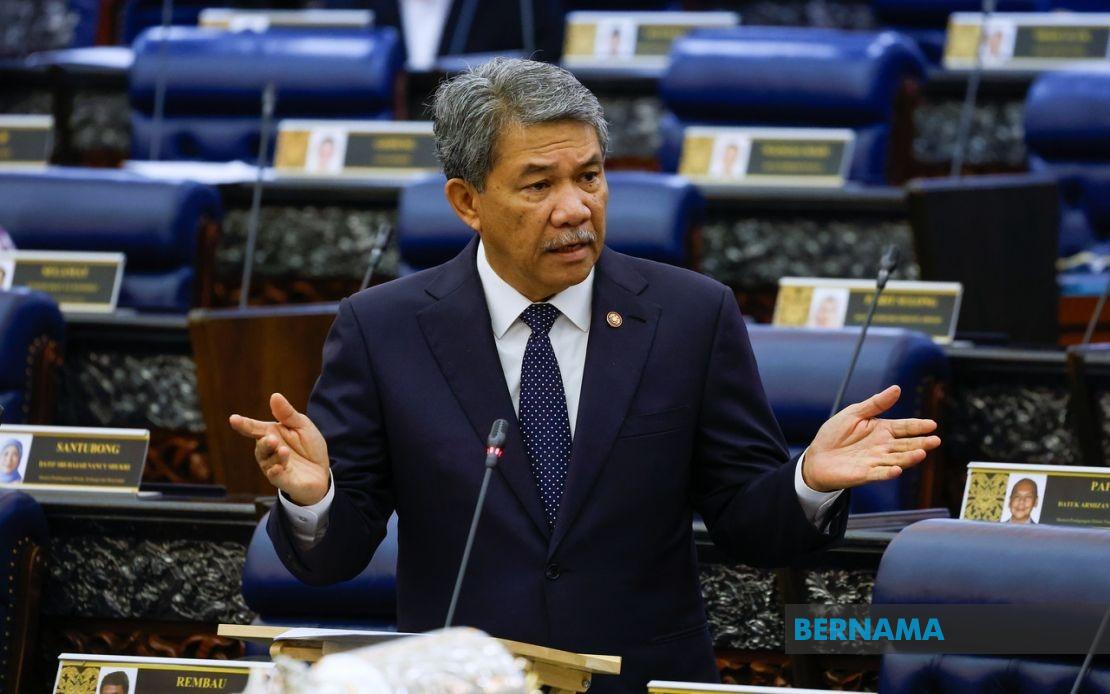
Malaysia's engagement with Myanmar through a diplomatic visit in May should not be interpreted as endorsement of the country's military administration, according to Foreign Minister Datuk Seri Mohamad Hasan, who underscored Kuala Lumpur's commitment to the regional bloc's collective stance on the Myanmar crisis. Speaking in parliament, Mohamad sought to dispel concerns that the Malaysian delegation's meeting signalled a shift in Malaysia's longstanding position of refusing to legitimize the junta that has governed Myanmar since 2021. The clarification comes amid heightened scrutiny of ASEAN's engagement with Naypyidaw, particularly as member states navigate the complex challenge of addressing Myanmar's instability without appearing to condone military rule.
The Foreign Minister explained that the visit was a deliberate outcome of decisions made at the 48th ASEAN Summit, which explicitly tasked foreign ministers with maintaining informal contact with Myanmar authorities. This coordinated approach reflects the regional organization's pragmatic calculation that complete isolation of Myanmar would prove counterproductive, potentially driving the country further into the orbit of non-ASEAN powers with their own strategic interests in Southeast Asia. Mohamad's comments suggest that ASEAN views sustained communication as essential to any eventual resolution of Myanmar's humanitarian and political crises, distinguishing between diplomatic engagement and political recognition—a nuance that often gets lost in public discourse surrounding the region's largest democracy's collapse into authoritarianism.
During his encounter with Myanmar Foreign Minister Tin Maung Swe, which notably took place at a hotel rather than at an official government venue, Mohamad conveyed Malaysia's expectations for tangible progress on addressing Myanmar's deteriorating situation. The choice of location itself carries diplomatic significance, signalling that while Malaysia participates in dialogue, it maintains symbolic distance from formal endorsement of Myanmar's current governance structures. This distinction between engagement and recognition reflects international diplomatic protocol, where the venue and formality of meetings can communicate as much as the substantive discussions themselves.
A central theme of Mohamad's parliamentary remarks involved reminding Myanmar of the reciprocal nature of ASEAN membership. While Myanmar enjoys the rights and protections afforded to all member states, Mohamad emphasized that membership also entails specific responsibilities and obligations, particularly regarding the implementation of the Five-Point Consensus framework. This consensus, agreed upon by ASEAN leaders in April 2021, establishes benchmarks for Myanmar's path toward resolving its political crisis, including cessation of violence, humanitarian assistance, and inclusive dialogue among all stakeholders. By framing the issue in terms of membership obligations, Mohamad subtly underscored that Myanmar's current trajectory places it in violation of its own commitments to the association.
The fear of Myanmar's isolation creating a dangerous vacuum represents one of ASEAN's most significant geopolitical anxieties. Should Myanmar become completely ostracized from regional forums and denied meaningful engagement opportunities, the country could become more susceptible to influence from powers outside Southeast Asia—particularly China and India, both of which maintain substantial strategic interests in Myanmar. For Malaysia and other ASEAN members, allowing such a vacuum to develop contradicts the fundamental principle of maintaining Southeast Asian autonomy and preventing external powers from dictating regional outcomes. This strategic calculation underpins Malaysia's willingness to maintain communication channels despite strong domestic political pressure from civil society organizations critical of engagement with the junta.
Mohamad's statement that Malaysia planned additional meetings with Myanmar stakeholders for early or mid-July indicates that ASEAN's engagement strategy remains ongoing and deliberately structured. These periodic encounters serve multiple purposes: they provide opportunities to reinforce expectations regarding the Five-Point Consensus, gather intelligence on conditions within Myanmar, and maintain the possibility of influence should the political situation evolve. For Malaysian policymakers, these interactions also allow Kuala Lumpur to position itself as a responsible regional actor committed to crisis management rather than exclusionary approaches that could destabilize the broader Southeast Asian environment.
The broader context for Malaysia's position reflects the country's own historical experience with political transition and democratic governance. As a nation that has navigated multiple changes in government and constitutional frameworks, Malaysia arguably possesses a vested interest in regional stability and the principle that international isolation rarely produces desired political outcomes. This perspective, however, must be balanced against growing skepticism from Myanmar's civil society, which views any ASEAN engagement with the junta as tacit legitimacy that undermines the democratic resistance movement currently fighting for Myanmar's return to civilian rule.
Mohamad's repeated emphasis on Malaysia's unwavering commitment to the Five-Point Consensus reflects an attempt to square this difficult circle. By continuously reiterating that engagement does not equal recognition, and that Malaysia maintains specific expectations regarding Myanmar's conduct, the Foreign Minister seeks to preserve ASEAN's diplomatic leverage while signalling to Myanmar's democratic forces that engagement remains conditional. The Five-Point Consensus framework itself—which includes calls for ceasefire, humanitarian assistance, inclusive dialogue, and ASEAN mediation—remains sufficiently ambitious that full implementation would effectively require the junta to substantially reshape its governance approach and power-sharing arrangements.
For Malaysia specifically, maintaining these communication channels serves practical interests beyond regional stability. As a country with significant economic investments in Myanmar and substantial populations of Myanmar migrants and refugees within its borders, Malaysia has compelling reasons to remain engaged with developments in Myanmar. A complete breakdown in diplomatic relations would complicate efforts to manage these transnational issues, from migrant worker protections to refugee management. Furthermore, Malaysia's own strategic position within ASEAN is enhanced by its willingness to undertake difficult diplomatic assignments on behalf of the organization, even when such assignments prove controversial domestically.
The parliamentary exchange between Mohamad and opposition MP Datuk Seri Saifuddin Abdullah suggests that concerns about Malaysia's Myanmar policy extend across Malaysia's political spectrum. Both government and opposition parliamentarians appear attentive to the potential criticism that engagement with military-led Myanmar could undermine Malaysia's own democratic credentials and regional standing. Mohamad's detailed clarifications indicate that the government recognizes the political sensitivity of the issue and feels compelled to defend its diplomatic posture in the national legislature, where accountability for foreign policy decisions remains a live political issue.
Looking forward, Malaysia's approach to Myanmar will likely remain characterized by this tension between engagement and moral distance. The planned mid-July meetings will presumably test whether Myanmar shows any genuine willingness to progress toward the Five-Point Consensus objectives, or whether continued engagement merely provides cover for deeper entrencement of military rule. For ASEAN as a whole, the Myanmar question increasingly epitomizes the organization's fundamental strategic dilemma: whether regional cohesion and non-interference principles should take precedence over concerns regarding democratic governance and human rights, or whether the two can be reconciled through sustained but conditional engagement.

