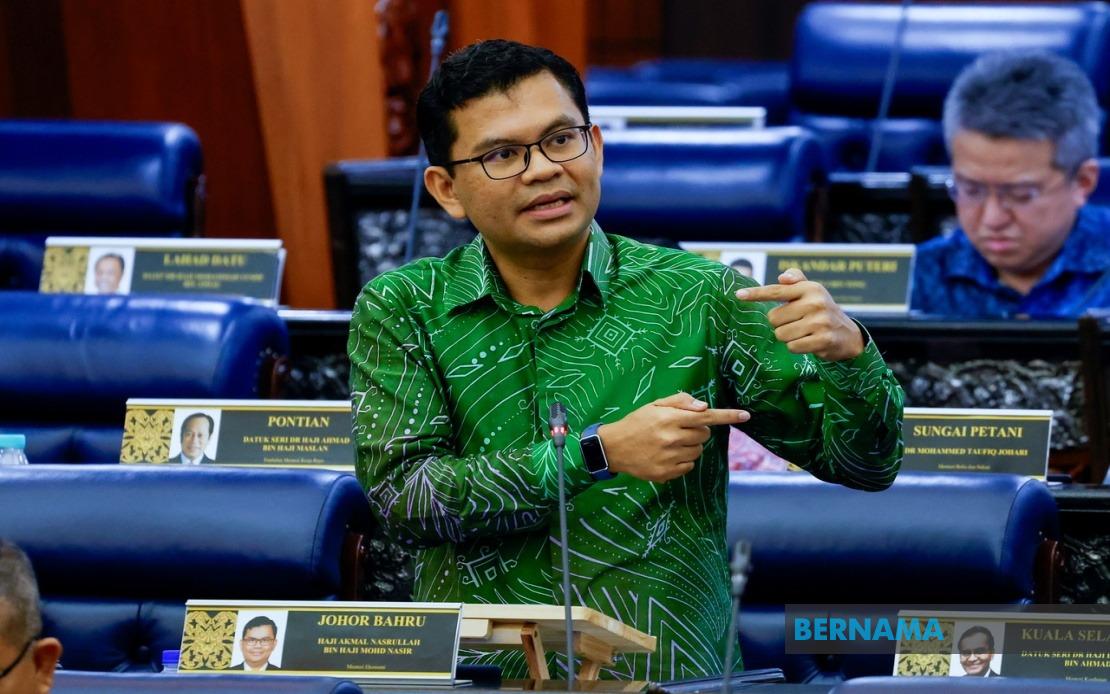
Economy Minister Akmal Nasrullah Mohd Nasir has painted an optimistic picture of Malaysia's employment landscape, asserting that both the labour market and broader business environment have weathered recent economic headwinds without significant deterioration through the first half of 2026. Speaking during parliamentary question time in the Dewan Rakyat, the minister characterised recent job loss figures as manageable and well-contained, providing a counterweight to concerns raised by opposition lawmakers about employment stability amid global economic uncertainty and domestic energy sector challenges.
The statistics underpinning the minister's assessment reveal a labour market that has actually tightened slightly in recent weeks. As of June 22, unemployment affected just 6,197 individuals, equivalent to 0.04 per cent of Malaysia's working population. This represents a meaningful improvement compared to May 2026, when 7,766 people had lost their jobs, reflecting a 20 per cent month-on-month decrease in joblessness. While the absolute numbers appear modest, the trend direction matters considerably for confidence levels among businesses and workers alike, particularly given the backdrop of energy-related disruptions and international economic volatility that triggered the parliamentary inquiry.
The broader labour force metrics paint a picture of continued expansion and employment resilience. By April this year, Malaysia's total labour force had swelled to 17.33 million individuals, with 16.82 million recorded as employed. These figures indicate sustained economic activity and business willingness to maintain or expand headcount despite acknowledged headwinds. The labour force participation rate held steady at 70.9 per cent, unchanged from the preceding month, suggesting that workers remain engaged in the formal economy rather than withdrawing from the job market entirely—a potentially concerning sign during periods of economic stress.
Unemployment figures themselves merit careful interpretation within Malaysia's economic context. The April unemployment rate of 3.0 per cent, affecting 511,800 people, represented a slight uptick from 2.9 per cent the previous month but remains comfortably below the four per cent threshold typically associated with full employment in developed economies. For policymakers and regional observers tracking Southeast Asian labour dynamics, this positioning indicates Malaysia has not yet encountered the mass joblessness seen in previous downturns, and current conditions fall well within historical norms for a diversified middle-income economy facing external pressures.
What distinguishes the current employment environment is the apparent success of government-backed worker redeployment and job matching initiatives. The MYFutureJobs programme, a central plank of the administration's employment support architecture, recorded striking growth in placement activity. Between April and June 12, placements through the platform surged by 55 per cent, rising from 12,119 to 18,756 positions filled. These figures gain added significance when annualised—by early June, the government had facilitated 62,644 job placements across 2026, encompassing both direct portal matches and beneficiaries supported through the Employment Insurance System framework.
The uptick in redeployment activity carries particular relevance for Malaysian workers and regional labour market observers. Rather than representing mere statistical adjustment, increased placement volumes suggest that displaced or job-seeking workers can transition into new employment within reasonable timeframes, thereby limiting the scarring effects of job loss on individual earnings trajectories and reducing downtime that erodes productivity. Minister Akmal Nasrullah explicitly framed this outcome as validation that government intervention extends beyond temporary income support to meaningfully accelerate worker re-entry into formal employment, a claim supported by the acceleration in monthly placement numbers.
The context for these labour market developments involves acknowledged economic pressures that prompted the original parliamentary question. An opposition lawmaker from Bachok, representing Perikatan Nasional, had raised concerns about potential job losses and business contraction following what was characterised as an energy crisis and broader global economic uncertainty. These concerns touch on genuine vulnerabilities in Malaysia's economy—energy sector challenges could cascade into manufacturing competitiveness issues, while external uncertainty affects export-dependent sectors and foreign investment decisions. The minister's measured response, grounded in recent employment data, attempts to reassure stakeholders that these challenges have not yet translated into the labour market disruptions that typically accompany recession or significant structural adjustment.
For Malaysian businesses and workers, these findings warrant both optimism and continued vigilance. The labour market's apparent stability provides confidence for hiring decisions and career planning, yet the slight month-to-month increase in unemployment from March to April suggests underlying fragility. The reliance on government redeployment programmes to achieve strong placement numbers may also indicate that organic job creation through normal business expansion remains constrained—businesses might be hiring through structured government schemes while remaining cautious about independent expansion.
Regional implications deserve consideration as well. Malaysia's labour market experience during this period provides a template for how middle-income Southeast Asian economies can deploy active labour market policies to mitigate employment disruption during external shocks. The 55 per cent increase in government-facilitated placements suggests that technological platforms and matching mechanisms can effectively connect displaced workers with opportunities, a model potentially applicable across the region as countries grapple with energy transitions and global supply chain adjustments.
Looking ahead, the sustainability of current employment conditions will depend on whether businesses proceed with confidence in undertaking permanent hiring or whether reliance on government-supported temporary placements persists. Minister Akmal Nasrullah's characterisation of the situation as manageable and under control provides reassurance, yet the modest absolute numbers and month-to-month volatility suggest the labour market remains in a delicate equilibrium. Continued monitoring of both headline unemployment rates and the composition of job creation—whether through organic business demand or government intervention—will be essential for understanding whether Malaysia's labour market has genuinely stabilised or merely postponed adjustment through policy support.

