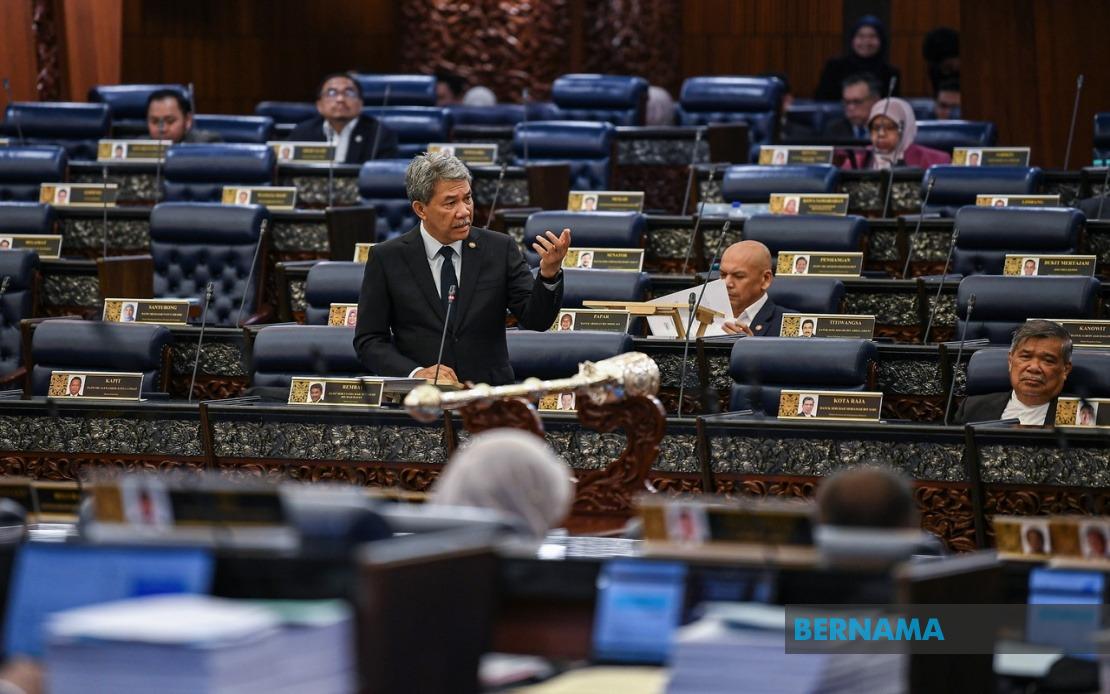
Malaysia's Foreign Minister Datuk Seri Mohamad Hasan has moved to quell public concerns about the governance of the Humanitarian Trust Fund for the People of Palestine (AAKRP), assuring Parliament that the mechanism operates under rigorous government controls and independent auditing. Responding to questions in the Dewan Rakyat on June 23, Mohamad emphasised that allegations questioning the fund's management are without merit, clarifying that the AAKRP functions as a state-controlled trust account rather than an independently operated facility managed by any single organisation outside government purview.
The distinction matters considerably for Malaysian donors and taxpayers, as it positions the fund as subject to the same accountability frameworks applied to other government-managed financial instruments. Mohamad highlighted that the Auditor-General's office conducts regular examinations of the AAKRP's operations, a standard practice that provides institutional oversight independent of the Foreign Ministry itself. Additionally, the fund reports regularly to Malaysia's Cabinet, creating another layer of political accountability and ensuring that senior government officials remain apprised of how resources are being allocated and spent across Gaza's humanitarian relief corridors.
Social media has become a significant vector for misinformation regarding international aid mechanisms in recent years, and Malaysia appears to be no exception. The Foreign Minister directly addressed this phenomenon, urging the Malaysian public not to rely on unverified claims circulating on social platforms regarding AAKRP administration. His warning reflects a broader challenge facing governments across Southeast Asia, where digital falsehoods about aid distribution can erode public trust in legitimate humanitarian efforts and potentially discourage future donations or government support for vulnerable populations overseas.
The distribution architecture that Malaysia has established for its Gaza assistance operates through established, internationally recognised intermediaries rather than through direct bilateral channels that might be harder to verify. Funding flows through the United Nations Relief and Works Agency for Palestine Refugees in the Near East (UNRWA), the Jordan Hashemite Charity Organisation (JHCO), the Palestine Red Crescent Society, and King Hussein Hospital. This multi-channel approach serves dual purposes: it ensures that aid reaches intended beneficiaries through organisations with existing infrastructure and expertise in operating within conflict zones, while simultaneously providing external validation of proper resource utilisation through these reputable partners.
Beyond financial transfers, Malaysia has also contributed material humanitarian assistance to Gaza's population, dispatching food supplies, medical equipment, and health-related resources. Some of these shipments experienced delays that have since been resolved following negotiations with Egypt regarding the reopening and coordination of overland humanitarian routes into Gaza. This logistical achievement underscores the complexity of delivering aid into conflict-affected areas, where border crossings may face periodic closures and where international cooperation becomes essential for maintaining supply chains to civilian populations.
The humanitarian landscape in Gaza remains dire, according to Mohamad's parliamentary statement. The ongoing conflict has inflicted substantial damage upon critical infrastructure, with hospitals, educational facilities, and religious buildings among the hardest-hit sectors. Such destruction directly impacts civilian wellbeing and complicates the delivery of humanitarian assistance, as aid organisations must often work within collapsed or severely degraded institutional frameworks. Malaysia's emphasis on infrastructure-sensitive aid channels reflects an understanding that effective humanitarian response requires more than simply delivering goods; it demands engagement with functioning local institutions and international partners capable of managing distribution and ensuring equitable access.
For Malaysian policymakers and the broader Southeast Asian diplomatic community, the AAKRP represents an intersection of humanitarian commitment and institutional governance that warrants careful attention. The region has increasingly positioned itself as a voice for Palestinian rights within international forums, and the credibility of such advocacy depends fundamentally upon the integrity of accompanying aid programmes. Transparency in fund management thus becomes not merely a bureaucratic requirement but a strategic necessity that protects Malaysia's reputation in international humanitarian circles and reinforces its moral authority when addressing conflict-related issues at forums like the United Nations.
The Foreign Minister's insistence on professional and responsible fund stewardship addresses both technical and reputational dimensions of international aid. Technically, the involvement of the Auditor-General and Cabinet oversight creates accountability mechanisms comparable to those in developed donor nations. Reputationally, Malaysia can position itself as a state that channels humanitarian impulses through robust institutional processes rather than ad hoc arrangements vulnerable to misuse or inefficiency. This distinction matters particularly within ASEAN, where governance standards and institutional credibility increasingly influence bilateral relationships and international standing.
The emphasis on delivering assistance through established multilateral and bilateral humanitarian agencies rather than through government-to-government transfers reflects contemporary best practices in humanitarian logistics. UNRWA, for instance, brings seven decades of operational experience in Palestinian contexts, while the Jordan Hashemite Charity Organisation and King Hussein Hospital provide institutional anchors within the immediate region. By routing Malaysian assistance through these channels, the Foreign Ministry effectively outsources verification and distribution management to organisations with established track records, reducing administrative burden while enhancing credibility.
Moving forward, Malaysia faces an ongoing challenge in communicating the legitimacy of its humanitarian mechanisms to a digitally connected public increasingly sceptical of government institutions. The Dewan Rakyat platform provided Mohamad with an opportunity to address parliamentary scrutiny directly, but sustaining public confidence will likely require additional transparency initiatives beyond parliamentary responses. Publishing periodic reports on AAKRP contributions and distributions, providing detailed accounts of how funds flow through partner organisations, and perhaps engaging independent evaluators to assess programme impact could strengthen public understanding of Malaysia's commitment to Palestinian humanitarian needs.
The broader context of Malaysia's Gaza assistance reflects the nation's consistent diplomatic positioning on Palestinian issues and its desire to translate advocacy into tangible support. Yet effective humanitarian engagement requires not only good intentions but also credible implementation frameworks that can withstand scrutiny and demonstrate that resources genuinely reach vulnerable populations. By anchoring the AAKRP within established government oversight mechanisms and international humanitarian partners, Malaysia attempts to reconcile its political commitments with institutional imperatives of accountability and transparency that increasingly define responsible aid delivery in the contemporary international system.

