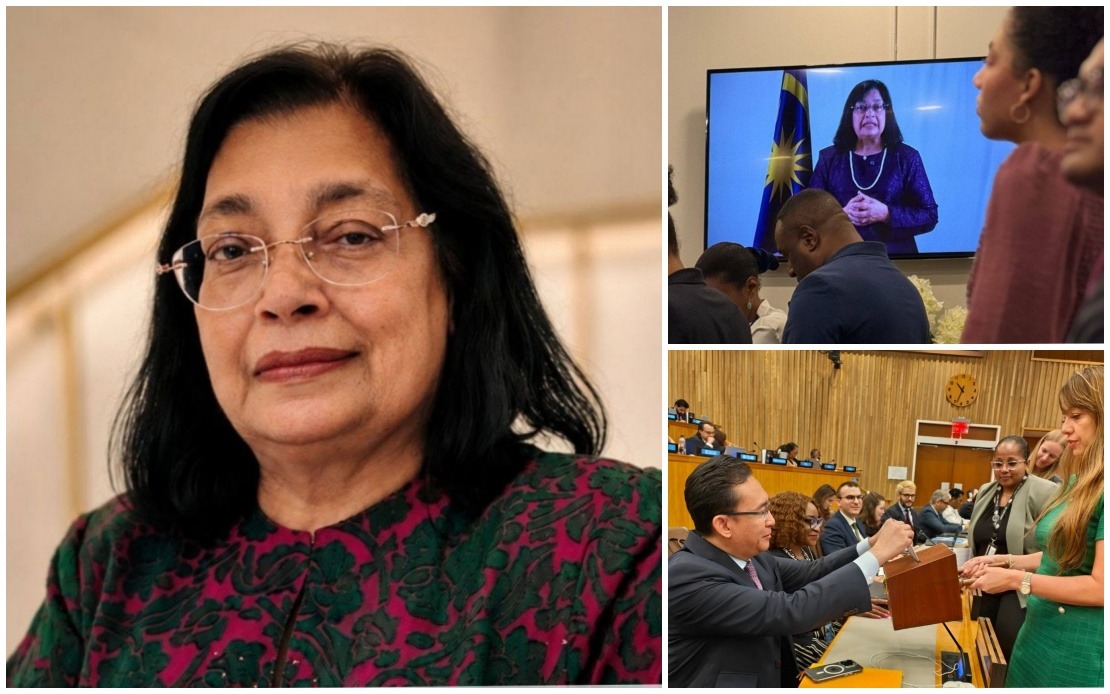
Malaysia has secured a significant victory in advancing its child protection agenda on the international stage, with Datuk Yasmeen Muhamad Shariff elected as a member of the United Nations Committee on the Rights of the Child for the 2027–2031 term. The election took place on Tuesday at the UN Headquarters in New York during the 21st Meeting of States Parties to the Convention on the Rights of the Child. Yasmeen's substantial mandate—secured with 136 votes from the 189 States Parties present and voting—puts her among the most endorsed candidates in the election, signalling broad multilateral support for her candidacy and the priorities Malaysia brings to this important forum.
This appointment carries particular significance as Yasmeen's second election to the committee, having previously served during the 2013–2017 term. Her re-election demonstrates the sustained confidence that the global community places in her expertise and demonstrates Malaysia's growing influence in shaping international child protection standards. The Foreign Ministry noted that the result reflects international recognition of Malaysia's commitment to advancing children's rights through thoughtfully designed policies and comprehensive legal frameworks. For a Southeast Asian nation to secure such prominence in a UN committee speaks to Malaysia's positioning as a credible voice in global child welfare discourse.
As a committee member serving in her personal capacity as an independent expert, Yasmeen will participate in the UN body's core mandate: monitoring how signatory nations implement the Convention on the Rights of the Child, engaging States Parties through constructive dialogue, and promoting rights-based approaches to emerging challenges that affect children worldwide. The committee's work has become increasingly vital as children globally face evolving threats ranging from digital exploitation to climate-related hardship. Malaysia's representation on this body gives the nation a platform to influence how international standards evolve and how implementation is assessed globally, while also allowing the country to advocate for perspectives rooted in Southeast Asian contexts and concerns.
The Foreign Ministry framed the election outcome as validation of Malaysia's ongoing efforts to embed child protection throughout its domestic governance structures. Officials pointed to inclusive policy design, progressive legal reforms, and targeted programmes as evidence of Malaysia's institutional commitment to ensuring children can develop and reach their potential. This narrative carries weight internationally, particularly given the committee's role in holding countries accountable to their obligations under the convention. By maintaining a seat on this oversight body, Malaysia positions itself as both a committed implementer and a constructive participant in the global conversation about evolving children's rights standards.
The timing of Yasmeen's election occurs against a backdrop of mounting complexity in the global landscape affecting children. The UN committee's role has expanded in recent years to address issues ranging from digital safety and artificial intelligence's impact on young people, to migration, armed conflict, and pandemic-related disruptions to education and wellbeing. For Malaysia and other Southeast Asian nations, these challenges carry particular urgency given the region's rapid digitalisation, significant migrant populations, and exposure to transnational child trafficking networks. Yasmeen's presence on the committee during this critical period allows Malaysia to contribute regional expertise and advocate for approaches that reflect Southeast Asian realities.
The Foreign Ministry's statement emphasised that Malaysia remains unequivocally committed to promoting and protecting children's rights in alignment with the convention's principles and provisions. This commitment extends beyond diplomatic posturing; the ministry pledged to continue constructive engagement with all stakeholders in addressing contemporary challenges that affect children. For Malaysian readers, this signals that the government views child protection as a continuous, evolving priority rather than a static checkbox—an important distinction in a rapidly changing world where new threats to children emerge regularly.
A notable element of the announcement was the explicit acknowledgment of cooperation between the Foreign Ministry and the Ministry of Women, Family and Community Development in securing Malaysia's successful nomination. This interagency collaboration underscores how child protection in Malaysia's international engagement requires coordination across multiple government departments. Domestically, this coordination reflects the complexity of implementing child-focused policies that span welfare, education, legal protection, and family services. The partnership credited in this election victory demonstrates institutional awareness that children's wellbeing cannot be compartmentalised into single-ministry domains.
For Malaysia's standing in Southeast Asia, this election outcome carries regional implications. As ASEAN nations collectively grapple with child protection challenges—from labour exploitation in agricultural and manufacturing sectors to digital safety concerns—having a member on the UN committee gives Malaysia a platform to share lessons and advocate for regional perspectives. The committee's work influences how international bodies assess national compliance and shape global norms that filter down into regional frameworks. Malaysia's influence in these conversations strengthens the nation's voice in broader regional governance discussions.
The election also reflects a deliberate Malaysian strategy of engaging multilateral institutions to advance priority issues. Child protection has become increasingly integrated into Malaysia's broader diplomatic agenda, appearing in trade negotiations, development assistance frameworks, and human rights dialogues. Yasmeen's continued presence on the committee supports this strategic positioning while allowing Malaysia to demonstrate that it takes international child welfare obligations seriously—a consideration that matters for Malaysia's international reputation and its relationships with partner nations.
Looking forward to 2027–2031, Yasmeen will serve during a period when the committee is likely to confront intensifying challenges around technology's role in children's lives, climate change's impact on child development and safety, and ongoing concerns about inequality and access to protection in lower-income regions. Malaysia's participation in shaping the committee's response to these issues positions the country as an active contributor to solutions rather than a passive recipient of international directives. This engagement reflects Malaysia's broader commitment to being a constructive partner in global governance, particularly on issues where the nation has demonstrated genuine domestic commitment.
Ultimately, Yasmeen's election represents more than an individual achievement; it reflects Malaysia's sustained effort to translate domestic child protection commitments into international influence and to ensure that the voices and priorities of Southeast Asian nations shape global standards affecting children. As the world becomes increasingly interconnected, the ability to influence how child protection is understood and implemented globally becomes an important extension of national child welfare policy. Malaysia's success in securing this seat ensures that the country will have a voice in these crucial conversations for the next five years.

