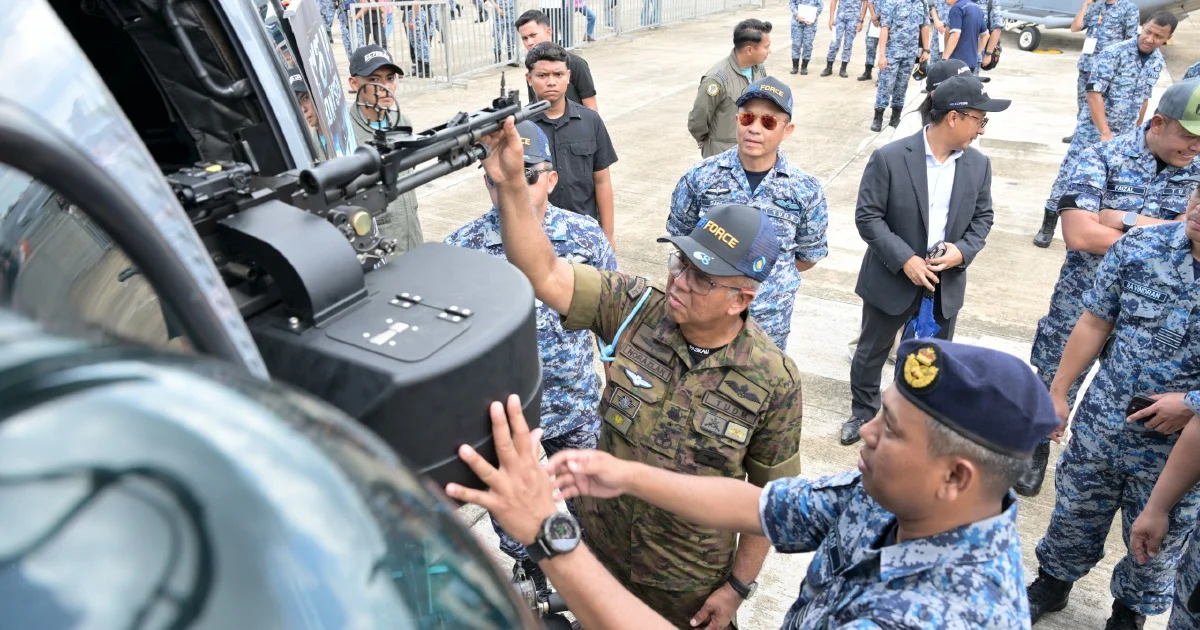
The Royal Malaysian Air Force has substantially enhanced the combat credentials of its EC725 helicopter fleet through a significant firepower upgrade designed to bolster operational effectiveness during dangerous search and rescue missions. This modernisation initiative underscores the service's commitment to ensuring aircrews and rescue personnel can operate with greater confidence when extracting personnel from contested or hostile territory where conventional transport helicopters face meaningful threats.
Combat search and rescue operations represent some of the most challenging and hazardous missions undertaken by military aviation services worldwide. Personnel recovery in conflict zones demands that dedicated rescue platforms possess sufficient defensive armament to suppress enemy fire, establish local air superiority, and create protective corridors for vulnerable evacuation operations. The EC725, a military variant of the Eurocopter AS532 Cougar, has become a cornerstone of many nations' tactical helicopter inventories precisely because of its capacity for such multi-purpose employment, combining transport capability with combat flexibility.
The timing of this upgrade reflects broader strategic considerations within Malaysia's defence modernisation agenda. As regional security dynamics continue evolving across Southeast Asia, the capacity to conduct credible rescue operations in degraded threat environments has assumed greater importance. Nations throughout the region have witnessed increasing interest in precision military capabilities and advanced air defence systems, creating operational scenarios where search and rescue helicopters require enhanced self-protection measures and organic firepower rather than relying exclusively on conventional defensive systems.
The EC725 platform offers inherent advantages for combat rescue specialisation. Its twin-engine configuration provides redundancy critical for operations over hostile terrain, while its substantial payload capacity accommodates additional weaponry without sacrificing the generous internal volume required for rescue equipment, medical facilities, and extracted personnel. The helicopter's proven reliability in tropical and high-altitude environments familiar to Malaysian geography makes it particularly suitable for upgrade investment, ensuring extended service life and operational relevance across the foreseeable planning horizon.
This modernisation programme carries implications beyond immediate tactical considerations. Enhanced CSAR capabilities demonstrate Malaysia's willingness to invest in specialised military capabilities that distinguish between general-purpose transport and purpose-built combat systems. This distinction matters considerably for force planning, training regimen development, and interoperability frameworks with allied nations, particularly within the context of regional security partnerships and multilateral exercises that increasingly feature personnel recovery operations as legitimate training objectives.
The upgrade programme also reflects confidence in sustained helicopter operations across environments where traditional air superiority cannot be guaranteed. Modern regional conflicts have repeatedly demonstrated that even air forces possessing significant advantages require dedicated platforms capable of functioning in contested airspace. By equipping EC725s with appropriate armament packages, the RMAF signals that rescue operations will not be postponed or abandoned merely because tactical conditions deteriorate, provided crews receive adequate support and firepower.
Technical implementation of such upgrades typically involves integrating weapon systems that balance lethality requirements against weight penalties and aerodynamic considerations. Helicopter weaponry packages generally employ lightweight systems—machine guns, rocket pods, or air-to-surface guided munitions—that provide meaningful suppressive fire without unduly compromising the aircraft's lift capabilities or agility during low-altitude rescue insertions. The specific armament configuration adopted by the RMAF likely reflects lessons learned from allied nations' combat rescue experiences, particularly observations from operations across Iraq and Afghanistan where such capabilities proved operationally invaluable.
Training implications accompanying this upgrade deserve emphasis. Helicopter crews accustomed to transport-focused operations require substantially different preparation for combat rescue specialisation. This encompasses not merely weapons employment and tactical procedures but fundamentally different approaches to threat recognition, evasion manoeuvres, and decision-making under fire. The RMAF's pilot training establishments will inevitably require curriculum evolution to ensure personnel develop appropriate competencies for armed helicopter operations, particularly the complex coordination required between rescue teams, defensive weapons systems, and supporting aircraft during contested extractions.
The upgrade programme's strategic significance extends to regional defence relationships and interoperability considerations. Nations within ASEAN increasingly engage in joint exercises and cooperative security arrangements, and capabilities such as enhanced combat rescue create opportunities for deeper coordination among allied air forces. Malaysian participation in multilateral search and rescue exercises will henceforth occur with meaningfully enhanced capabilities, potentially attracting greater interest from regional partners keen to develop similar competencies.
Operational deployment scenarios for these upgraded EC725s span both peacetime applications and potential conflict contingencies. Search and rescue operations extend far beyond combat zones—civilian operations, disaster response, and maritime rescue similarly benefit from enhanced defensive capabilities, particularly in maritime environments where isolation and extended transit over open water creates particular vulnerability. The firepower upgrade thus serves multiple operational constituencies across the air force's mission portfolio.
Investment in this upgrade programme additionally reflects recognition that military equipment requires continuous modernisation to maintain relevance. Platforms developed decades previously—the EC725 ancestry traces to designs originating in the 1970s—remain viable through progressive enhancement of systems and capabilities. Rather than pursuing entirely new platform acquisition, the RMAF has adopted a pragmatic approach investing in existing assets, demonstrating fiscal discipline while achieving genuine operational improvement.
Looking forward, this modernisation initiative positions the RMAF to address contemporary security requirements with credible capabilities. The enhanced EC725 helicopter fleet represents a meaningful capability gap closure that will strengthen Malaysia's capacity to protect personnel in high-risk environments and underscore the service's commitment to maintaining operational competence across the full spectrum of anticipated missions throughout the coming years.

