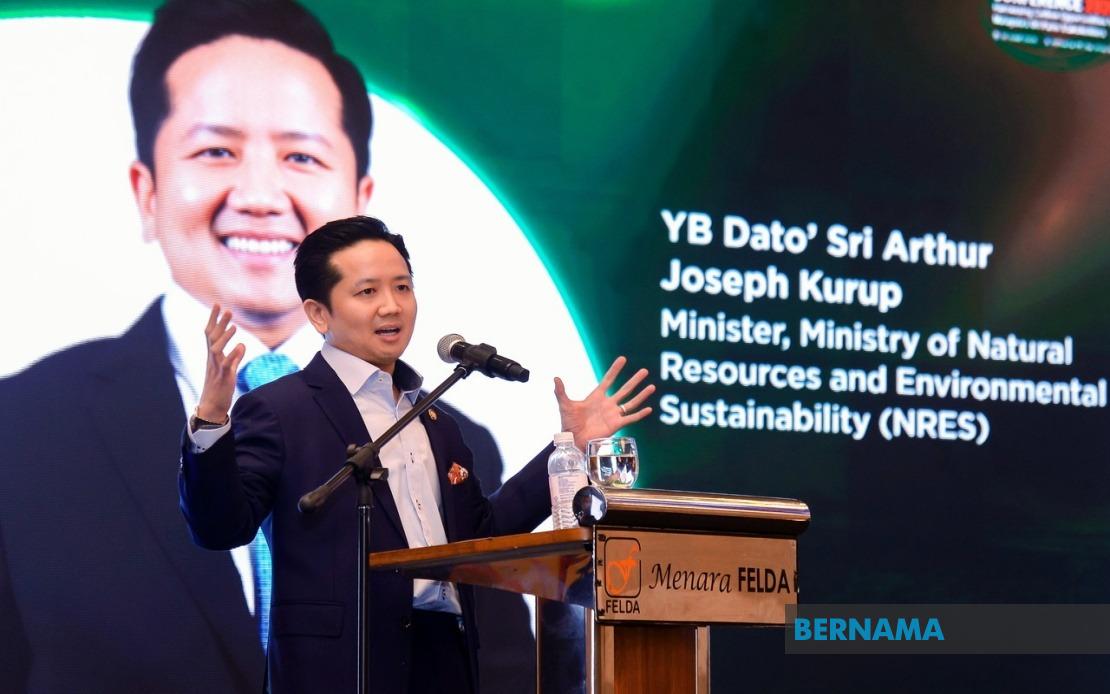
Malaysia's proposed carbon tax is undergoing continued refinement as the government works to balance environmental objectives with industry readiness, Natural Resources and Environmental Sustainability Minister Datuk Seri Arthur Joseph Kurup said on June 16. Speaking at the Malaysia Palm Carbon Conference (MPC) 2026 in Kuala Lumpur, Kurup indicated that while the timing of implementation remains under review, the government remains committed to eventually introducing the tax as part of its climate action strategy. The announcement came in the presence of Federal Land Development Authority (Felda) chairman Datuk Seri Ahmad Shabery Cheek, reflecting the cross-sector importance of the initiative.
The ministry's measured approach to implementation reflects recognition that Malaysia's industrial base requires adequate preparation before new fiscal measures take effect. Rather than rushing forward with a punitive framework, Kurup emphasised that the carbon tax should function as an incentive mechanism designed to accelerate the adoption of cleaner technologies and drive meaningful reductions in emissions across the economy. This distinction between penalty-based and incentive-driven approaches carries significant implications for how Malaysian businesses, particularly those in energy-intensive sectors, prepare their operational and financial strategies.
The government's hesitation over exact implementation timelines stems partly from economic headwinds identified earlier this year. In April, Kurup had indicated that the original plan to introduce the tax in 2024 might face deferral, citing concerns about the global energy supply crisis and geopolitical volatility that could amplify pressures on domestic industries and consumers. This calculation reflects policymakers' understanding that carbon pricing mechanisms introduced during periods of economic uncertainty risk triggering inflationary cascades through supply chains, particularly in construction, steel, and cement sectors that were initially earmarked as priority targets.
The mechanism for deploying carbon tax revenue represents a critical design consideration still under government examination. Rather than viewing carbon taxation as a simple revenue-raising measure, officials are exploring frameworks that would direct collected funds toward climate adaptation initiatives, forest conservation programmes, and sustainable land management practices. For Malaysian stakeholders concerned about environmental governance, this approach suggests that the tax would function as part of a circular system where carbon pricing simultaneously incentivises emission reductions while financing the adaptation and mitigation infrastructure needed to strengthen national climate resilience.
Climate change represents an acute challenge for Malaysia, a tropical nation particularly vulnerable to rising sea levels, altered precipitation patterns, and ecosystem degradation in biodiversity hotspots. The government's exploration of how carbon tax revenue might strengthen climate resilience speaks to recognition that Malaysia cannot simply transfer emission-reduction burdens to industry without simultaneously investing in the country's adaptive capacity. This integrated thinking positions the carbon tax within a broader portfolio of climate governance measures rather than as an isolated fiscal intervention.
Parallel to carbon tax refinement, the government is advancing legislative foundations for enhanced climate action. Kurup confirmed that the National Climate Change Bill is expected to be presented to the Dewan Rakyat during the current parliamentary session. This legislation would represent a significant strengthening of Malaysia's climate governance architecture, providing the institutional and legal framework necessary to coordinate climate policy across government agencies and ensure consistency in implementing ambitious environmental commitments. For investors and businesses operating in Malaysia, passage of this bill would signal government seriousness about climate integration into long-term development planning.
The timing of these parallel initiatives—refining the carbon tax while advancing climate legislation—suggests a strategic sequence where legal and governance foundations precede major fiscal measures. This approach allows policymakers to establish clarity around climate objectives, institutional responsibilities, and revenue mechanisms before imposing new costs on economic actors. For multinational corporations operating in Southeast Asia, this gradual implementation pathway may facilitate longer planning horizons compared to abrupt policy shifts, though uncertainty about final design details continues to complicate strategic decisions.
Malaysia's experience with carbon pricing will be closely watched across Southeast Asia, where governments face similar pressures to demonstrate climate commitment while protecting industrial competitiveness. Countries like Indonesia and Thailand are monitoring how Malaysia balances these tensions, as regional approaches to carbon pricing could eventually influence cross-border competitiveness and investment flows. The government's emphasis on ensuring industry readiness and developing thoughtful revenue mechanisms suggests an intention to position Malaysia as a leader in climate policy design that accounts for development challenges specific to emerging economies.
The construction, steel, and cement sectors identified as initial targets for carbon pricing are fundamental to Malaysia's infrastructure ambitions and regional economic role. These industries employ hundreds of thousands of workers and generate substantial export revenues. The government's deliberate pace in implementation reflects awareness that these sectors require time to recalibrate supply chains, upgrade technological capabilities, and adjust pricing models to accommodate new regulatory costs. Manufacturers in these industries are likely using the current refinement period to evaluate decarbonisation options and assess competitive positioning under eventual carbon pricing.
Broader implications for Malaysia's climate commitments rest partly on how successfully the carbon tax, once implemented, achieves dual objectives of emission reduction and revenue generation. The effectiveness of the tax will depend on its price point, sectoral coverage, and mechanisms for maintaining competitiveness with carbon-free imports. Government officials will need to calibrate the tax carefully to avoid simply displacing emissions-intensive manufacturing to jurisdictions with laxer environmental standards, a risk that South and Southeast Asian countries face as they advance unilateral climate policies.
The ministry's emphasis that carbon taxation represents incentive rather than punishment signals an attempt to reframe climate policy as aligned with economic opportunity rather than burden. This rhetorical positioning may prove important for building political constituency for the eventual tax. Business chambers and industrial associations have historically resisted carbon pricing, but framing such measures as drivers of technological innovation and competitive advantage could alter the political economy of climate policy in Malaysia. The government's ongoing consultations with stakeholders during the refinement phase likely reflect efforts to build such consensus.
Looking forward, the success of Malaysia's carbon tax initiative will depend on coordinating implementation across multiple government agencies, ensuring transparent governance of collected revenue, and maintaining political commitment through economic cycles. The parallel advancement of the National Climate Change Bill suggests policymakers are building institutional scaffolding necessary to sustain these efforts beyond individual political cycles. For Malaysian businesses, investors, and citizens concerned about climate action, the government's measured but determined approach indicates that meaningful carbon pricing is arriving—the refinement period is now, not indefinitely deferred.