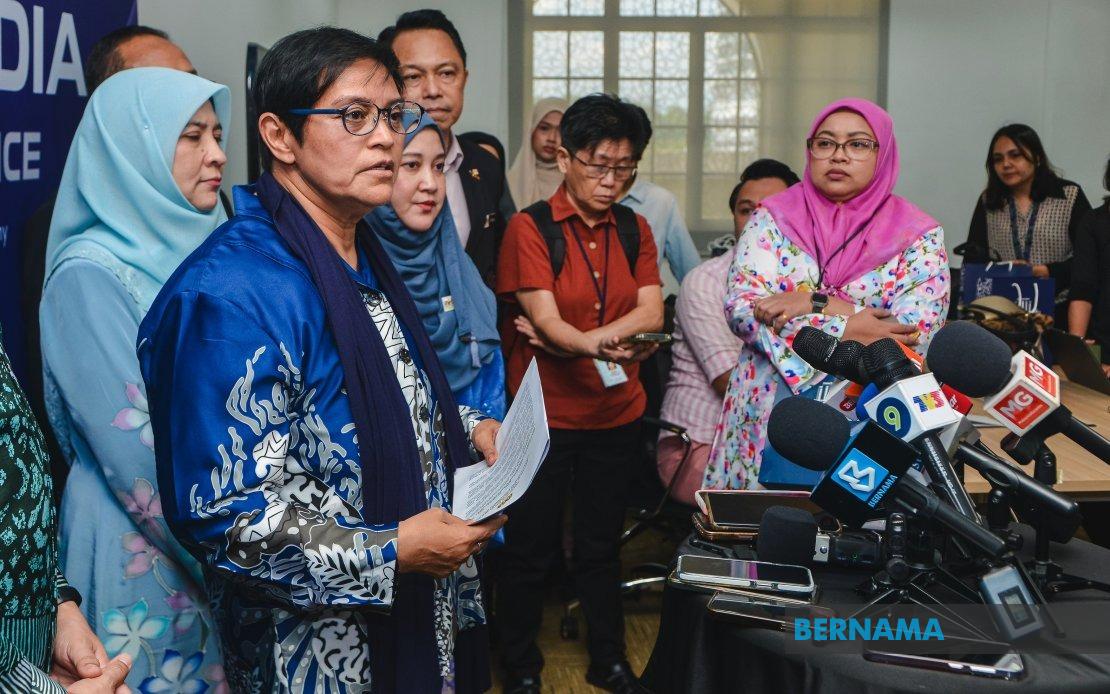
Malaysia is taking an unprecedented legislative approach to combat the rising tide of bullying in schools and beyond. The Anti-Bullying Act 2026, formally launched this week, marks a significant departure from conventional criminal law by introducing the concept of joint parental liability—a measure that legal experts say reflects society's evolving understanding of shared family responsibility in child safeguarding. Under this new framework, parents face the prospect of legal consequences not just for their own actions, but for the misconduct of their offspring, a principle Minister in the Prime Minister's Department (Law and Institutional Reform) Datuk Seri Azalina Othman Said unveiled at the formal opening of the Anti-Bullying Tribunal headquarters at the Asian International Arbitration Centre (AIAC) in Kuala Lumpur.
The introduction of parental joint liability represents a fundamental shift in how Malaysia conceptualises accountability for bullying. While most criminal offences confine responsibility to the individual perpetrator, the Anti-Bullying Act 2026 extends culpability to the family unit itself. This means parents or guardians can be held answerable for financial penalties, fines, and related costs stemming from their child's bullying conduct. Azalina explained that this shared responsibility model aims to create a broader deterrent effect, encouraging families to actively monitor and intervene in children's behaviour. The move reflects growing international recognition that bullying rarely occurs in isolation—it emerges from social environments where family attitudes, supervision, and values play determining roles.
The practical implications of joint liability are substantial for Malaysian households. When a child engages in bullying—whether physical intimidation, cyberbullying, verbal harassment, or social exclusion—parents may find themselves financially accountable alongside their child through the tribunal system. This transforms the bullying problem from a matter affecting only the perpetrator and victim into one with household-level consequences. For many families, particularly those already facing economic pressures, such joint financial responsibility could serve as a powerful incentive to instil anti-bullying values and maintain oversight of their children's conduct and peer relationships.
The rationale underlying this legislative approach stems from an alarming escalation in bullying incidents across Malaysia. Azalina cited the tragic consequences of extreme bullying cases, including instances resulting in loss of life, as justification for the stronger legal framework. Bullying in Malaysian schools and online spaces has become increasingly severe, with documented cases of severe physical assault, psychological torment, and cyberbullying campaigns that have devastated young victims. By establishing joint liability, lawmakers hope to harness parental influence as a preventative mechanism, recognising that parents often exercise greater leverage over children's behaviour than schools or enforcement authorities alone can achieve.
To operationalise this new legal regime, Malaysia has established the Anti-Bullying Tribunal, a specialised dispute resolution body operating independently from traditional courts. The tribunal comprises 56 members selected for their expertise in law and child-related disciplines, creating a forum specifically calibrated to handle bullying cases with sensitivity and specialised knowledge. Rather than channelling bullying cases through the conventional criminal justice system—which many argue is ill-suited to adolescent misconduct—the tribunal offers a more tailored, educative approach that balances accountability with the developmental needs of young offenders.
Access to the tribunal has been deliberately designed for breadth and convenience. Proceedings operate from the AIAC headquarters but extend nationwide through six physical and virtual hearing zones strategically positioned within existing government facilities, including Legal Aid Department offices, courtrooms, and school premises. This distributed model acknowledges that many bullying incidents occur within school environments or regional locations, making decentralised access essential for practical enforcement. Additionally, the tribunal permits online hearings, a critical accommodation that removes geographical barriers to justice and reflects Malaysia's growing digital infrastructure.
Victims of bullying now enjoy significantly enhanced procedural rights under the new Act. Previously, young people experiencing bullying outside school settings often faced bureaucratic obstacles in reporting incidents, particularly if school management proved unresponsive or complicit in downplaying the problem. The 2026 Act eliminates this constraint by permitting victims to file complaints directly with the Anti-Bullying Tribunal without first navigating institutional hierarchies or management processes. This direct access proves especially significant in cases involving private institutions, religious schools, or incidents occurring in digital spaces where traditional school authority holds no sway.
The tribunal has established an online portal enabling streamlined case registration, further reducing friction in the complaint process. Digital accessibility is particularly important for bullying cases, as young victims often experience shame, fear, or practical difficulties in accessing physical complaint facilities. An online portal allows victims and their families to document and submit evidence—including screenshots of cyberbullying, witness statements, and incident chronologies—from secure locations. This technological integration recognises that contemporary bullying frequently manifests through digital channels, where traditional complaint mechanisms prove inadequate.
For Malaysian parents, the implications of joint liability extend beyond immediate financial penalties. The law effectively redistributes responsibility for bullying prevention, placing the onus on families to cultivate anti-bullying values, supervise peer relationships, and intervene when signs of bullying behaviour emerge. This represents a cultural shift, positioning parents not merely as supporters of school discipline but as primary stakeholders in preventing bullying. The legislation implicitly acknowledges that parental attitudes toward conflict, diversity, empathy, and respect shape whether children become bullies, bystanders, or defenders of vulnerable peers.
The broader Southeast Asian context makes Malaysia's legislative innovation noteworthy. Bullying remains a pervasive challenge across the region, yet few nations have implemented such comprehensive, victim-centred legal frameworks. Malaysia's approach—combining specialised tribunals, joint parental liability, direct victim access, and nationwide infrastructure—offers a potential model for regional peers grappling with similar challenges. The Act demonstrates how legal reform can address modern social problems by recognising that traditional criminal law mechanisms often prove inadequate for addressing bullying's psychological and social dimensions.
Implementation challenges will undoubtedly emerge as the Anti-Bullying Tribunal commences operations. Training 56 tribunal members to consistently apply joint liability standards across diverse cases, ensuring that proceedings remain prompt and affordable for victims, and managing the volume of cases expected to flow through the system all present practical hurdles. Additionally, legal questions about proportionality—ensuring that parental liability remains proportionate to their culpability and capacity to supervise—will likely require clarification through early tribunal decisions. The tribunal's success will depend heavily on whether it can maintain victim confidence while treating young offenders with developmental sensitivity.
Azalina's emphasis on raising awareness among children reflects the Act's educative dimension alongside its enforcement role. By publicising the tribunal's existence, capabilities, and the serious consequences of bullying, the government aims to deter potential perpetrators through certainty of consequences rather than severity alone. For Malaysian youth, understanding that bullying can trigger not merely school discipline but legal proceedings and parental financial liability could meaningfully alter risk calculations about engaging in such behaviour. This deterrent effect, proponents argue, could prove more transformative than traditional punitive approaches.
The Anti-Bullying Act 2026 ultimately represents Malaysia's attempt to weaponise family dynamics against a persistent social scourge. By making parents legally accountable for their children's bullying conduct, the legislation recognises that effective prevention requires engagement at the family level. Whether this approach succeeds will depend on equitable implementation, adequate resourcing of the tribunal system, and broader cultural shifts in how Malaysian families discuss and address bullying. The coming months will reveal whether joint parental liability proves an effective deterrent or whether it generates unintended consequences that legal architects did not anticipate.