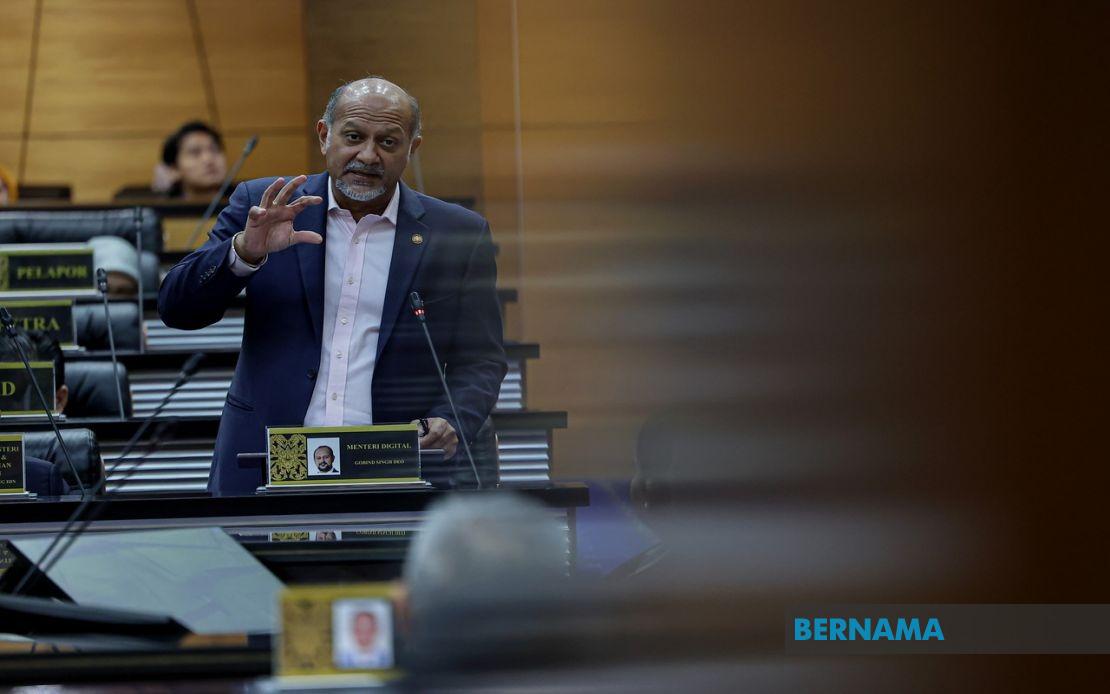
Malaysia's incoming Artificial Intelligence Governance Bill represents a pivotal shift in how the nation will manage the risks and responsibilities inherent in deploying advanced technology, Digital Minister Gobind Singh Deo told the Dewan Rakyat on June 24. At its core, the legislation seeks to establish unambiguous legal accountability for any adverse consequences stemming from AI systems, recognising a fundamental challenge in the digital age: artificial intelligence itself cannot bear moral or legal responsibility. Instead, that burden must rest squarely on the shoulders of the humans, organisations, and entities involved in creating, operating, deploying, and utilising these systems.
Gobind's clarification responds to growing public anxiety about AI's expanding role in Malaysian society. As constituents increasingly encounter the technology in both commercial and government services, citizens lack clear recourse when things go wrong. The bill addresses this gap by establishing the principle of accountability as a cornerstone of its architecture. This principle gains importance precisely because artificial intelligence lacks what lawyers call legal personality—the fundamental quality that allows entities to own property, enter contracts, and bear responsibility. Without such personality, the AI system itself cannot be sued, prosecuted, or held accountable in any meaningful legal sense.
The scope of this accountability framework extends across the entire lifecycle of an AI system, from its initial conception and development through to eventual termination or decommissioning. This comprehensive approach reflects sophisticated understanding of how artificial intelligence risks emerge. Gobind illustrated this point by noting that danger does not necessarily appear at a single moment. A system might be perfectly safe when first developed but become problematic when modified, relocated to a different operational context, integrated with other systems, or deployed across user populations it was never originally intended to serve. Each transition introduces new variables and failure modes that developers and operators must anticipate and manage.
Crucially, the bill functions as a horizontal governance framework rather than attempting to replace existing regulatory structures or impose uniformity across all sectors. Malaysia already maintains technology-specific regulations and sector-specific oversight mechanisms—whether in banking, telecommunications, healthcare, or other domains. The AI bill complements rather than supersedes these established frameworks. Should an AI incident intersect with criminal law, consumer protection statutes, intellectual property rights, or other specialised jurisdictions, those existing laws and their respective enforcement agencies retain their authority and responsibility. This architecture prevents regulatory overreach while ensuring comprehensive coverage.
The government has deliberately chosen not to regulate the actual content or outputs that AI systems generate. This represents a pragmatic recognition that direct censorship or control of AI-generated material would prove both technically difficult and potentially counterproductive to innovation. Instead, the legislation focuses on governance mechanisms designed to prevent or minimise risks before they materialise. This upstream approach proves more efficient than attempting to police every output after deployment. Among the preventive mechanisms under consideration is mandatory AI incident reporting, which would create a systematic process for logging problems as they occur in real-world deployments.
Incident reporting serves multiple purposes within Malaysia's proposed regulatory ecosystem. By requiring organisations to document when their AI systems cause harm or behave unexpectedly, authorities gain visibility into patterns of failure and emerging risks. This data collection enables regulators to identify common vulnerability vectors, issue guidance or revised standards, and prevent similar incidents from recurring elsewhere. The mechanism effectively transforms individual failures into collective learning opportunities across the entire Malaysian AI sector. Such transparency also provides regulators with early warning signals about dangerous systems before widespread harm occurs.
Complementing incident reporting, the government is exploring an AI regulatory sandbox—a controlled testing environment where developers, industry participants, and regulatory agencies can collaborate to assess new systems before broader commercial deployment. Sandboxes have proven effective in fintech and other sectors, allowing innovation to proceed under managed conditions while authorities observe real-world behaviour and outcomes. Within such environments, developers can experiment with novel approaches, identify problems before public release, and work with regulators to refine both the systems themselves and the rules governing them. This collaborative model balances support for innovation against protection of public interests.
The timing of this legislative initiative carries significant implications for Malaysia's position within Southeast Asia and the global digital economy. Regional competitors including Singapore, Indonesia, and Thailand are simultaneously developing their own AI governance frameworks. Malaysia's approach—characterised as balanced, transparent, and safety-conscious—could position the country as a trusted destination for responsible AI development. Companies seeking to deploy systems in jurisdictions with clear accountability rules and sensible regulatory frameworks may deliberately choose Malaysia over more uncertain environments. This regulatory clarity becomes a competitive advantage in attracting investment and talent.
For Malaysian citizens and businesses, the bill's emphasis on lifecycle accountability offers concrete protection. When AI systems cause financial loss, discrimination, privacy breaches, or physical harm, victims will have clear paths to remedy. Organisations deploying AI systems will face legal exposure proportional to their negligence or recklessness, creating strong incentives for responsible development and operation. The framework protects innovation by providing safe harbours for good-faith actors while establishing accountability for those who cut corners or ignore known risks.
Gobind's parliamentary statement indicates that government deliberation on the bill remains ongoing. Officials continue refining specific mechanisms to balance multiple objectives: protecting public interests, strengthening accountability throughout the AI lifecycle, and simultaneously supporting innovation, research, technological development, and Malaysia's competitive position in the digital economy. This balancing act proves delicate. Overly stringent requirements could discourage AI adoption and push development offshore. Insufficient safeguards would leave Malaysian citizens vulnerable to harm. The forthcoming bill represents the government's attempt to navigate this terrain, establishing a framework that acknowledges AI's transformative potential while insisting that humans remain ultimately responsible for the consequences of their technological choices.

