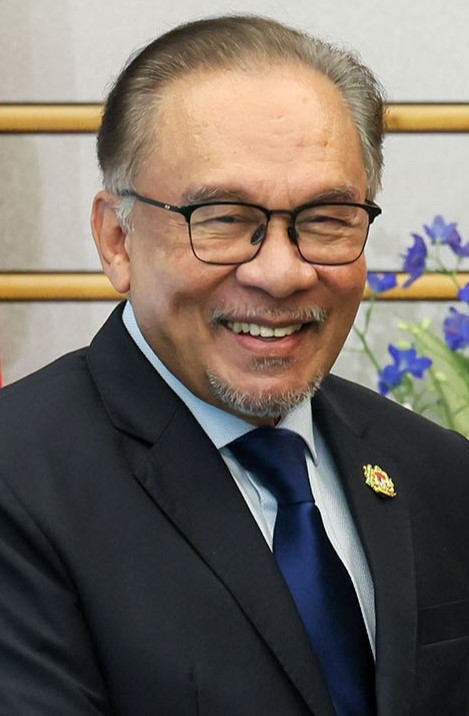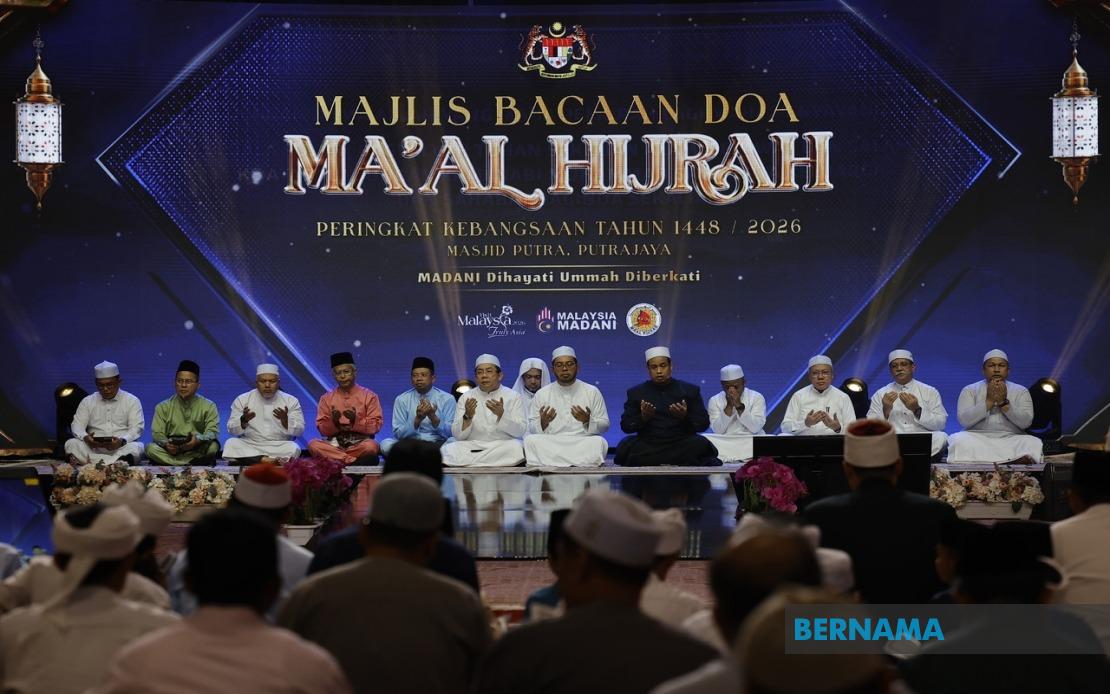
The call for Malaysia's youth to harness the transformative power of the hijrah concept has gained momentum as religious and civic leaders emphasise its contemporary relevance. Datuk Dr Zulkifli Hasan, the Minister in the Prime Minister's Department overseeing Religious Affairs, has positioned the Islamic concept of migration and renewal as a blueprint for young Malaysians seeking to drive meaningful change in their lives and communities. Speaking in Putrajaya on June 16, Zulkifli underscored the profound potential embedded within the nation's youth demographic, urging them to extract lessons from Prophet Muhammad SAW's historical journey and apply those principles to modern challenges facing Malaysian society.
The hijrah, traditionally understood as Prophet Muhammad's migration from Makkah to Madinah, carries profound symbolic weight beyond its literal meaning. In contemporary Islamic thought, the concept encompasses spiritual transformation, community building, and the establishment of institutions that serve collective welfare. Zulkifli's invocation of this principle speaks to a deliberate effort to frame youth engagement around constructive values and purposeful action. By connecting personal development to the broader narrative of Islamic civilisational building, the minister has articulated a vision wherein young Malaysians function not merely as individual agents but as contributors to a larger social project centred on ethical governance and community resilience.
The national Maal Hijrah 1448H/2026M celebrations have been reconfigured this year to emphasise this foundational message through experiential programming. Rather than adopting a conventional ceremonial approach, organisers have selected Putra Mosque as the symbolic epicentre for the main events, deliberately choosing a venue that embodies institutional development and communal gathering. The decision to commence activities at a mosque reflects a conscious pedagogical strategy, anchoring discussions about hijrah within a space historically associated with the Prophet's first establishment after arriving in Madinah. This architectural and spatial choice transforms the celebration from abstract commemoration into a tangible exercise in understanding how civilisational progress originates from foundational institutions dedicated to collective welfare.
The restructured programming schedule reveals an intentional effort to balance grandeur with pragmatism. According to Zulkifli, the national-level observance has been scaled down considerably, taking into account broader imperatives around energy conservation and sustainability during a period of global supply chain disruptions. This operational decision, while seemingly logistical, carries symbolic implications for Malaysian audiences familiar with ongoing discussions around environmental responsibility and national resilience. The modest scale conveys a message that meaningful commemoration need not depend on elaborate spectacle; instead, substantive engagement with historical lessons and their application to contemporary concerns constitutes the event's true value proposition.
A comprehensive keynote lecture series scheduled for June 18 at the JAKIM Auditorium aims to translate historical narratives into actionable insights for approximately 1,000 expected participants. The inclusion of both national and international figures speaking to the hijrah spirit creates an opportunity for cross-cultural and transnational dialogue around Islamic concepts of renewal and community transformation. By assembling speakers with diverse geographical and experiential backgrounds, organisers position the hijrah not as a parochial or historically bounded concept but as a universal framework applicable across Muslim-majority and Muslim-minority contexts alike. This comparative approach holds particular relevance for Malaysian audiences, given the nation's position as a multicultural society where Islamic principles must coexist and interact with plural value systems.
The ceremonial centrepiece scheduled for June 17 at Putra Mosque represents the culmination of planning efforts and carries considerable symbolic weight through its official patronage. The event's opening at 7 am, followed by presentation of national and international Maal Hijrah Figure awards, establishes a formal recognition mechanism for individuals and organisations exemplifying the hijrah spirit in contemporary contexts. By having the Sultan of Perak, Sultan Nazrin Shah, officiate proceedings, organisers have secured highest-level institutional endorsement, signalling the state's investment in promoting these values throughout the public sphere. Such ceremonial architecture reinforces that the hijrah concept enjoys legitimacy across multiple domains—religious, governmental, and social—rather than remaining confined to a single institutional domain.
For Malaysian youth specifically, the timing and framing of these calls merit careful consideration. The nation's young demographic increasingly navigates complex pressures: rapid technological change, economic uncertainty, and questions regarding social identity and belonging in an interconnected world. The hijrah framework, as presented by Zulkifli and reinforced through commemorative programming, offers an alternative narrative to individualised success models. Instead, it positions personal transformation as intrinsically linked to community welfare and institutional development. This linkage holds potential appeal for young Malaysians seeking meaningful engagement beyond consumption-oriented or status-driven paradigms, particularly those experiencing alienation from conventional social structures.
The emphasis on institutions—particularly mosques as incubators of civilisational development—extends beyond religious symbolism into pragmatic governance implications. By highlighting how Prophet Muhammad prioritised institutional establishment upon arrival in Madinah, contemporary religious leaders like Zulkifli subtly advocate for youth investment in community-serving institutions. For Malaysia, where questions about civic participation, institutional trust, and social cohesion periodically surface in public discourse, this message carries pointed relevance. Young Malaysians engaged in educational institutions, civil society organisations, or faith-based communities receive implicit validation that their efforts contribute to broader civilisational projects rather than representing isolated or marginal activities.
The geographical and temporal specificity of these celebrations—centred in Putrajaya, Malaysia's administrative capital, during the Islamic month of Muharram—positions them within contested spaces of national meaning-making. These official commemorations function simultaneously as religious observance, civic education, and political messaging. The inclusion of both local and international speakers ensures that Malaysian experiences and global perspectives achieve representation, creating dialogic space where local youth can situate their aspirations within transnational Islamic communities while remaining grounded in Malaysian particularities. This balance between the local and the global characterises much contemporary Islamic activism in Southeast Asia, where young people negotiate between parochial and cosmopolitan identities.
Looking beyond the immediate celebrations, the sustained messaging around hijrah and youth potential suggests broader strategic objectives within Malaysia's religious and governmental sectors. As the nation contends with socioeconomic transitions, demographic shifts, and evolving security challenges, investing in youth narratives that emphasise purposeful transformation and community responsibility represents a calculated intervention. Whether expressed through commemorative programming, award recognition, or keynote lectures, this messaging attempts to crystallise a particular vision of what positive youth engagement looks like—one rooted in Islamic principles, community-oriented in scope, and institutionally anchored in Malaysia's existing social infrastructure. The coming months will reveal whether these calls translate into sustained youth mobilisation or remain confined to ceremonial expression.