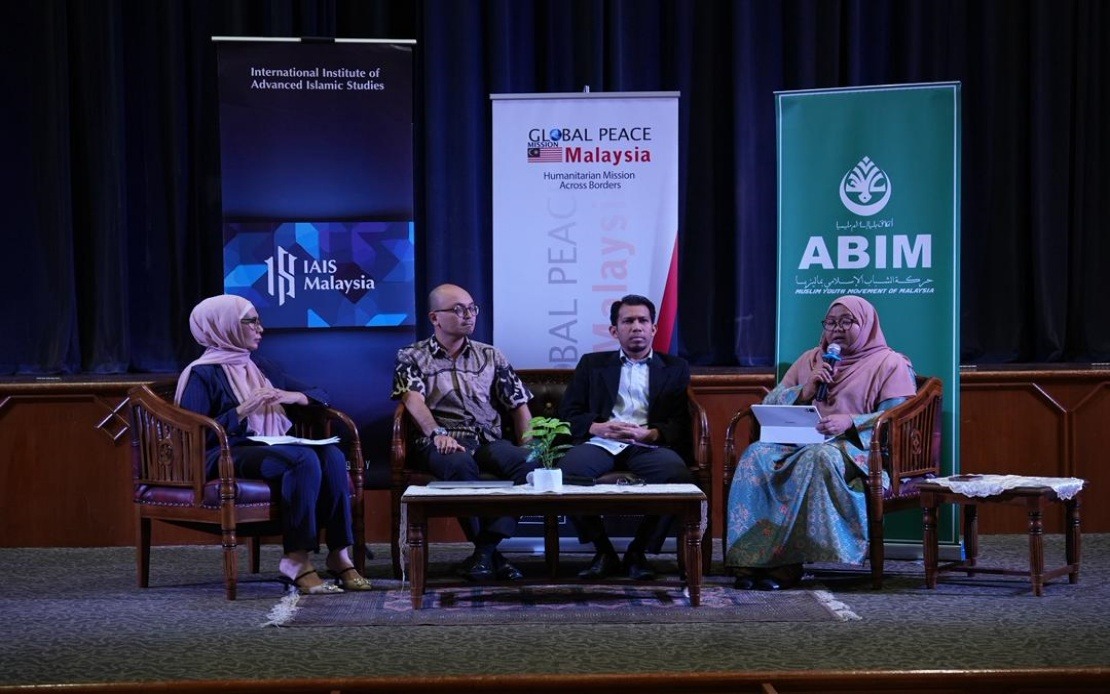
Civil society groups and humanitarian organisations gathered at the Kuala Lumpur Solidarity with Refugees Conference have endorsed a comprehensive ten-point resolution framework addressing the country's approach to refugee management. The gathering, held on June 20 in conjunction with World Refugee Day 2026 at the International Institute of Advanced Islamic Studies (IAIS) Malaysia, drew participants from across the non-governmental sector, academic institutions, community bodies and international organisations seeking to shape more effective refugee policy in Southeast Asia's most significant host nation.
The resolutions represent a deliberate attempt to reframe Malaysia's refugee discourse at a critical juncture when public opinion has become increasingly polarised. Angkatan Belia Islam Malaysia (ABIM) president Ahmad Fahmi Mohd Samsudin indicated that the conference outcomes will be formally presented to Members of Parliament and key governmental stakeholders to inform policy discussions. The initiative reflects growing concern among humanitarian actors that xenophobic narratives have gained traction in public discourse, potentially threatening broader social cohesion beyond refugee-specific issues.
Among the substantive resolutions adopted, participants called for the government to develop an integrated action strategy that navigates competing priorities: maintaining national security interests, protecting local community welfare, and upholding humanitarian obligations toward vulnerable populations. This formulation explicitly acknowledges the legitimate security and social concerns that have underpinned recent public scepticism toward refugee populations, while rejecting wholesale vilification or dehumanisation. The framing suggests conference organisers recognised the need to move beyond purely advocacy-oriented messaging toward addressing substantive governance challenges.
A second major resolution emphasised strengthening Malaysia's refugee data infrastructure through collaborative efforts with the United Nations High Commissioner for Refugees (UNHCR) and other international bodies. Improved registration, documentation and demographic analysis would enhance transparency in refugee management and enable evidence-based policymaking rather than decisions shaped by anecdotal concerns or misinformation. This technical focus reflects recognition that better administrative systems could simultaneously improve security screening and demonstrate responsible state management to sceptical publics.
The conference participants adopted resolutions explicitly rejecting all manifestations of hatred, discrimination and incitement targeting refugees and asylum seekers while simultaneously acknowledging legitimate public anxieties regarding security, law enforcement capacity and community stability. This carefully balanced language attempts to move discussion away from polarised positions where either humanitarian concerns or security imperatives dominate entirely. Ahmad Fahmi stressed the importance of grounding refugee debates in empirical evidence and fact-based analysis rather than allowing misconceptions to drive public sentiment.
Particularly significant among the resolutions were calls for enhanced public education campaigns and media literacy initiatives to counter misinformation and xenophobic narratives in circulation. Conference organisers expressed concern that unchecked anti-refugee rhetoric could establish precedent for hostility toward other marginalised populations, potentially fragmenting social cohesion. This preventative framing positions refugee protection as integral to broader social stability rather than a specialised humanitarian concern isolated from mainstream political discourse.
The resolutions further advocated for establishing formal mechanisms through which NGOs, humanitarian workers and civil society activists could address attacks, disinformation campaigns and hate speech directed at them through social media and other platforms. This reflects the increasingly challenging operational environment facing humanitarian organisations in Malaysia, where defenders of refugee rights face coordinated online harassment campaigns. Organisers sought concrete institutional support structures to enable continued civil society engagement without requiring individual activists to absorb personal reputational costs.
Malaysia's historical experience with refugee populations informed the conference's approach. Although the country remains outside the 1951 Refugee Convention framework, it has managed significant refugee populations from Vietnam, Syria, Bosnia and Palestine across multiple decades. Ahmad Fahmi highlighted this extended experience as demonstrating Malaysia's capacity to handle refugee challenges responsibly. This historical perspective provides foundation for arguments that Malaysia possesses demonstrated competence in refugee management and need not approach the issue as novel or destabilising.
The conference proceeded under joint organisation by Global Peace Mission (GPM) Malaysia, ABIM and IAIS Malaysia, bringing together diverse stakeholder perspectives. ABIM indicated intentions to pursue follow-up discussions with the Home Ministry and National Security Council (MKN), positioning the resolutions as catalyst for ongoing policy dialogue rather than concluded advocacy effort. This sustained engagement approach recognises that shifting government refugee policy requires sustained stakeholder coordination across multiple government bodies and sustained dialogue.
The timing of the conference around World Refugee Day highlighted Malaysia's position as a critical refuge destination for displaced persons across Asia. The country currently hosts over 180,000 registered UNHCR refugees alongside undocumented migrants, making refugee policy consequential for regional stability and humanitarian outcomes. Conference outcomes therefore carry significance extending beyond Malaysian borders, potentially influencing how other Southeast Asian nations approach refugee populations amid similar political pressures and security concerns.
Underlying the conference's initiative was explicit concern about trajectory of anti-refugee sentiment in Malaysian public discourse. Ahmad Fahmi warned that unless public concerns receive responsible, fact-based attention, xenophobic sentiments risk expanding beyond refugee populations toward other vulnerable communities. This preventative framing positions refugee rights advocacy as essential to defending minority protections and social pluralism more broadly, moving the debate beyond purely humanitarian grounds toward fundamental governance questions about protecting vulnerable populations from majoritarian hostility.
The resolutions adopted represent pragmatic middle-ground positioning rather than absolutist humanitarian advocacy. By simultaneously acknowledging security imperatives and community welfare concerns whilst rejecting dehumanisation, conference participants sought to create political space for refugee-protective policymaking. This calibrated approach reflects understanding that in contexts of rising anti-refugee sentiment, purely rights-based advocacy risks political isolation, whereas frameworks integrating security and humanitarian considerations may prove more persuasive to policymakers navigating genuine governance tensions.

