A Malaysian national has been handed a jail sentence of 16 months and two weeks after admitting to membership in an organised crime syndicate based in Phnom Penh that specialised in defrauding Singaporeans. Yip Chee Ming, 30, pleaded guilty to the single charge before a Singapore court on Friday, June 26, with prosecutors taking into account an additional cheating allegation during sentencing. His case provides a rare glimpse into the internal workings of transnational scam operations and reveals how even short-term involvement with such enterprises carries severe legal consequences.
Yip's entry into the criminal enterprise began innocuously enough when a friend known as Jason approached him in October 2024 with a job proposition. The position offered by the Phnom Penh-based operation involved impersonating banking officials to extract money from Singaporean victims through orchestrated telephone fraud. The offer came with financial incentives designed to attract recruits: a monthly cryptocurrency payment of US$1,800 (approximately S$2,333) plus a one per cent commission on each victim successfully defrauded. Keen to explore the opportunity, both men agreed to visit the scam compound to assess the operation before committing fully.
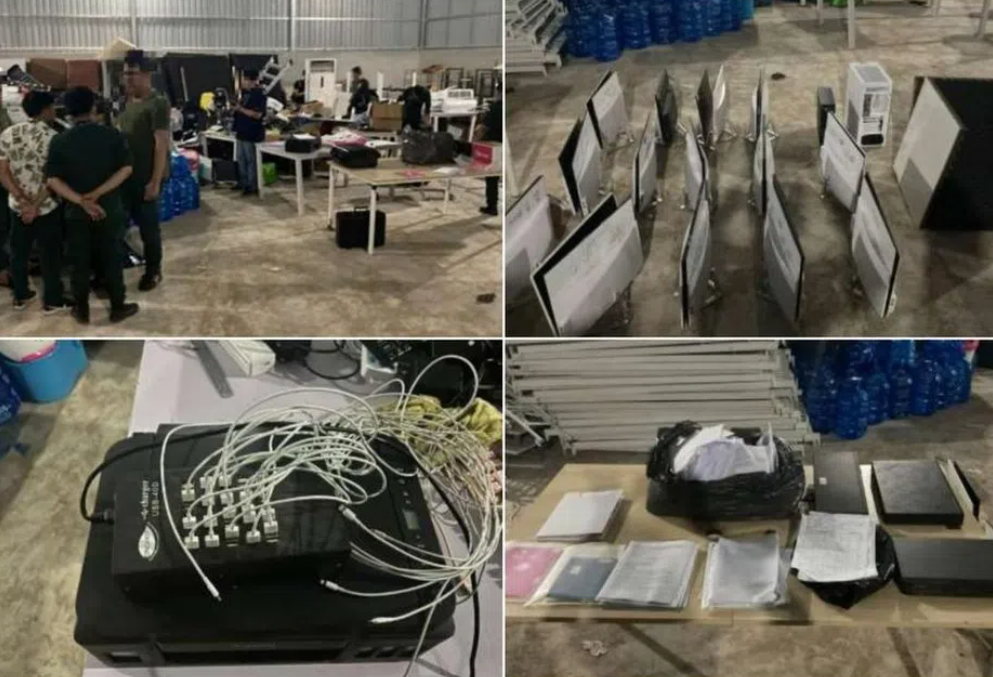
Tang Soon Wah, identified as one of the syndicate's leadership figures, personally facilitated their recruitment process. He invited both men to Cambodia to tour the five-storey facility where scam operations were conducted, a compound complete with security guards stationed at its perimeter. The operation's physical infrastructure and professional presentation suggest an organisation of considerable scale and sophistication. After returning to Malaysia to deliberate, Yip and Jason made their decision and flew to Cambodia on November 21, 2024, ready to begin their new employment.
Yip commenced work the following day, tasked with impersonating a banking officer to convince targets into financial transfers. The syndicate provided structured training materials including prepared scripts and coaching on accent and vocal delivery to appear more convincing to Singaporean-speaking victims. However, despite adhering precisely to the provided dialogue and applying the trainers' guidance, Yip proved entirely unsuccessful in his criminal endeavour. When he attempted the same task on November 23, 2024, his performance remained equally dismal. Having failed to successfully deceive a single victim across his two days of actual work, Tang made the decision to terminate his employment and subsequently erased all digital communication records with him.
The brevity of Yip's criminal career reflects broader structural realities within such syndicates. These operations maintain rigid hierarchical organisations where leadership manages overall strategy, supervisors and trainers oversee frontline operatives, money launderers convert criminal proceeds into cryptocurrency, and callers like Yip execute the actual fraud. The syndicate in question employed at least 78 suspected members across these various tiers. Beyond Yip's incompetence as a caller, his early termination demonstrated that even a few days of exposure to the conspiracy was sufficient to trigger criminal liability upon arrest.
The scale of the operation that briefly employed Yip becomes apparent through court disclosures regarding its scope and impact. Between September 3, 2024, and September 5, 2025, the same syndicate orchestrated at least 528 verified scam cases generating approximately S$52.5 million in confirmed losses. These figures represent only reported instances; actual numbers are likely substantially higher, as fraud victims often remain unaware of successful schemes or decline to report them to authorities. The financial toll underscores how these transnational enterprises inflict considerable damage across entire victim populations.
Yip's arrest occurred on September 9, 2025, when Singapore police and Cambodian National Police executed a coordinated operation targeting the syndicate. He was among 12 individuals charged with syndicate membership, marking him as merely one component within a much larger enforcement action. Of his co-accused, nine were Singapore citizens: Deon Tan Ke Yuan, 25; Lester Ng Jing Hai, 29; Christy Neo Wei En, 29; Heiqal Lee, 30; Tay Jun Xiang, 32; Ng Wei Kang, 33; Zachary Lee Jia An, 35; Melvin Tan Wenzheng, 35; and Lau Haoxiang, 39. Two additional defendants were Malaysian Muhamad Asyraf Anuar, 29, and Filipino national De Villar Rizalyn Panganiban, 34.
The case highlights how readily criminals from multiple Southeast Asian nations collaborate on transnational fraud schemes. The participation of Malaysian and Filipino nationals alongside Singaporeans demonstrates how scam syndicates recruit across borders, exploiting regional labour mobility and linguistic commonalities to build diverse teams. For Malaysian authorities and citizens, Yip's conviction serves as stark testimony to the severe consequences of even tangential involvement in such criminal enterprises, particularly when spanning international borders.
Government official impersonation scams, the specific category under which this syndicate operated, have become an escalating threat across Singapore. While overall scam cases declined in 2025, government impersonation fraud more than doubled from 1,504 cases in 2024 to 3,363 cases in 2025, making it the fifth most prevalent scam category. This trend suggests that sophisticated criminal organisations have deliberately shifted strategy toward this particular fraud method, recognising its effectiveness in targeting anxiety about government matters and official authority.
Under Singapore law, membership in an organised crime group carries substantial penalties. Convicted offenders face potential fines reaching S$100,000, imprisonment extending to five years, or both sanctions applied concurrently. Yip's sentence of 16 months and two weeks, while shorter than the maximum possible term, still reflects judicial acknowledgment of the serious nature of syndicate membership despite his personal failure to execute successful fraud. The comparative leniency suggests his complete inability to harm any victims weighed in his favour during sentencing considerations.

