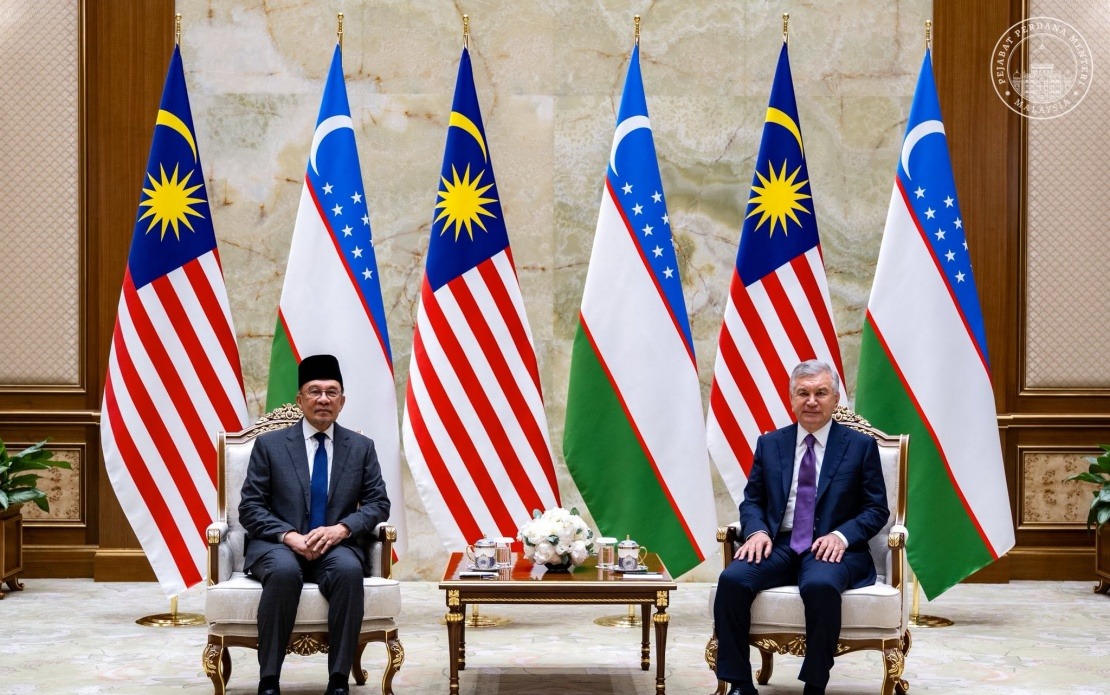
Prime Minister Datuk Seri Anwar Ibrahim has identified substantial potential for Malaysia and Uzbekistan to expand their partnership across multiple strategic economic and cultural domains. The two nations discussed deepening collaboration in energy, trade, investment, education, the halal industry, and tourism during a significant diplomatic encounter in Tashkent. The meeting took place during a transit stop as Anwar travelled to Kazan to attend the ASEAN-Russia Commemorative Summit from June 17-18, underscoring the importance both capitals attach to strengthening bilateral relations amid broader regional diplomatic engagements.
The brief but substantive dialogue between Anwar and Uzbekistan President Shavkat Mirziyoyev allowed the leaders to exchange perspectives on consolidating ties that have demonstrated steady growth across various sectors. This engagement reflects Malaysia's broader strategy of deepening relationships with Central Asian nations, a region increasingly relevant to Southeast Asian interests as geopolitical dynamics shift. The timing of the meeting also signals Malaysia's recognition of Uzbekistan's growing strategic importance in Central Asia and its expanding role as a bridge between regions.
Energy cooperation emerged as a particularly significant area of discussion between the two governments. Malaysia and Uzbekistan identified considerable scope for strengthening collaboration in the gas and petroleum industries, sectors critical to both nations' economic development trajectories. Such cooperation transcends mere commercial transactions; it represents a mutual interest in enhancing energy security and advancing shared sustainability objectives. For Malaysia, diversifying energy partnerships beyond traditional suppliers strengthens its energy resilience, whilst for Uzbekistan, engagement with Southeast Asian markets provides access to sophisticated demand centres and technological expertise.
Beyond conventional trade and investment frameworks, both nations recognised the importance of advancing cooperation in preserving and upholding the intellectual and cultural treasures of Islamic civilisation. This dimension reflects shared commitments to scholarly traditions and the historical contributions of Islamic civilisation to human advancement. For Malaysia, engaging Central Asian partners on these cultural foundations strengthens regional soft power networks and reinforces its position as a bridge between Islamic and Asian worlds. Uzbekistan's own rich Islamic heritage and scholarly traditions create natural intellectual synergies with Malaysia's educational and religious institutions.
The halal industry represents another promising avenue for bilateral cooperation that carries particular significance for both nations. Malaysia's established expertise and global halal certification leadership positions it advantageously to support Uzbekistan's halal sector development. This partnership could facilitate knowledge transfer, standardisation development, and market access opportunities benefiting producers in both countries. As global halal markets expand, strategic cooperation between certified leaders and emerging producers creates mutual commercial advantage whilst promoting adherence to religious and ethical standards.
Educational partnerships featured prominently in the discussions, reflecting both governments' commitment to developing human capital and facilitating knowledge exchange. Malaysian universities and research institutions engaging with Uzbek counterparts can advance scientific collaboration whilst creating opportunities for student and scholar mobility. Such academic partnerships strengthen people-to-people connections that underpin longer-term diplomatic and economic relationships, fostering understanding between diverse populations and creating professional networks that endure across decades.
Anwar articulated a vision of bilateral cooperation extending beyond narrow economic metrics to encompassing human dignity, knowledge advancement, and inclusive development. This framing positions Malaysia-Uzbekistan engagement within a broader paradigm emphasising equitable growth and socioeconomic empowerment. For Southeast Asian readers, such articulation underscores Malaysia's commitment to partnerships that balance economic pragmatism with humanitarian values, distinguishing its approach to international relations from purely transactional frameworks.
The Prime Minister's public recognition of Uzbekistan's strengthening engagement with ASEAN nations reflects mutual diplomatic courtesies whilst acknowledging Central Asia's growing interest in Southeast Asian markets and partnerships. Uzbekistan's commitment to deepening ties with ASEAN countries signals recognition that regional prosperity requires inclusive engagement across continental boundaries. For ASEAN, such Central Asian interest validates the grouping's relevance as a stable investment destination and valuable trading partner in an increasingly multipolar global order.
Tourism cooperation represents a more underexplored but potentially lucrative dimension of bilateral engagement. Uzbekistan's historical Silk Road cities and cultural heritage hold significant appeal for Malaysian tourists and regional visitors, whilst Malaysia's status as a global tourism destination offers reciprocal attraction. Facilitating visa arrangements, promoting cultural tourism products, and developing joint tourism marketing initiatives could generate substantial economic benefits for both nations whilst fostering cross-cultural understanding through visitor experiences.
The broader context reveals Malaysia's strategic calculation that Central Asian partnerships strengthen its regional positioning and economic resilience. As global supply chains evolve and economic partnerships diversify, engagement with resource-rich and geographically strategic Central Asian nations provides valuable hedging against dependency risks. For Uzbekistan, partnerships with established Southeast Asian economies offer access to technological expertise, investment capital, and sophisticated market linkages essential for modernisation and diversification objectives.
Anwar's gesture of extending best wishes to Uzbekistan's national football team for its 2026 FIFA World Cup campaign against Colombia represented diplomatic soft power at its most accessible. Such personal courtesies, whilst seemingly minor, reinforce warmth in bilateral relationships and demonstrate leaders' investment in mutual success across domains beyond formal state business. The moment illustrates how contemporary diplomacy operates through multiple channels simultaneously, combining high-level strategic discussions with relatable cultural references that resonate with broader populations.
The Malaysia-Uzbekistan engagement exemplifies pragmatic multilateralism where nations identify concrete cooperation opportunities whilst acknowledging shared values and cultural heritage. As Southeast Asia navigates increasingly complex international relationships, Malaysia's demonstrated capacity to develop meaningful partnerships with diverse regions—from Central Asia to Russia to traditional ASEAN neighbours—reflects diplomatic sophistication serving national interests. The Tashkent meeting, though brief, signals strengthened commitment to translating identified opportunities into tangible economic and cultural outcomes benefiting both populations.