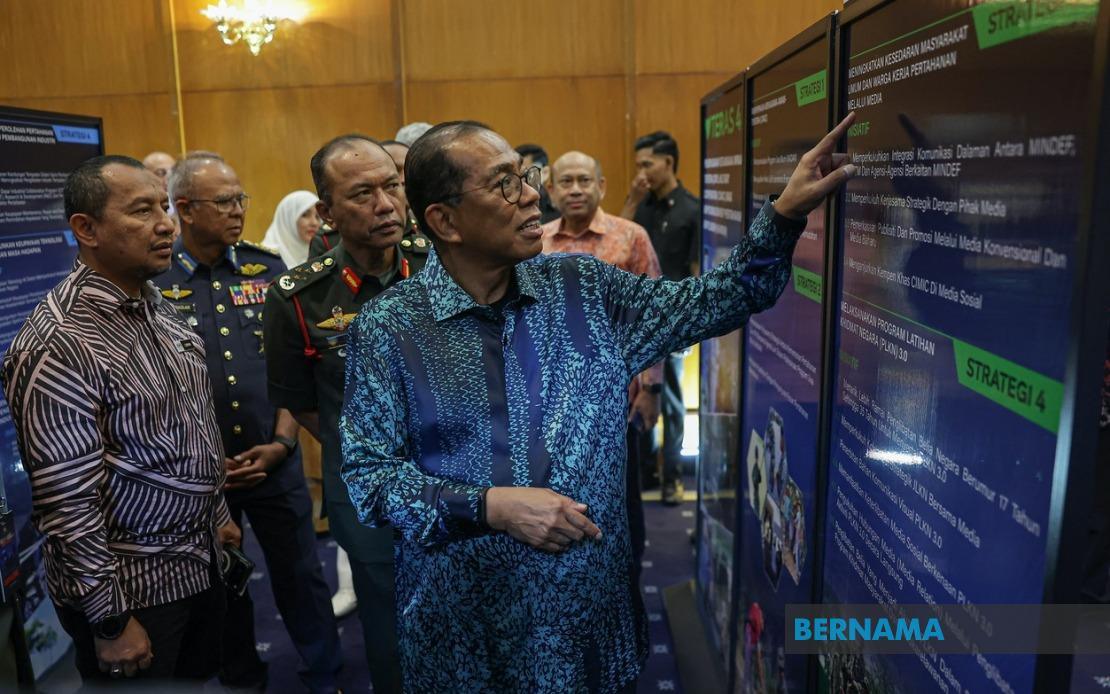
Malaysia has taken a major step toward modernising its defence architecture with the launch of two interconnected strategic documents designed to guide military development through 2030. Defence Minister Datuk Seri Mohamed Khaled Nordin unveiled the National Defence Strategic Plan (PSPN) and the Defence Capacity Blueprint (RTKP) at a ceremony in Kuala Lumpur on June 25, marking a deliberate effort to ensure the country's defence posture remains agile and responsive to an increasingly unpredictable global security environment.
The twin documents represent an evolution of Malaysia's existing Defence White Paper, building upon its framework while addressing gaps identified during a comprehensive mid-term review. Rather than abandoning the foundational strategy, these new instruments serve as operational roadmaps that translate broad strategic principles into concrete action plans and resource allocation mechanisms. This tiered approach reflects sophisticated strategic planning that recognises the difference between defining strategic direction and executing it within realistic budgetary and organisational constraints.
Mohamed Khaled articulated the geopolitical rationale underpinning these plans with particular emphasis on the mounting complexity facing defence establishments worldwide. The modern security landscape extends far beyond traditional interstate conflict, encompassing artificial intelligence proliferation, automated weapons systems, and asymmetric threats that defy conventional military responses. For Malaysia, positioned at a strategic crossroads within Southeast Asia with significant maritime interests and critical trade routes, these emerging challenges carry particular salience. The region's strategic importance ensures that developments in global security—whether technological or geopolitical—inevitably ripple through Malaysian defence planning considerations.
The PSPN itself rests upon seven strategic pillars that collectively address the multifaceted nature of contemporary defence management. Operational readiness of the Malaysian Armed Forces forms the foundational pillar, ensuring that personnel and equipment maintain capacity to respond to immediate threats. Enhancement of defence capabilities addresses the modernisation imperative, particularly relevant given Malaysia's ageing platform inventory and the accelerating pace of military technological change. Personnel welfare and veteran support reflect recognition that military readiness ultimately depends on human capital—attracting, retaining, and caring for skilled professionals in an increasingly competitive labour market. The inclusion of defence technology and innovation signals commitment to developing indigenous capabilities rather than relying exclusively on foreign procurement, a strategic calculus that carries both fiscal and sovereignty implications.
The RTKP complements the PSPN by confronting the often-neglected reality that strategic ambition routinely outpaces organisational and fiscal capacity. This blueprint functions as a capacity audit and development instrument, systematically addressing financial resources, human capital, technological expertise, and inter-agency coordination. Mohamed Khaled's characterisation—that the PSPN defines destinations while the RTKP ensures the journey is feasible—encapsulates a mature understanding of strategic planning's practical dimensions. Without corresponding capacity investments, strategic plans devolve into rhetorical exercises generating expectations they cannot fulfil.
The capacity blueprint reflects sophisticated systems thinking about the entire defence ecosystem. It acknowledges that defence capability emerges not merely from Defence Ministry initiatives but from coordinated action across government agencies, academia, industry, and society broadly. This whole-of-government and whole-of-society framing represents a departure from narrower conceptions of defence as a military-only responsibility. For Malaysia, this inclusive approach carries particular relevance given the need to mobilise diverse national resources against transnational threats ranging from terrorism to maritime piracy and cybercriminal networks that respect no bureaucratic boundaries.
Concrete capacity development spans financial mechanisms, human resource strategies, leadership development pathways, professional competency frameworks, and innovation infrastructure. Each element addresses specific bottlenecks historically constraining Malaysian defence modernisation. Financial capacity improvement matters given competing budgetary demands and the resource intensity of modern military equipment. Human capital enhancement responds to chronic recruitment and retention challenges in technical fields where civilian opportunities often offer superior compensation. Technological expertise building addresses Malaysia's historical reliance on foreign partners for advanced capabilities, shifting emphasis toward developing indigenous understanding and adaptation capacity.
Recent equipment acquisitions demonstrate the plans' immediate practical application. The Defence Ministry received three ANKA Medium Altitude Long Endurance Unmanned Aircraft Systems in March, with these systems now operationally deployed at Labuan Air Base. These platforms expand Malaysian intelligence, surveillance, and reconnaissance capacity—critical capabilities for monitoring maritime zones and terrestrial boundaries. The ANKA systems represent strategic choices in modernisation, providing persistent surveillance capabilities at significantly lower operational costs than manned alternatives while reducing pilot risk exposure.
The acquisition pipeline outlined by Mohamed Khaled reveals substantial ongoing commitments to capability enhancement. Forthcoming delivery of FA-50M light combat aircraft addresses fighter aircraft modernisation needs, introducing significantly more advanced platforms than current inventory. Maritime patrol aircraft acquisitions strengthen naval domain awareness, particularly important for an archipelagic nation reliant on maritime trade and possessing extensive exclusive economic zones requiring monitoring. The second batch of Littoral Mission Ships enhances coastal defence and constabulary capabilities across Malaysia's extensive coastline and internal waterways.
These hardware acquisitions gain significance when viewed through the RTKP lens. Equipment procurement represents only one dimension of capability development. The aircraft and ships prove operationally effective only when supported by adequately trained personnel, sustainable maintenance infrastructure, compatible communications systems, and integrated command structures. The capacity blueprint ensures attention to these less visible but equally critical enablers, preventing recurrence of historical patterns where advanced equipment acquisitions faltered due to insufficient supporting infrastructure.
The strategic planning documents' release carries implications extending beyond Malaysia alone. Southeast Asia confronts shared security challenges including maritime disputes, terrorist networks, trafficking, and great power competition for regional influence. Malaysia's approach to defence modernisation and capacity building establishes a regional reference point. Other ASEAN members face similar security environments and comparable resource constraints, making Malaysian experience with strategic planning and capability development potentially instructive for regional partners wrestling with comparable modernisation challenges.
The emphasis on adaptability and responsiveness embedded within these strategic documents acknowledges that 2030—the planning horizon—represents not a fixed destination but a waypoint in continuous evolution. Technology will advance further, geopolitical circumstances will shift, and new security challenges will emerge. Strategic planning frameworks that build in mechanisms for regular review and adjustment prove more durable than static documents that rapidly become obsolete. Malaysia's explicit commitment to mid-term reviews and adaptive capacity building suggests institutional maturity in recognising that effective strategy requires continuous calibration rather than rigid adherence to predetermined plans.
Implementation fidelity will ultimately determine whether these strategic documents generate tangible improvements in Malaysian defence preparedness. Well-intentioned plans frequently encounter resistance from institutional inertia, bureaucratic fragmentation, budget pressures, and political shifts. The whole-of-government approach necessitates coordination across Defence Ministry, armed services, other government agencies, and civil society—a complexity multiplier that can either generate synergies or create coordination failures. Sustained political commitment and clear accountability mechanisms will prove essential for translating strategic intent into operational reality.

