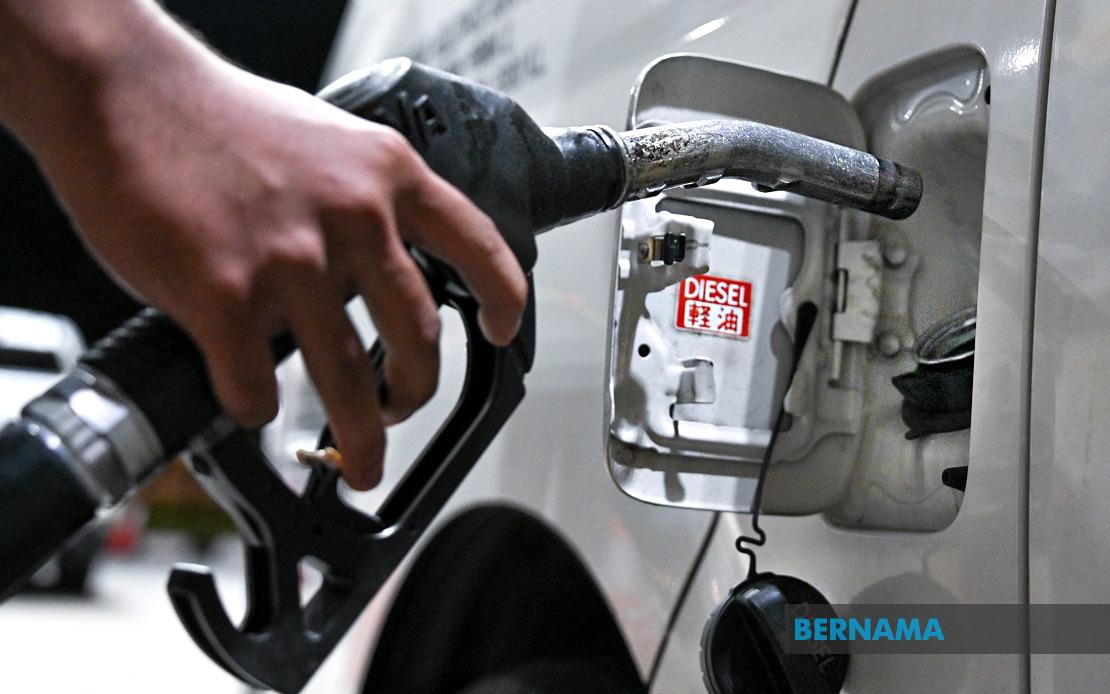
Malaysia's government is banking on a revamped diesel subsidy scheme to recover billions in lost revenue while maintaining affordable fuel for qualifying citizens. The BUDI MADANI Diesel programme, set to launch on July 1, represents a significant pivot toward targeted rather than blanket fuel subsidies, with Second Finance Minister Datuk Seri Amir Hamzah Azizan projecting annual savings of up to RM2 billion through the elimination of subsidy leakages that have drained the national coffers.
The scheme will fix the price of subsidised diesel at RM2.10 per litre for eligible Malaysian private vehicle owners, who will be identified and verified through a MyKad-based system similar to the existing BUDI RON95 petrol programme. Some 700,000 qualifying diesel vehicle owners nationwide will have access to this subsidised rate at participating petrol stations, marking a departure from universal subsidies that have historically benefited smugglers and commercial operators with no legitimate claim to government support. The government's decision to introduce identity verification reflects lessons learned from earlier subsidy schemes that proved vulnerable to systematic abuse.
The fiscal pressure driving this overhaul is substantial. Monthly subsidy costs for petrol and diesel ballooned from around RM800 million to nearly RM4.9 billion by April, largely driven by surging global crude oil prices and unprecedented domestic consumption patterns that far exceed reasonable estimates of actual need. These figures provided compelling evidence that leakages had spiralled beyond manageable levels, consuming resources intended for citizens and pushing government finances to unsustainable levels.
One of the most striking indicators of subsidy abuse emerged from consumption data in Sabah and Sarawak, where diesel usage has climbed to nearly two billion litres annually against an estimated genuine requirement of approximately one billion litres. This suggests leakages of around one billion litres yearly in East Malaysia alone, largely attributed to cross-border smuggling into Brunei and Indonesia, where global diesel prices command substantial premiums. Plugging such leaks without compromising legitimate supply to these states remains a critical implementation challenge.
Nationwide, diesel consumption jumped abnormally from roughly 624 million litres per month to approximately 1.2 billion litres monthly, an increase inconsistent with economic fundamentals or population trends. Amir Hamzah attributed these spikes to deliberate exploitation of subsidy channels, where commercial operators and smugglers obtained heavily subsidised fuel intended only for private motorists, then diverted it for profit. Such activities not only depleted government reserves but risked creating artificial scarcities that could disrupt legitimate supply chains and threaten transport and logistics sectors dependent on stable fuel availability.
The introduction of MyKad verification directly addresses these vulnerabilities by creating a digital checkpoint that links subsidised fuel access to individual citizen identity. This mechanism mirrors the approach already deployed under BUDI RON95, suggesting the government has confidence in its technical feasibility and effectiveness. The early-access period beginning June 27, 2026, for eligible owners in Peninsular Malaysia allows the system to be stress-tested and refined before the nationwide rollout on July 1, reducing the risk of technical failures or widespread disruption during full implementation.
Existing beneficiaries of BUDI Diesel Individual support, currently receiving RM400 monthly cash assistance, will transition seamlessly to the new mechanism without submitting fresh applications. Replacing cash transfers with point-of-sale subsidies through MyKad verification offers the government better control over benefit distribution and reduces the administrative burden on recipients, who previously had to register separately for cash payments. The automatic migration approach minimises disruption to vulnerable groups, though it relies on accurate identification of eligible beneficiaries in government databases.
For Malaysian consumers, the RM2.10 per litre price point represents a considerable discount to the global price, which has historically averaged above RM3.00 per litre in recent years. This pricing balances the government's fiscal constraints against the need to protect household and small business transportation costs, sectors where fuel expenses directly impact living standards and competitiveness. The subsidy, once recovered savings are factored in, becomes more sustainable long-term than universal schemes that inevitably attract disproportionate smuggling and diversion.
The BUDI MADANI Diesel programme signals a strategic shift toward conditional, means-tested subsidies rather than indiscriminate price controls. This aligns with international best practice in subsidy reform, where targeted schemes have generally reduced fiscal leakage while maintaining protection for vulnerable populations. However, the success of this model depends critically on the robustness of MyKad verification systems, the capacity of petrol station networks to process identity checks efficiently, and consistent enforcement against those attempting to bypass or circumvent the mechanism.
Minister of Domestic Trade and Cost of Living Datuk Armizan Mohd Ali and Treasury Secretary-General Tan Sri Johan Mahmood Merican's presence at the announcement underscored the whole-of-government commitment to implementation, spanning trade regulation, inflation management, and fiscal discipline. This coordination will be essential, as the transition period may see temporary supply disruptions, price volatility at pump level, or public confusion about eligibility criteria that requires rapid, unified communication from multiple agencies.
The RM2 billion in projected annual savings, if realised, would free substantial resources for redirection toward social safety nets, infrastructure, or debt servicing—competing priorities that have constrained government budgets. However, achievement of these targets requires near-perfect plugging of subsidy leaks and sustained discipline in preventing new forms of gaming the system. The government's willingness to undertake this politically challenging reform despite inevitable complaints from affected parties suggests awareness that the status quo was genuinely unsustainable.

