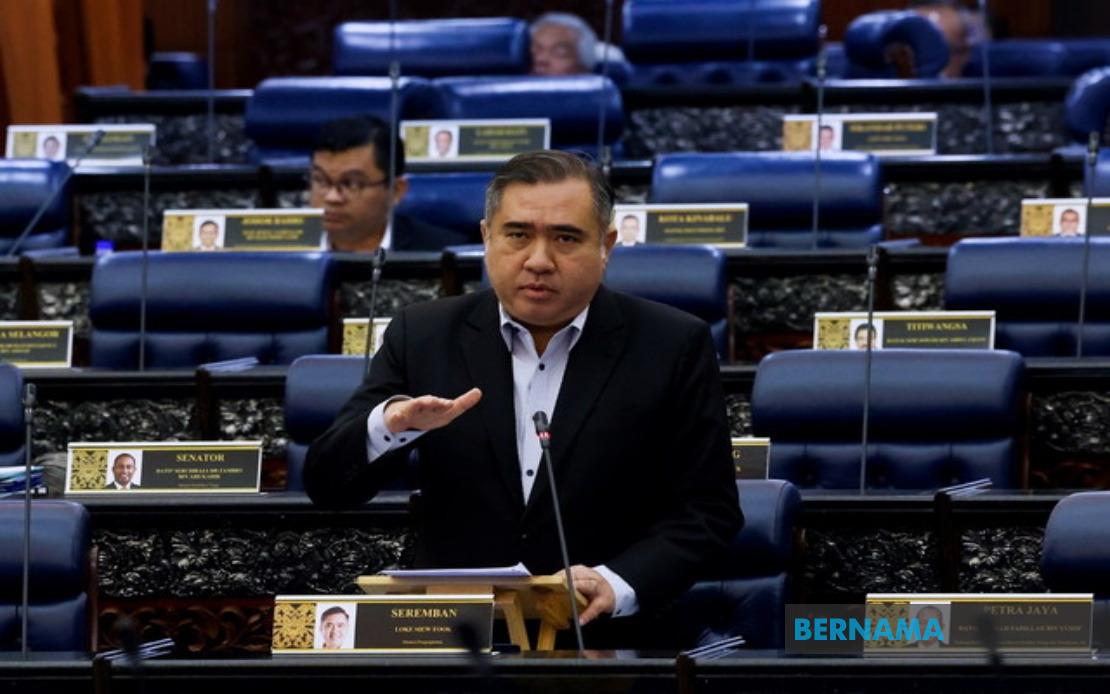
Malaysia's Transport Ministry has unveiled plans to establish a formal compensation framework for victims of fatal and serious road accidents, marking a significant shift in how the legal system addresses the human and financial costs of traffic tragedies. The proposed amendments to the Road Transport Act 1987 would empower courts to order convicted offenders to provide financial restitution to victims or their lawful next of kin, Transport Minister Anthony Loke told Parliament on July 14. The move reflects growing recognition that current penalties treat dangerous drivers too leniently and fail to adequately address the devastation experienced by bereaved families and injured parties across Malaysia.
Under the proposed framework, judges would exercise discretionary authority when determining compensation amounts, evaluating multiple factors specific to each case. The severity and nature of injuries sustained, the extent of economic and non-economic losses suffered by victims and dependents, and the convicted offender's financial capacity to pay would all feature in judicial deliberations. This nuanced approach differs markedly from standardised penalty structures and acknowledges that road accidents create vastly different impacts depending on circumstances—a family losing a sole breadwinner faces dramatically different losses than those in other scenarios. By anchoring compensation decisions to individual case merits, the legislation aims to ensure justice feels proportionate to actual harm inflicted.
Loke framed the compensation initiative within a broader governmental philosophy that drivers responsible for deaths through reckless or illegal conduct should not escape with minor traffic violations. Instead, serious offences would trigger maximum legal consequences aligned with the gravity of their actions. This messaging carries particular weight in Malaysia, where road fatalities remain persistently high and public frustration with lenient sentencing has mounted. The minister's emphasis on distinguishing between ordinary traffic violations and crimes causing death signals a policy recalibration that prioritises victim protection and offender accountability over the administrative convenience of treating all driving infractions uniformly.
Paralleling the compensation initiative, the government has already secured parliamentary passage of the Road Transport (Amendment) Bill 2026, introducing aggressive new penalties specifically targeting illegal street racing—a persistent scourge claiming lives across Malaysian highways and urban roads. The legislation creates a dedicated offence category for illegal racing activities, rather than prosecuting participants under generic dangerous driving statutes. First-time offenders now face fines ranging from RM2,000 to RM10,000, imprisonment of up to two years, or both penalties combined. Repeat offenders confront substantially harsher consequences: fines between RM5,000 and RM20,000, imprisonment extending to five years, or combined sentences. These graduated penalties deliberately escalate consequences for serial offenders, recognising that repeat participants pose elevated danger to public safety.
A critical innovation embedded in the amendment addresses enforcement gaps that previously hampered authorities. Under prior law, legal action against street racers could only proceed following an accident—meaning dangerous individuals continued operating with impunity until tragedy struck. The revised framework radically alters this calculus by enabling prosecution of illegal racing participants before any collision occurs. This preventative approach targets the activity itself rather than waiting for catastrophic consequences to justify intervention. Authorities can now charge and convict participants in organised street racing, interrupt dangerous events proactively, and deter potential participants through credible enforcement threats rather than depending on accident investigations to build cases.
Enforcement intensity has already increased markedly under the new legislative regime. A recent Johor operation exemplified this escalated approach, resulting in 16 arrests and seizure of 260 motorcycles involved in illegal racing activities. These enforcement sweeps simultaneously disrupt organised racing networks, remove dangerous vehicles from circulation, and generate public awareness that authorities are actively targeting this behaviour. The targeted operations signal that enforcement applies across the country rather than concentrating on particular hotspots, building the perception of consistent consequences nationally. For Johor—which experiences recurrent tragic racing incidents—intensified operations address both the immediate safety crisis and public demand for visible governmental action.
Loke specifically referenced the June 1 accident at Kilometre 27 of Jalan Renggam-Simpang Renggam in Johor, which claimed five lives, as exemplifying the severity of racing-related tragedies demanding maximum legal response. The Attorney-General's Chambers directed investigations proceed under Section 302 of the Penal Code, the provision addressing culpable homicide—treating the incident as a serious criminal matter rather than mere traffic violation. This prosecutorial decision symbolises governmental determination that racing-induced fatalities trigger the full force of criminal law. Such high-profile cases shape public perception of enforcement commitment and establish precedent that racing participants face genuinely serious consequences rather than regulatory inconvenience.
Beyond legislative measures and enforcement operations, Loke articulated that meaningful progress against road tragedies requires complementary social and behavioural transformation. He underscored that Malaysia's road death toll—exceeding 6,000 fatalities annually—reflects systemic failures extending beyond legal frameworks into driver behaviour, cultural attitudes toward traffic rules, and public prioritisation of road safety. Educational campaigns, community engagement initiatives, and drivers' own choices fundamentally shape safety outcomes. The minister implicitly acknowledged that even rigorous laws and intensive enforcement cannot prevent accidents if drivers maintain attitudes of recklessness, invulnerability, or disregard for traffic norms. Sustainable safety improvement demands that individual Malaysians internalise road safety values and translate that commitment into daily driving decisions.
Loke's appeal for non-partisan approach to road safety represents a subtle but important signal in Malaysia's contentious political environment. By requesting that parties avoid politicising the issue, he advocated that safety improvement transcend partisan competition and reflect unified national commitment. Road safety matters affect all Malaysians regardless of political affiliation, and families grieving accident victims transcend political boundaries. The appeal for cross-party cooperation on this issue implicitly acknowledges that solutions require sustained implementation beyond single election cycles, and that politicisation diverts attention from practical measures reducing deaths. In context of Malaysian politics, such appeals for depoliticisation indicate genuine concern that political actors might exploit road safety tragedies for partisan advantage rather than advancing collective welfare.
The Transport Ministry's multi-pronged approach combining legislation, enforcement, court-empowered compensation, and public engagement reflects recognition that reducing Malaysia's road toll demands simultaneous pressure across multiple intervention points. No single lever—stricter laws, increased patrols, or public campaigns alone—suffices to overcome entrenched dangerous behaviours and normalised risk-taking on Malaysian roads. The compensation mechanism specifically addresses an equity gap: victims and families of those killed by culpable drivers faced financial devastation alongside emotional trauma, without formal legal recourse to recover losses from offenders. Formalising this compensation pathway acknowledges governments' responsibility to ensure accident consequences extend to perpetrators, not solely to innocent victims.
For Malaysian drivers and road users, these reforms carry immediate practical implications. Illegal racing participants face substantially elevated legal and financial exposure, creating credible incentives to abandon such activities. Dangerous drivers causing deaths now confront not only imprisonment but also mandated financial restitution to grieving families. These changes incrementally shift the cost-benefit calculations that influence driving behaviour—as consequences become more severe and certain, risk-taking becomes less rational. Over time, if enforcement remains consistent and public awareness of penalties grows, the reforms may gradually influence cultural norms around acceptable driving behaviour and attitudes toward illegal racing.
Regionally, Malaysia's legislative response to illegal racing positions the country within broader Southeast Asian efforts addressing this phenomenon. Neighbouring countries grapple with similar street racing phenomena and resulting fatalities, suggesting that Malaysia's legal innovations may influence or reflect regional trends in road safety policy. The explicit creation of discrete offences for illegal racing, rather than relying on general dangerous driving statutes, provides a model other jurisdictions might consider. Furthermore, the compensation mechanism represents an attempt to address road violence through victim-centred justice frameworks increasingly adopted internationally—though such approaches remain relatively uncommon across Southeast Asia.
The timing and scope of these reforms suggest sustained governmental attention to road safety rather than temporary crisis response to individual tragedies. The passage of the 2026 amendments, concurrent compensation proposal, and intensified enforcement operations indicate coordinated policy action across multiple institutional levels. Sustaining this momentum beyond initial parliamentary action represents the genuine challenge ahead. Enforcement must remain intensive, courts must apply compensation provisions generously to ensure victims feel justice, and public messaging must consistently reinforce that dangerous driving carries profound consequences. Only through sustained implementation and cultural reinforcement can legislative amendments translate into meaningful reductions in Malaysia's persistently tragic road toll.

