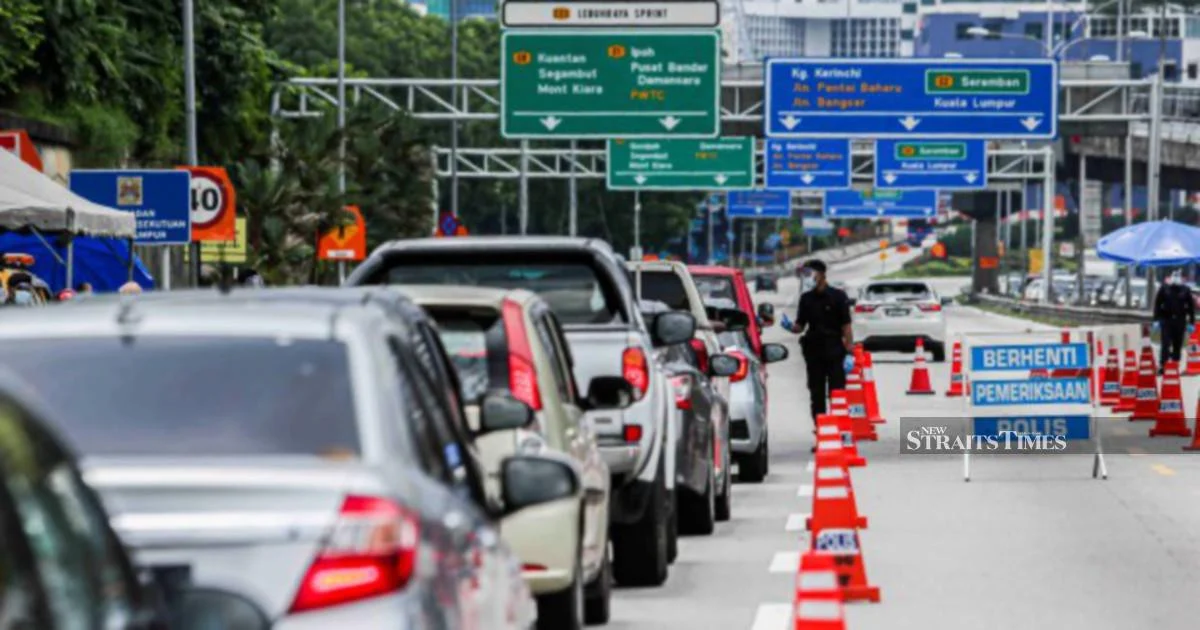
Malaysian motorists face the prospect of significantly steeper traffic fines if lawmakers pass planned amendments to the Road Transport Act 1987. The legislation, currently under parliamentary consideration, would elevate the maximum compound penalty for over 700 distinct road traffic violations to RM500, representing a substantial jump from current rates. This sweeping overhaul targets a broad spectrum of driving infractions across the nation's road network, signalling a major policy shift in how the government enforces traffic regulations.
The proposed amendments to Act 333, as the Road Transport Act is formally known, reflect mounting frustration among policymakers over persistent traffic violations and road safety concerns. Malaysia's accident statistics have long remained a flashpoint for public discourse, with unsafe driving practices frequently cited as contributing factors to fatal collisions and injuries. By substantially increasing the financial consequences of traffic breaches, authorities aim to create a more powerful deterrent that might prompt greater compliance among the driving public.
The RM500 ceiling would apply uniformly across the extensive catalogue of traffic offences currently enforced by the Road Transport Department and police authorities. This standardised approach simplifies the penalty structure while ensuring that repeated violators—those who have previously paid smaller fines without modifying their behaviour—face escalated consequences. The amendment's scope encompasses everything from minor infractions like exceeding speed limits and parking violations to more serious breaches including dangerous driving and failing to maintain vehicle safety standards.
For Malaysian drivers accustomed to relatively modest fines, the proposed increase represents a meaningful financial impact. A RM500 fine equates to approximately a day's wages for many working Malaysians, lending the penalty greater psychological weight and economic sting than previous compound rates. This consideration appears deliberate; policymakers evidently believe that fines must achieve a certain threshold to genuinely influence behaviour rather than simply functioning as a nuisance cost of driving.
The timing of these amendments also reflects broader regional trends toward stricter traffic enforcement. Several Southeast Asian countries have implemented aggressive campaigns against dangerous driving, deploying technology and enhanced penalties to combat road fatalities. Malaysia's move aligns with this regional momentum, positioning the country as serious about transforming driving culture through both punitive measures and, potentially, complementary education initiatives.
Implementation challenges, however, may temper the amendments' immediate impact. The effectiveness of higher fines depends substantially on consistent enforcement—a variable that has historically plagued Malaysian traffic regulation. Police and enforcement agencies must possess sufficient resources, training, and motivation to apply the new penalties uniformly across different regions and social classes. Without credible enforcement visibility, even RM500 fines may fail to deter repeat offenders who calculate their risk based on realistic probability of detection.
Public reception to the proposed increase appears mixed among Malaysian motorists. Some welcome stronger enforcement as a safety measure, particularly those who have witnessed or experienced traffic accidents. Others express concern about whether the government intends genuine safety improvement or simply revenue generation through fines. This scepticism stems partly from historical patterns where fine revenue has not transparently translated into road safety infrastructure improvements or driving education programmes.
The amendments' passage through parliament remains conditional, though government backing suggests reasonable likelihood of legislative approval. Parliamentary committees will presumably scrutinise the proposal's scope and rationale, potentially recommending modifications. Key considerations include whether exemptions should apply to first-time offenders, whether the increases should be phased in gradually, and whether accompanying measures like driver education incentives should be implemented alongside the penalty enhancement.
Malaysian motorists in the peninsula and East Malaysia would both fall under the enhanced penalty regime if the amendments proceed unchanged. This uniformity contrasts with the occasionally divergent approaches taken by different state governments on related transport matters, though primary enforcement authority remains federal. The financial implications could substantially affect insurance premium calculations, since traffic convictions influence risk assessments and claims history.
Economists observe that such penalty increases function as a form of regressive taxation, disproportionately affecting lower-income drivers who cannot easily absorb RM500 fines. Conversely, affluent motorists may regard the penalty as an acceptable business cost of driving without discipline, potentially limiting the deterrent effect across all income brackets. This equity concern has prompted some policy experts to suggest that graduated penalties—scaled to income or vehicle value—might achieve safety objectives more fairly.
The broader legislative context matters significantly for understanding these amendments' implications. Malaysia has previously increased penalties for serious traffic offences, including drunk driving and reckless endangerment. The current proposal extends this trend across the entire traffic violation spectrum, suggesting comprehensive philosophical shift toward more punitive enforcement overall. Whether this approach meaningfully reduces accident rates or simply generates higher revenue remains an empirical question awaiting post-implementation evaluation.
Beyond fines themselves, observers note that sustained road safety improvement requires integrated strategies combining enforcement, infrastructure investment, vehicle safety standards, and driver education. A RM500 fine addresses only the enforcement component. Without parallel initiatives addressing road design, traffic management systems, and systematic driver training reform, the financial penalty alone may produce limited behavioural change despite its heftier amount.
As parliament deliberates these amendments, Malaysian civil society organisations and safety advocates have opportunity to provide constructive input on implementation details. Transparency regarding how fine revenue will be allocated—whether toward road safety improvements, victim compensation, or driver education—could substantially enhance public acceptance of the higher penalties and demonstrate genuine government commitment to reducing traffic casualties across the nation.

