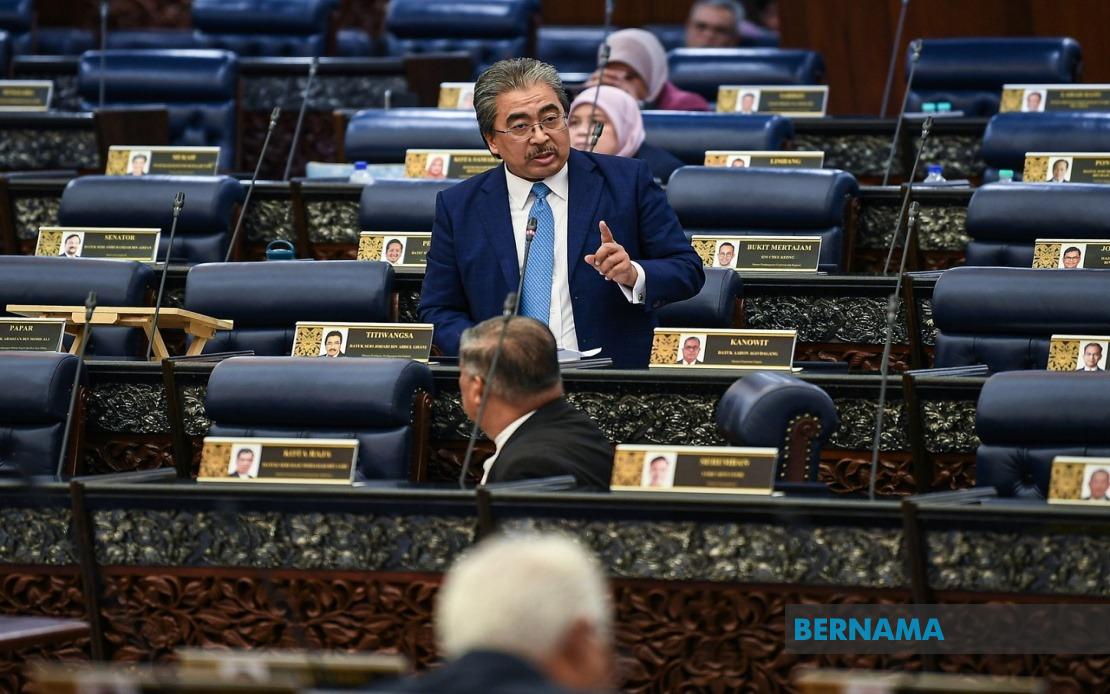
Malaysia is moving to establish a comprehensive mechanism that will prevent the entry of goods manufactured through forced labour, marking a significant shift in the country's trade governance and human rights compliance framework. Investment, Trade and Industry Minister Datuk Seri Johari Abdul Ghani announced the initiative during parliamentary proceedings, signalling the government's commitment to addressing international scrutiny over labour practices in supply chains that feed into Malaysian commerce.
The urgency behind this development stems partly from mounting pressure from major trading partners, particularly the United States, which has launched extensive investigations into countries that fail to enforce adequate safeguards against forced labour imports. Malaysia currently lacks specific legislation or mechanisms to bar such goods, leaving the country vulnerable to trade restrictions and reputational damage in international markets where ethical sourcing increasingly influences purchasing decisions and regulatory compliance.
To spearhead this effort, the government has convened an Inter-Agency Task Force on Forced Labour chaired by the Ministry of Investment, Trade and Industry. This coordinated approach reflects the complexity of the issue, requiring expertise spanning trade policy, customs enforcement, labour standards, and border security. Participating ministries include Finance, Foreign Affairs, Home Affairs, Human Resources, and Transport, underscoring how forced labour concerns intersect multiple government portfolios and operational domains.
Beyond cabinet-level departments, the task force incorporates specialized enforcement and development bodies. The Attorney-General's Chambers brings legal expertise, while the Royal Malaysian Customs Department and Malaysian Border Control and Protection Agency provide frontline implementation capacity. Additionally, the Royal Malaysian Police contribute investigative resources, and both the Malaysian Investment Development Authority and Malaysian External Trade Development Corporation offer perspectives on how trade facilitation must balance with labour protection standards.
The timing of Malaysia's initiative cannot be divorced from escalating trade tensions with Washington. In June 2026, the United States unveiled preliminary findings from its investigation into 60 countries regarding forced labour import restrictions. Malaysia was identified among 54 nations lacking specific legal frameworks to prevent such goods from entering their markets. Six other countries possessed laws but faced accusations of inadequate enforcement, a distinction that Malaysia currently risks crossing without decisive regulatory action.
Perhaps most pressing for Malaysian policymakers is the threat of punitive tariffs. US authorities have signalled plans to impose an indicative tariff of 10 percent on Malaysian exports beginning July 24, conditional on progress in addressing forced labour vulnerabilities. While this represents a preliminary figure rather than confirmed policy, the magnitude would substantially impact Malaysian exporters reliant on American markets. The calculation underscores how trade disputes increasingly leverage labour and human rights concerns as bargaining tools.
Within the broader US investigation into Malaysia, two separate inquiries are proceeding on distinct tracks. The forced labour investigation is nearing completion, accounting for the urgency and the flagged tariff deadline. By contrast, investigations into market access barriers remain ongoing, suggesting that Malaysia faces a staggered sequence of potential trade actions should it fail to satisfy American expectations across multiple dimensions.
For Malaysia, developing this mechanism carries implications that extend beyond bilateral relations with the United States. Regional and global buyers increasingly implement supply chain due diligence requirements, particularly multinational corporations operating under evolving European and other Western regulatory frameworks. By establishing credible mechanisms to prevent forced labour imports, Malaysia signals to international partners that the country takes labour standards seriously, potentially offering competitive advantages in sectors where ethical sourcing commands price premiums and market access.
However, implementation presents substantial practical challenges. Determining whether goods were produced using forced labour requires investigation capacity, international cooperation, and evidentiary standards that many developing nations struggle to maintain. Malaysia must build institutional capability to investigate claims, verify compliance among suppliers, and coordinate with source countries that may themselves lack transparent labour monitoring systems. The Inter-Agency Task Force structure suggests recognition of these complexities, though success ultimately depends on resource allocation and political will to enforce restrictions even when doing so inconveniences domestic industries or trading partners.
The broader context involves Malaysia's position within global supply chains. The country hosts significant manufacturing sectors in electronics, semiconductors, palm oil processing, and garments—industries historically flagged by international labour rights organizations for vulnerability to forced labour exploitation. Establishing credible import restrictions sends a message that Malaysia recognizes these risks and intends to address them proactively rather than waiting for foreign sanctions to force compliance.
From a regional perspective, Malaysia's initiative may influence neighbouring Southeast Asian nations facing similar American pressure. The development of Malaysian mechanisms could establish templates for Thailand, Vietnam, and other countries confronting comparable investigations and tariff threats. Conversely, if Malaysia's approach proves ineffective or faces implementation obstacles, it may signal to the region that establishing such mechanisms without corresponding investments in labour inspectorates and enforcement capacity produces only symbolic compliance.
The government's framing emphasizes proactive strengthening of trade compliance and regulatory responsiveness to partner requirements. This language reflects a strategic choice to position Malaysia as cooperating willingly with international labour standards rather than resisting them as external impositions. Such positioning may facilitate more favourable negotiation outcomes with the United States and strengthen Malaysia's standing among trading partners emphasizing corporate social responsibility.
As the July 24 deadline approaches, Malaysia's success in demonstrating meaningful progress on forced labour mechanisms will likely influence whether the threatened tariffs materialize. The Inter-Agency Task Force must transition from study and formulation to concrete regulatory frameworks and enforcement procedures capable of demonstrating to American authorities that Malaysia has meaningfully addressed the concerns underlying the Section 301 investigation.

