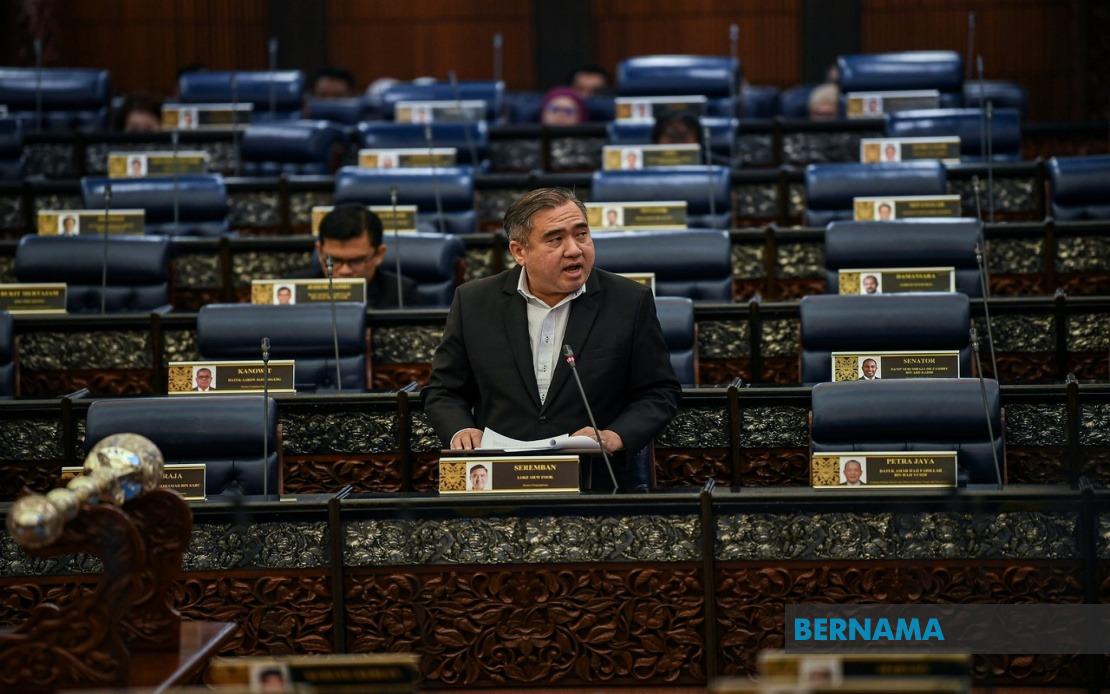
The Malaysian Parliament has taken a significant step towards tackling the persistent problem of illegal street racing by introducing dedicated criminal provisions within the Road Transport (Amendment) Bill 2025. Transport Minister Anthony Loke tabled the legislation for its second reading in the Dewan Rakyat on June 23, establishing what authorities consider a long-overdue legal framework specifically targeting racing and speed trials conducted without authorisation on public roads.
The centrepiece of the new legislation is the proposed Section 42A, which transforms illegal racing from a prosecutorial gray area into a clearly defined standalone offence under the Road Transport Act 1987. This represents a marked departure from the current enforcement landscape, where officials have historically relied on dangerous driving statutes that often prove cumbersome to apply in racing scenarios. The shift carries practical implications for road safety enforcement, as authorities will no longer need to establish that a racing incident directly caused an accident or injury before intervening.
First-time offenders convicted under the new provision face financial penalties ranging from RM2,000 to RM10,000, imprisonment lasting up to two years, or a combination of both sanctions. The graduated penalty structure intensifies considerably for those with prior convictions. Individuals convicted a second time or thereafter confront fines between RM5,000 and RM20,000 alongside potential imprisonment extending to five years, reflecting Parliament's determination to deter repeat participation in this dangerous activity. This tiered approach acknowledges that habitual offenders pose substantially greater risks to public safety than first-time participants.
Loke highlighted a fundamental enforcement challenge that the new legislation addresses. Under existing dangerous driving laws, authorities face considerable difficulty in prosecuting racing cases because such laws typically require evidence of actual harm—accidents, injuries, or fatalities—to trigger criminal liability. This reactive approach inherently disadvantages law enforcement, forcing them to wait for tragedy before taking action. The proposed amendment inverts this paradigm, enabling preventive intervention based on the act of racing itself, regardless of whether anyone suffers harm.
The practical implications for street enforcement are substantial. When multiple motorcyclists engage in impromptu speed competitions or motorists deliberately use public roads to test vehicle acceleration, authorities can now take immediate action without awaiting an accident. This proactive capacity allows traffic police and Road Transport Department officials to disrupt dangerous behaviour at its inception, potentially preventing injuries before they occur. For Malaysian road users, the amendment signals an operational shift toward interception rather than investigation after the fact.
Beyond the racing provision, the Bill introduces Section 110B, which protects enforcement personnel and strengthens operational security during traffic enforcement activities. This provision criminalises obstruction, interference with, assault against, or threats directed at enforcement officers conducting their duties. It further penalises individuals who share real-time information about enforcement operations with suspected offenders to facilitate their escape from detection. Violators face fines ranging from RM10,000 to RM50,000, imprisonment of one to five years, or both penalties combined, with the offence classified as arrestable, meaning officers can detain suspects without warrants.
The rationale underlying Section 110B extends beyond mere officer protection. Enforcement operations targeting overloading, non-compliant vehicles, and commercial transport violations have experienced increasing obstruction from individuals coordinating warning systems among offender networks. By creating criminal liability for those who alert speeding motorcyclists or lorry drivers to checkpoint locations, the amendment targets the information networks that currently undermine enforcement effectiveness. For Southeast Asian readers familiar with similar challenges across the region, this represents a recognition that modern traffic enforcement must combat not just the offenders themselves but the communication systems that sustain their evasion.
The Bill simultaneously revises the compound offer system for traffic violations, adjusting minimum financial thresholds that have remained static for years. The minimum compound amount increases from RM300 to RM500, though this change takes effect only on January 1, 2029, providing a transition period for administrative preparation. However, Loke clarified an important distinction: this increase does not mean all offenders will automatically receive RM500 compounds. Instead, the amendment raises the maximum ceiling that enforcement officers can impose, with actual amounts determined by violation severity, settlement timing, and regulatory procedures. This flexibility ensures that minor infractions do not attract excessive penalties whilst serious or repeat breaches incur appropriately elevated financial consequences.
The delayed implementation date for compound revisions reflects standard legislative practice for significant penalty adjustments, allowing the Road Transport Department and traffic enforcement agencies time to update systems, train personnel, and communicate changes to the motoring public. For vehicle owners and drivers across Malaysia, the years between now and 2029 provide ample warning of impending enforcement cost increases, though the immediate criminalization of street racing takes effect upon the Bill's passage.
The legislation arrives amid growing public concern about street racing culture in Malaysian urban and suburban areas. Young riders, particularly those operating high-performance motorcycles on highways and major roads during late-night hours, have generated numerous accident reports, vehicle pursuit incidents, and community complaints. The dedicated offence sends a clear deterrent message that Parliament views such activity not merely as traffic violations but as criminal behaviour warranting serious sanctions. For Malaysian families, the amendment represents parliamentary recognition that street racing threatens public safety on roads increasingly congested with civilian traffic.
From a broader Southeast Asian perspective, Malaysia's legislative approach mirrors growing regional awareness that traffic safety requires increasingly stringent legal frameworks. Countries across the region have gradually strengthened penalties for dangerous driving, yet most maintain ambiguous laws regarding racing specifically. Malaysia's adoption of a standalone racing offence potentially influences policy discussions in neighbouring jurisdictions where similar street racing problems persist. As road fatality rates remain stubbornly elevated across Southeast Asia, legislative innovations addressing specific dangerous behaviours gain relevance for policymakers throughout the region.
The Bill's passage through Parliament signals sustained commitment to road safety improvement as Malaysia progresses through the Decade of Action for Road Safety. Whilst the legislation focuses narrowly on racing and enforcement interference, it exemplifies the graduated approach Malaysia increasingly adopts toward traffic crime—establishing clear offences, proportional penalties, and enhanced enforcement protections. For transport authorities navigating the complex challenge of balancing road freedom with public safety, the new framework provides clearer legal tools and stronger officer protections, potentially translating into more consistent, effective enforcement across the country's expanding highway network.

