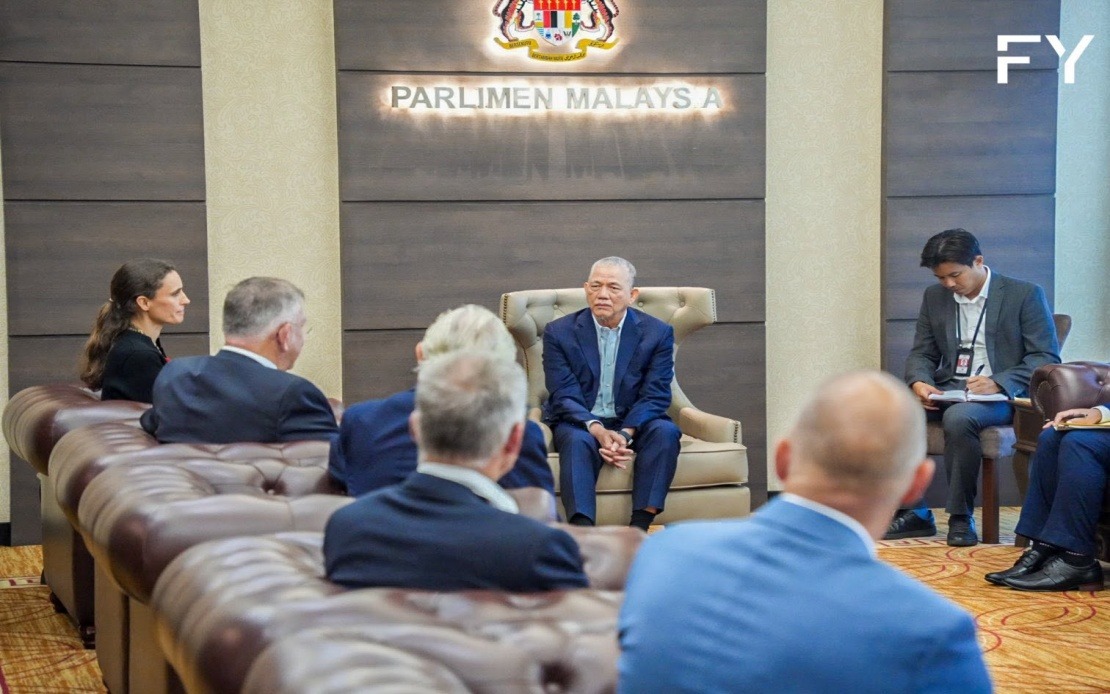
Malaysia is positioning itself as an attractive destination for German small and medium enterprises seeking to expand into Southeast Asia, with Deputy Prime Minister Datuk Seri Fadillah Yusof extending a formal welcome to businesses from Europe's largest economy. The overture came during a high-level meeting at Parliament House between Fadillah and German Ambassador Silke Riecken-Daerr, who brought a delegation from the German SME Business Association to explore deeper commercial ties. The focus on smaller German firms reflects Malaysia's recognition that innovation and technological advancement often originate from specialised mid-market companies rather than multinational corporations alone.
Green technology, renewable energy, and water management represent the priority sectors being promoted to prospective German investors. According to Fadillah, these investment areas dovetail seamlessly with Malaysia's broader sustainable development strategy, which has become increasingly central to the country's economic planning in recent years. The emphasis on environmental technologies signals Malaysia's commitment to balancing economic growth with climate and resource sustainability—a consideration that resonates strongly with German companies operating under stringent EU environmental regulations and consumer expectations. By marketing these sectors prominently, Malaysian authorities are attempting to attract businesses already accustomed to rigorous green standards, thereby importing both capital and operational best practices.
The bilateral economic relationship between Malaysia and Germany already runs deep, with over 800 German companies currently operating across various industries within the country. This substantial presence underscores the maturity of commercial ties and provides an ecosystem within which new entrants can operate with established supply chains, regulatory familiarity, and networking opportunities. Germany's traditional strengths in mechanical engineering and manufacturing technology have made it a natural partner for Malaysia's industrial base, and this historical foundation creates momentum for further expansion into emerging sectors like renewable technology.
Beyond direct investment flows, the discussions between Malaysian officials and the German delegation touched on vocational and technical education—a domain where Germany possesses world-renowned expertise. The German dual-education system, which combines classroom learning with apprenticeship training, has produced generations of highly skilled technicians and engineers, making it a benchmark globally. Fadillah recognised that importing elements of this pedagogical model could significantly upgrade Malaysia's Technical and Vocational Education and Training (TVET) infrastructure, addressing a persistent skills gap that employers across Southeast Asia have identified as a constraint on competitiveness.
The potential collaboration in TVET carries particular significance for Malaysia's medium-term economic prospects. As manufacturing becomes increasingly sophisticated and automation reshapes labour demand, the quality of vocational training directly determines whether Malaysian workers remain competitive in higher-value production processes. German expertise could help redesign curricula, establish modern training facilities, and create pathways linking classroom instruction to real-world industrial applications—precisely what Malaysia's TVET system has historically struggled to achieve at scale.
Fadillah's comments reflect a broader strategic pivot within Malaysian policymaking toward attracting quality investments rather than merely chasing volume. By specifically targeting German SMEs rather than launching generic investment campaigns, Malaysia is demonstrating a preference for businesses with established technological capabilities, strong corporate governance, and commitment to sustainable practices. This selectivity suggests confidence in Malaysia's ability to compete for discerning investors and a belief that such partnerships will generate stronger downstream benefits for the domestic economy than typical manufacturing-for-export arrangements.
The timing of this outreach also carries significance within the context of global economic restructuring. As Western companies reassess their supply chains in response to geopolitical tensions and climate concerns, Southeast Asia offers an attractive alternative to traditional sourcing from China or other heavily dependent suppliers. Germany, already facing pressures to diversify its own supply chains and reduce carbon-intensive production, may find Malaysia's combination of geographic positioning, political stability, and growing green-technology ambitions increasingly appealing.
For Malaysian stakeholders ranging from government agencies to industry associations, the cultivation of German SME interest opens multiple pathways for value creation. Technology transfer, joint ventures, and manufacturing partnerships with German firms could accelerate the sophistication of Malaysia's industrial base while creating employment opportunities for workers trained in advanced technical skills. Additionally, the presence of environmentally conscious German companies could elevate standards across Malaysia's supply chains, potentially qualifying Malaysian manufacturers for contracts with European partners bound by strict sustainability criteria.
The diplomatic language employed by Fadillah—emphasising mutual benefit and strategic cooperation—reflects confidence that Malaysia's value proposition extends beyond low costs to encompassing institutional reliability, strategic location, and alignment with emerging global priorities. However, translating such diplomatic overtures into concrete investment flows requires follow-through on domestic commitments to green infrastructure, regulatory clarity, and workforce development. The success of this initiative will ultimately depend on whether Malaysia's stated ambitions in sustainable development translate into tangible policy frameworks and incentive structures that German entrepreneurs recognise as credible and beneficial.

