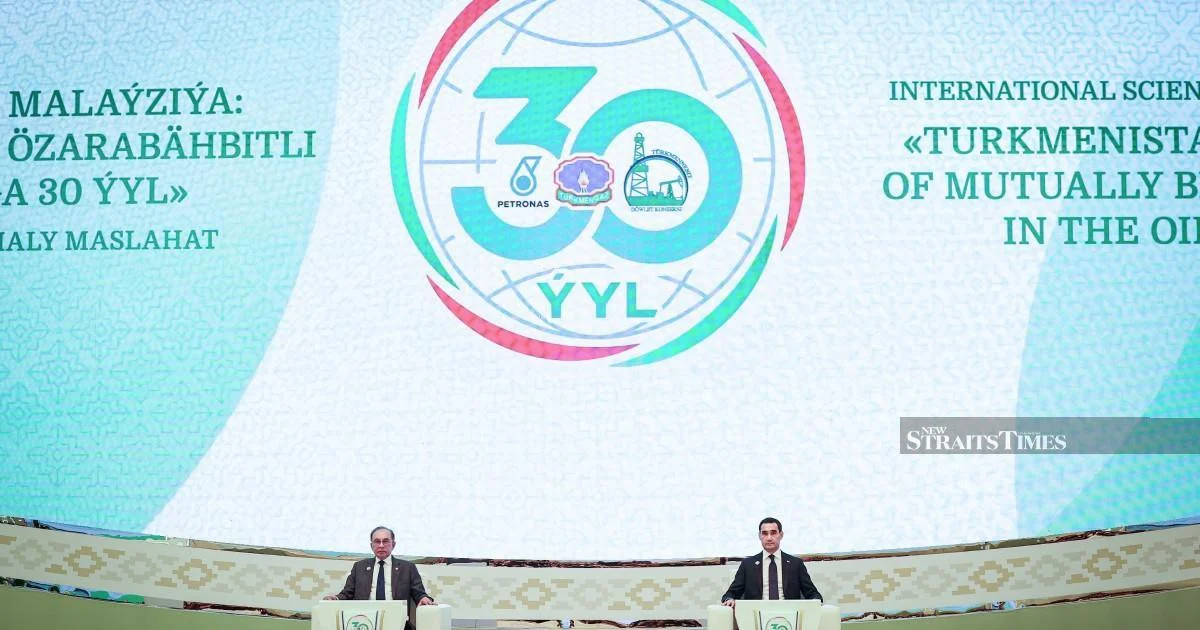
Prime Minister Datuk Seri Anwar Ibrahim's recent diplomatic missions to Russia and Turkmenistan have delivered substantive outcomes in petroleum cooperation, marking a pivotal moment for Malaysia's energy strategy in an increasingly complex geopolitical environment. The visits underscore Malaysia's pragmatic approach to diversifying energy partnerships beyond traditional alignments, particularly as global energy markets undergo structural shifts.
Anwar's engagement with Russian and Turkmen leadership reflects Malaysia's recognition that hydrocarbon security remains integral to long-term economic competitiveness. Both nations control significant reserves and production capacity within regions that have historically operated at arm's length from Southeast Asian economies. The timing of these overtures is instructive—they occur as Malaysia grapples with declining domestic petroleum reserves and faces mounting pressure to maintain energy independence while transitioning toward renewable sources. Rather than viewing these partnerships as contradictory to Malaysia's climate commitments, the government appears to be positioning them as transitional measures that ensure stable energy flows during the technological shift ahead.
Russia's hydrocarbon wealth and technological expertise in extraction and processing represent tangible assets for Malaysian engagement. The Russian petroleum sector, despite international sanctions hampering conventional financing and technology transfer, retains sophisticated capabilities in deepwater exploration, enhanced recovery techniques, and liquefied natural gas operations. For Malaysia's national oil company Petronas, which has faced technical and financial constraints in maintaining production from aging offshore fields, Russian cooperation could provide access to methodologies and equipment that enhance extraction efficiency. The commercial dimensions extend beyond crude oil; potential partnerships in petrochemicals, refining, and downstream sectors could create value-added opportunities that raw resource trading cannot match.
Turkmenistan's strategic position as Central Asia's most prolific gas producer offers complementary advantages. The nation sits atop reserves estimated at 17 trillion cubic metres, making it one of the world's most significant gas repositories. However, Turkmen gas historically flowed predominately toward Russian and Chinese buyers through established pipeline infrastructure. Malaysia's interest in accessing these supplies through new arrangements could reshape Central Asian energy corridors. For Petronas, participation in Turkmen gas projects would diversify supply sources and reduce dependence on Middle Eastern liquefied natural gas imports, thereby improving cost efficiency and supply resilience. Such cooperation also positions Malaysia as a credible participant in emerging energy architectures linking Asia to Central Asia, potentially enhancing the nation's strategic leverage in regional forums.
The geopolitical dimensions warrant careful analysis. Malaysia's simultaneous cultivation of Russian and Turkmen relationships signals independence from Western pressure to impose broad-based sanctions or boycotts on these nations. This positioning aligns with Malaysia's consistent diplomatic philosophy of maintaining equidistant relationships with global powers, a doctrine that has served the country well in previous eras. However, the approach carries commercial and reputational risks. Western capital markets, upon which Petronas and other Malaysian enterprises depend for financing major projects, may scrutinize partnerships involving sanctioned jurisdictions. Technology providers in Western countries may face regulatory constraints when supplying equipment for Russia-related operations. These complications demand sophisticated contract structuring and careful management of international legal frameworks.
For Malaysian consumers and industry, successful energy cooperation with Russia and Turkmenistan could materially reduce utility costs and enhance manufacturing competitiveness. Cheaper and more abundant energy inputs benefit power-intensive industries—petrochemicals, semiconductor manufacturing, steel production, and aluminum smelting—that form critical components of Malaysia's industrial base. The ripple effects extend to consumer electricity pricing, which has emerged as a politically sensitive issue as the cost of living rises across the region. Domestic natural gas supplies remain underutilized relative to Malaysia's conversion capacity, and additional imported volumes could optimize power generation mix and reduce reliance on coal.
The broader Southeast Asian context suggests these initiatives may catalyze regional competition and cooperation in securing energy supplies. Vietnam, Thailand, and Indonesia monitor Malaysian moves closely, each seeking to optimize their respective energy portfolios amid similar challenges of resource depletion and rising demand. Rather than fostering rivalry, however, these bilateral arrangements could establish precedents for multilateral cooperation in Central Asian engagement, potentially elevating ASEAN's collective voice in discussions with major energy producers. A coordinated Southeast Asian approach to Russian and Central Asian energy markets could generate superior terms than individual national negotiations, yet achieving such coordination requires institutional development that ASEAN has historically struggled to accomplish.
Petrolas' role as primary implementing agency merits attention. The company faces operational pressures from declining reserve replacement ratios, aging facilities requiring substantial capital expenditure, and shareholder demands for cash distributions. Strategic partnerships offering capital participation, technology transfer, and operational synergies address these constraints directly. However, Petronas must ensure that agreements protect Malaysian national interests regarding resource ownership, pricing mechanisms, and technology access. The corporation's historical negotiations with international partners establish templates that should inform these new relationships, ensuring that Malaysia avoids arrangements that subordinate national control or replicate extractive patterns that benefited foreign companies at domestic expense.
Malaysia's energy transformation encompasses not only securing fossil fuel supplies but also transitioning toward renewables and nuclear power. These Russian and Turkmen partnerships should not distract from the urgent necessity of developing domestic renewable capacity, particularly solar and offshore wind potential that remains substantially underdeveloped. The government's Green Technology Finance and Sukuk initiatives provide mechanisms for mobilizing capital toward clean energy, and prioritizing these instruments alongside conventional fuel partnerships demonstrates balanced long-term vision. Energy security increasingly requires technological flexibility—the ability to source power from multiple input types rather than dependence on any single fuel or supplier.
Investor sentiment regarding Malaysia's energy future may shift positively following these diplomatic achievements. International energy majors scrutinize country risk when deciding whether to commit capital to exploration and production activities. Demonstrable government engagement in energy diplomacy and willingness to negotiate complex arrangements signals stable operating environment and serious commitment to petroleum sector development. This positive sentiment could encourage fresh foreign investment in Malaysian deepwater exploration, downstream expansion, and energy infrastructure modernization—investments that require multibillion-ringgit capital commitments and project timelines spanning decades.
The ultimate success of these partnerships depends on implementation fidelity and capacity. Securing agreements represents the initial phase; translating commitments into operational projects, transferring technology, training personnel, and achieving commercial viability demands sustained effort and sophisticated project management. Malaysian institutions must cultivate expertise in Central Asian business practices, regulatory frameworks, and contractual norms that differ substantially from Middle Eastern or Southeast Asian contexts. Building relationships with local partners, understanding political sensitivities, and navigating complex stakeholder environments in Russia and Turkmenistan require diplomatic presence and commercial networks that Malaysia is still developing.
Anwar's diplomatic initiatives demonstrate recognition that Malaysia's prosperity increasingly depends on sophisticated engagement with diverse global partners across multiple regions. Rather than viewing energy partnerships through ideological lenses, the government appears committed to pragmatic assessment of mutual benefits and risk mitigation. As global energy markets fragment and traditional alignments fracture, Malaysia's willingness to engage constructively with non-traditional partners positions the nation advantageously for securing supplies, accessing technology, and maintaining influence in emerging configurations of international commerce. The coming years will determine whether these preliminary agreements mature into substantive partnerships that genuinely strengthen Malaysia's energy foundation.

