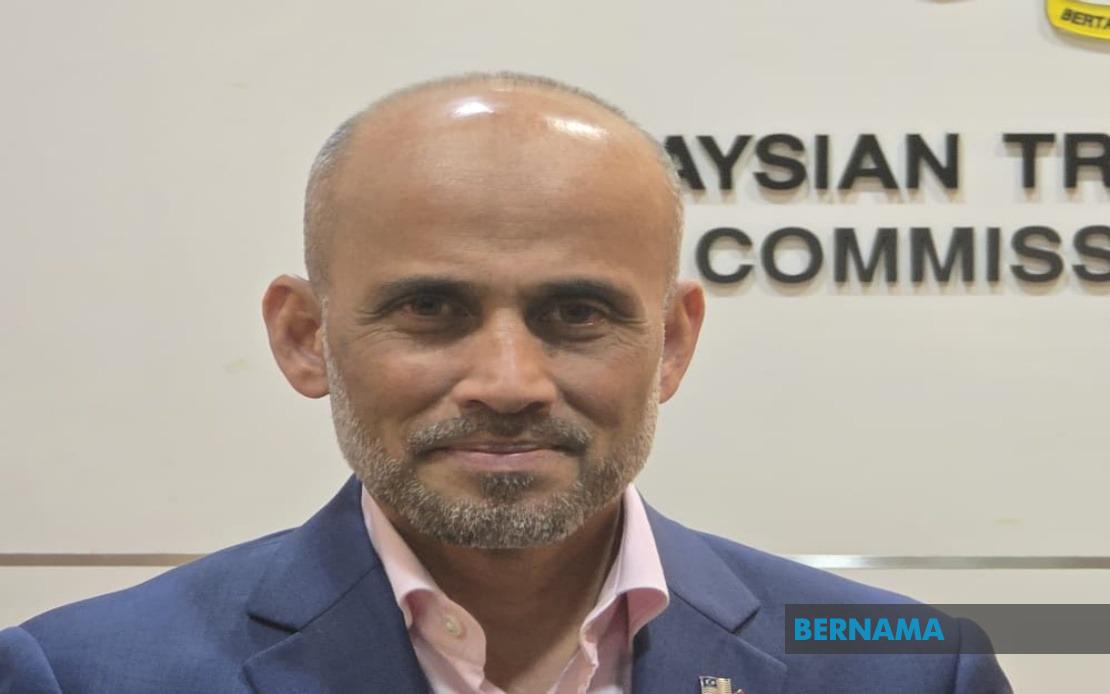
Malaysia and Singapore's diplomatic relationship has deepened measurably in recent years, anchored by mutual commitment to overcoming shared regional challenges, according to Datuk Dr Azfar Mohamad Mustafar, who is stepping down as Malaysia's High Commissioner to the island republic this month. In his five-year posting ending June 30, Azfar steered bilateral engagement through some of the most turbulent geopolitical and health crises of the past decade, emerging with what he characterizes as a stronger foundation for future cooperation. Reflecting on his tenure before his transition to the role of High Commissioner to the United Kingdom effective July 1, Azfar described the relationship as having grown substantially through careful navigation of mounting pressures that tested both nations' institutional resilience.
The pandemic emerged as the most pressing test of bilateral coordination during Azfar's appointment, which commenced in June 2021 when vaccination campaigns were still ramping up and movement restrictions remained in place. The closure of land borders, a critical measure to contain virus transmission, created immediate economic and social disruptions for the estimated hundreds of thousands of Malaysians whose livelihoods depend on daily cross-border movement into Singapore. Beyond logistical complications, the high commissioner pointed to the administrative burden imposed on consular operations, which faced an unusually demanding volume of requests and interventions. These ranged from travel documentation issues to welfare assistance for citizens stranded by abrupt lockdown measures. The successful management of these consular pressures, Azfar suggested, represented a tangible demonstration of both nations' commitment to protecting their citizens despite severe operational constraints.
Economic recovery has vindicated the optimism both governments expressed during the depths of lockdowns. Trade between Malaysia and Singapore has now rebounded to levels surpassing pre-pandemic figures, positioning Singapore once again among Malaysia's largest commercial partners. The financial flows remain substantial and sustained, reflecting the deep integration of manufacturing, financial services, and supply chain networks that bind the two economies. Azfar particularly highlighted Singapore's continued prominence as a source of foreign direct investment into Malaysia, a relationship that shows no signs of diminishing despite global investment volatility. The establishment of the Johor-Singapore Special Economic Zone represents the most visible manifestation of this deepening integration, offering Singapore investors expanded opportunities in Malaysia's manufacturing and logistics sectors while providing Malaysian enterprises access to Singapore's capital and expertise.
The special economic zone initiative carries particular significance for Johor's development trajectory and broader Malaysian prosperity. By creating a structured framework for cross-border investment and commerce, the zone promises to catalyze industrial expansion in Malaysia's southern region while channeling Singapore's excess capital and technical capabilities toward economically productive purposes. Azfar expressed confidence that this initiative will attract sustained investment commitments from Singapore-based companies seeking to establish or expand operations, particularly in sectors where labor costs and land availability favor Malaysian locations. The strategic positioning of Johor as Malaysia's gateway to Singapore creates natural advantages that regional enterprises are increasingly recognizing and exploiting.
Looking toward the near term, Azfar reaffirmed Malaysia's commitment to supporting Singapore's assumption of ASEAN chairmanship in 2025, a responsibility that carries significant diplomatic weight and organizational complexity. This endorsement carries practical implications, as ASEAN's effectiveness as a regional institution depends fundamentally on the solidarity and active participation of member states. Singapore has indicated that deepening economic integration among ASEAN members represents a priority for its chairmanship year, an objective that aligns closely with Malaysian interests in expanding intra-regional trade and investment flows. The commitment extends beyond rhetorical support to encompass concrete cooperation on specific initiatives that will define Singapore's tenure.
The ASEAN Power Grid initiative exemplifies the kind of transformative regional project that bilateral cooperation can advance meaningfully. This infrastructure undertaking aims to create interconnected electrical networks across Southeast Asia, reducing energy costs, enhancing supply security, and promoting cleaner energy transitions. Malaysia's active participation and Singapore's technical leadership can accelerate progress on this initiative, which promises substantial economic and environmental benefits for the entire region. The project also demonstrates how two neighboring nations can transcend bilateral issues to address challenges that require regional coordination and investment.
Azfar's career trajectory reflects the Malaysia's diplomatic service's emphasis on sustained engagement in critical postings. His appointment as High Commissioner to Singapore in 2019 followed diplomatic missions in France, where he served as Ambassador from 2018 to 2021, and prior administrative roles within the Foreign Ministry since 2001. This background suggests the Foreign Ministry's assessment of Singapore as a posting requiring experienced and senior diplomatic talent, underscoring the bilateral relationship's strategic importance. His move to the United Kingdom, one of Malaysia's most significant diplomatic postings given historical ties and contemporary trade relationships, indicates continued confidence in his capacity to represent Malaysian interests at the highest level.
The emphasis on continuity despite Azfar's departure carries weight in diplomatic contexts where personal relationships and institutional knowledge significantly influence bilateral outcomes. His acknowledgment that considerable work remains on the Malaysia-Singapore agenda suggests that his successor will inherit a relationship with clear momentum but also unfinished business requiring sustained attention. The outgoing high commissioner's measured characterization of his contribution—as having played a "small part" in a larger collective effort—reflects diplomatic convention while also highlighting that bilateral relationships transcend individual officials and depend fundamentally on institutional commitment from both governments.
For Malaysian readers and businesses, Azfar's observations signal a relationship positioned for continued expansion despite pervasive global uncertainty. Singapore's role as both a destination for Malaysian talent and a source of investment capital means that the health of bilateral relations directly impacts employment opportunities, entrepreneurial access to capital, and sectoral competitiveness. The continued emphasis on deepening economic ties suggests that competition for regional investment will intensify, requiring Malaysian states and enterprises to enhance their value propositions relative to rival locations. Johor particularly stands to benefit from proximity to Singapore's capital markets and technological capabilities, provided local infrastructure and governance keep pace with investor expectations.

