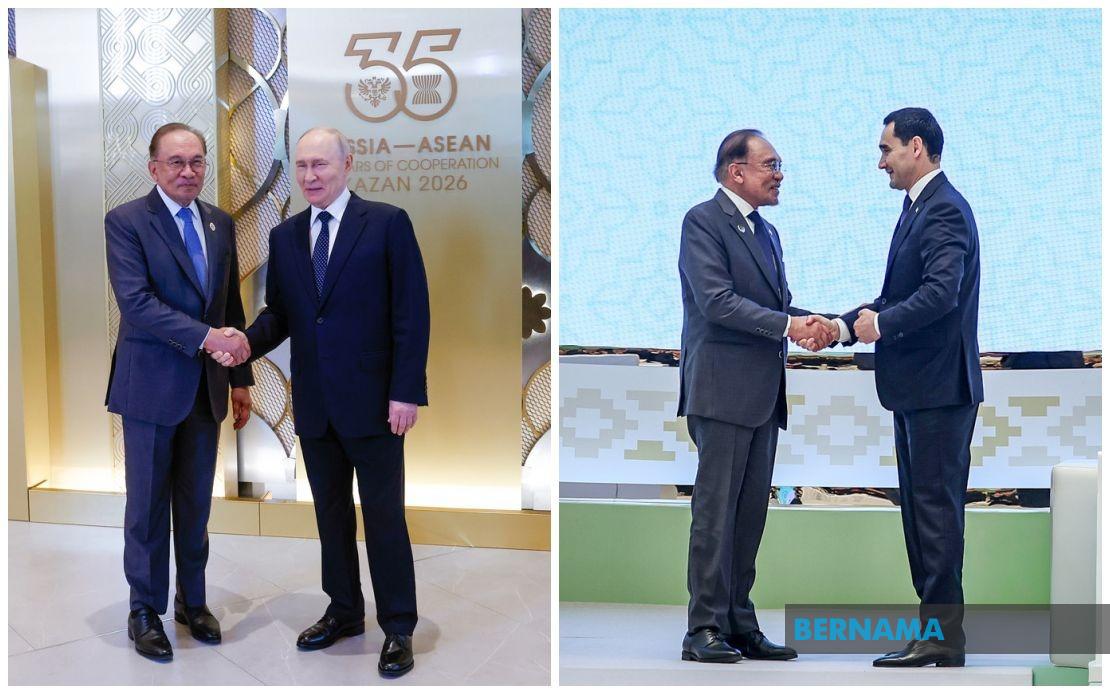
Prime Minister Datuk Seri Anwar Ibrahim's recent official missions to Russia and Turkmenistan represent a major diplomatic push to reshape Malaysia's energy landscape and elevate its standing in global energy markets. Senior government ministers have lauded the visits as watershed moments in the country's international relations strategy, citing tangible breakthroughs that extend far beyond ceremonial engagements and position Malaysia to benefit from sustained energy security over the coming decades.
The centrepiece of the Russia visit, conducted in Kazan in the Republic of Tatarstan, was securing Moscow's commitment to supply Malaysia with crude oil, petroleum products and gas over a two-decade timeframe. This represents a fundamental departure from Malaysia's traditional reliance on shorter-term supply arrangements negotiated on an annual or seasonal basis. Housing and Local Government Minister Nga Kor Ming emphasised that this long-term security underpins the government's broader energy diversification strategy, which he described as integral to sustaining domestic fuel subsidies and maintaining the stability of programmes such as BUDI MADANI RON95. By locking in supplies from a major energy producer like Russia, Malaysia can better manage price volatility and ensure consistent fuel availability for consumers, with petrol currently subsidised at RM1.99 per litre.
The energy agreement carries particular significance given Malaysia's geographical position in Southeast Asia and its exposure to global energy market fluctuations. Securing a two-decade supply arrangement removes considerable uncertainty from Malaysia's energy planning and allows policymakers to build more robust long-term strategies for industrial development, transportation infrastructure and household energy needs. The arrangement moves beyond the transactional model that has characterised much of Malaysia's international energy purchasing and instead establishes a partnership framework predicated on stability and mutual benefit.
Equally significant is Petronas's appointment as operator of one of Turkmenistan's largest gas fields, a development that minister Nga characterised as a potential game-changer for Malaysia's flagship energy corporation. Petronas currently ranks 139th in the Fortune Global 500, and successful management of a major Turkmenistan gas asset could substantially elevate its market position and competitive standing. The operational responsibility demonstrates confidence from Turkmenistan's government in Petronas's technical capabilities, project management expertise and commercial acumen. For Malaysia, having a home-grown company lead operations in a world-class energy asset serves as a powerful endorsement of the country's technical prowess and professional standards in the energy sector.
Human Resources Minister Datuk Seri R. Ramanan framed the Petronas appointment within a broader narrative about Malaysian competitiveness on the global stage. The minister stressed that this assignment represents far more than a commercial contract; it validates Malaysia's capacity to compete internationally and leads globally in sophisticated industries. For a developing economy seeking to position itself as a serious player in energy markets and advanced industrial sectors, having a national champion operate a world-scale resource project carries immense symbolic and practical value. It signals to international investors and partners that Malaysia possesses the institutional strength and professional expertise necessary to execute complex, high-stakes projects.
The Turkmenistan leg of Anwar's journey underscores another dimension of Malaysia's strategic positioning: leveraging energy resources to build deeper bilateral relationships with Central Asian nations. Turkmenistan possesses some of the world's largest natural gas reserves, making it a critical player in global energy markets. Malaysia's engagement here extends beyond simple resource acquisition; it represents an attempt to weave Malaysia into networks of energy cooperation that span Asia and Europe. For Southeast Asia, this positioning potentially benefits the entire region by creating alternative supply channels and demonstrating that energy partnerships need not be dominated by Middle Eastern suppliers or traditional Western partnerships.
The visits also encompassed broader cooperation frameworks spanning trade, investment, tourism and technology transfer. Minister Ramanan highlighted particular emphasis on human capital development and skills training, suggesting that Malaysia views these energy partnerships as launching pads for technology collaboration. The execution of major gas field operations in Turkmenistan will require workforce development, technical training and knowledge transfer programmes. These elements could translate into genuine skill advancement for Malaysian professionals and create pathways for Malaysian companies to participate in energy sector value chains beyond simple resource extraction.
Anwar's statements regarding these agreements emphasised international confidence in Malaysia's political stability and institutional reliability. For a prime minister conducting sensitive negotiations with major energy producers, demonstrating that Malaysia offers a predictable, professionally-managed investment environment represents crucial diplomatic capital. Energy projects, particularly in gas field development and long-term supply arrangements, demand certainty and trustworthy governance. By framing these achievements through the lens of Malaysia's proven stability and competence, Anwar has positioned the country as a preferred partner in energy relationships that span decades.
The energy security implications for Malaysia extend into domestic economic management. By diversifying energy sources away from traditional suppliers and reducing dependency on volatile spot markets, Malaysia gains leverage in managing inflation and supporting subsidised fuel prices without unsustainable budget consequences. The BUDI MADANI RON95 programme's sustainability hinges partly on stable input costs; securing long-term Russian supplies at agreed prices creates a more predictable cost structure that permits continued subsidisation without constant budgetary pressure. This domestic benefit, while less visible internationally than large project acquisitions, carries significant weight for ordinary Malaysians facing cost-of-living challenges.
For Southeast Asia more broadly, Malaysia's success in securing these agreements may signal shifting energy geopolitics. As the region's largest energy exporter, Malaysia's engagement with Russian energy markets and Turkmenistan's gas reserves reflects a region increasingly willing to diversify its international partnerships. This strategic positioning, independent of traditional Western-dominated energy relationships, allows Southeast Asian nations greater flexibility in foreign policy and reduces vulnerability to external pressure in energy matters. Malaysia's moves may encourage other ASEAN members to explore similar bilateral energy partnerships that enhance regional energy security.
The commercial implications for Petronas warrant careful examination. Operating a major Turkmenistan gas field positions the corporation to generate significant revenues and strengthen its balance sheet. However, successful project execution in a complex Central Asian environment will test Petronas's operational capabilities and project management systems. Success could meaningfully advance the corporation's global ranking and market capitalisation, directly benefiting Malaysia's national wealth. Conversely, operational challenges could constrain Petronas's growth trajectory. The stakes are therefore substantial, with these agreements representing both substantial opportunity and considerable responsibility for Malaysia's national oil company.
These diplomatic achievements also carry implications for Malaysia's positioning within ASEAN and broader Asian geopolitics. By securing major energy partnerships with both Russia and Central Asia, Malaysia demonstrates agency and diplomatic sophistication at a time when regional alignments remain fluid. The country is neither gravitating exclusively toward traditional Western partnerships nor aligning rigidly with China-centric arrangements. Instead, Malaysia is selectively engaging multiple powers to serve its national interests. This pragmatic approach to international relations reflects Anwar's foreign policy philosophy and positions Malaysia as a serious, independent actor on the international stage rather than a follower of predetermined geopolitical scripts.

