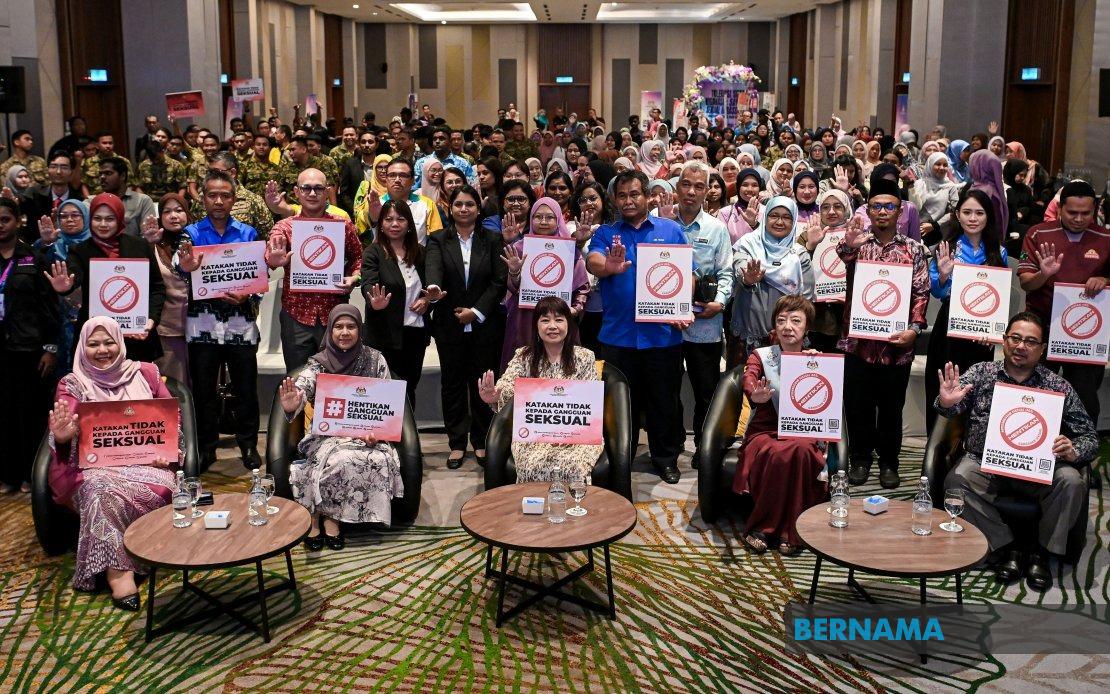
Malaysia's sexual harassment landscape has become increasingly visible, with authorities documenting 388 reported cases during the first five months of this year. Deputy Minister of Women, Family and Community Development Lim Hui Ying revealed these figures in Port Dickson on June 18, noting that the data originates from the Royal Malaysia Police records and reflects a broader pattern of disclosure rather than necessarily a spike in occurrences alone.
The numerical trajectory warrants serious attention. Police statistics demonstrate a steep climb in reported incidents, rising from 477 cases across the entirety of 2022 to 1,038 cases in 2023—more than doubling within a single year. The continued flow of reports in 2024 suggests this trend remains on an upward arc. However, Lim cautioned against interpreting raw statistics as a simple measure of prevalence. Instead, she characterised the increase as evidence of shifting social dynamics: victims and communities are gaining confidence to break through cultural barriers and reject the entrenched silence that has long enabled harassment to persist unchallenged.
The profile of harassment cases reveals troubling patterns rooted in proximity and trust. Lim identified workplaces as primary settings where harassment occurs, while perpetrators frequently maintain family connections or existing relationships with victims. This dynamic introduces profound complications that silence many survivors. Shame, fear of career repercussions, and anxiety about destabilising family bonds create formidable obstacles to reporting. These psychological and social barriers explain why official statistics likely represent only a fraction of actual incidents. The gap between reported and unreported cases reflects not victim reluctance alone, but systematic pressure within Malaysian communities that treats harassment as an inevitable or private matter rather than a breach of fundamental dignity and rights.
Crucially, Lim broadened the conversation beyond the common perception that harassment primarily or exclusively affects women. While women comprise the majority of complainants, men also fall victim to sexual harassment, though at significantly lower rates. This acknowledgment carries important implications for support services and awareness campaigns, which must avoid inadvertently marginalising male survivors or reinforcing assumptions that masculinity provides automatic protection. Comprehensive responses to harassment require recognising its capacity to harm anyone regardless of gender, while remaining sensitive to gendered patterns in reporting and victimisation.
The government has established institutional mechanisms specifically designed to accelerate justice and remove procedural obstacles. The Tribunal for Anti-Sexual Harassment, or TAGS, had received 100 complaints as of mid-June, with 82 cases resolved within 60 days of the initial hearing. This performance demonstrates the tribunal's capacity to deliver relatively swift outcomes compared to conventional legal pathways, which often extend resolution timelines across months or years. For victims weighing the emotional and practical costs of pursuing formal complaints, the prospect of relatively rapid resolution through TAGS represents a meaningful incentive to seek justice through formal channels rather than enduring harassment silently.
Beyond complaint mechanisms, the ministry is advancing broader societal transformation through the Women, Peace and Security initiative, aligned with the National Action Plan spanning 2025 to 2030. This framework extends beyond reactive enforcement to encompass prevention and institutional change, positioning women's security as integral to national stability and development. The strategy recognises that normalising harassment and tolerating gender-based violence corrodes social cohesion and undermines half the population's capacity to contribute fully to economic and civic life. By connecting women's safety to national security priorities, policymakers signal that harassment is not merely a women's issue but a matter of collective national interest.
Lim emphasised that responsibility for cultural transformation extends across society's institutions and relationships. Parents, educators, employers, colleagues, and students all bear accountability for establishing environments where harassment becomes intolerable. This distributed responsibility model acknowledges that no single enforcement body can eradicate harassment through policing and punishment alone. Instead, lasting change requires early education that teaches respect and consent, cultural shifts that reward those who speak up rather than penalising them, and strengthened support systems that help survivors navigate recovery and justice processes. Educational institutions, in particular, represent crucial leverage points where norms can be established before adult behaviours calcify.
The government provides multiple avenues for accessing support, recognising that different survivors require varied pathways to assistance. Talian Kasih 15999, a 24-hour helpline, offers counselling and psychosocial support for those processing trauma or contemplating disclosure. Local social support centres complement this infrastructure, ensuring that geographic location does not determine access to care. These services acknowledge that formal complaint processes, while necessary, represent only one element of comprehensive victim support. Many survivors require emotional processing, safety planning, and guidance navigating complex family and workplace dynamics before or alongside formal action.
Lim's framing of early intervention carries profound implications for prevention strategy. When harassment or boundary violations remain unaddressed, they frequently escalate into more severe forms of violence, with consequences radiating beyond individual victims to affect families and communities. Early response—whether through supervisor intervention, family mediation, or formal complaint—disrupts escalation patterns and protects not only immediate victims but also future targets. This prevention perspective reframes sexual harassment from an isolated interpersonal problem to a public health concern requiring systematic, early detection and response.
The Malaysian context reflects patterns visible across Southeast Asia and globally: growing documentation of harassment correlates with institutional attention, legal frameworks, and cultural shifts rather than sudden outbreaks of misconduct. As awareness increases and consequences tighten, previously silent experiences find voice in statistics and case filings. This phenomenon presents simultaneous progress and challenge. Progress lies in breaking silence and establishing accountability; the challenge emerges in mobilising resources adequate to supporting the flood of disclosure while sustaining prevention efforts that reduce future incidents.
For regional observers, Malaysia's experience offers lessons about institutional design and cultural change. Dedicated tribunals reduce delays and barriers to access; public acknowledgment from senior officials validates victim experiences and encourages reporting; and integrated support services recognise that justice processes succeed only when survivors receive complementary emotional and practical assistance. Yet statistics and mechanisms alone cannot alter the power dynamics, shame, and fear that silence harassment. Sustained progress requires patience, institutional commitment, and willingness to challenge deeply embedded cultural practices that prioritise reputation and relationship preservation over individual dignity and safety.