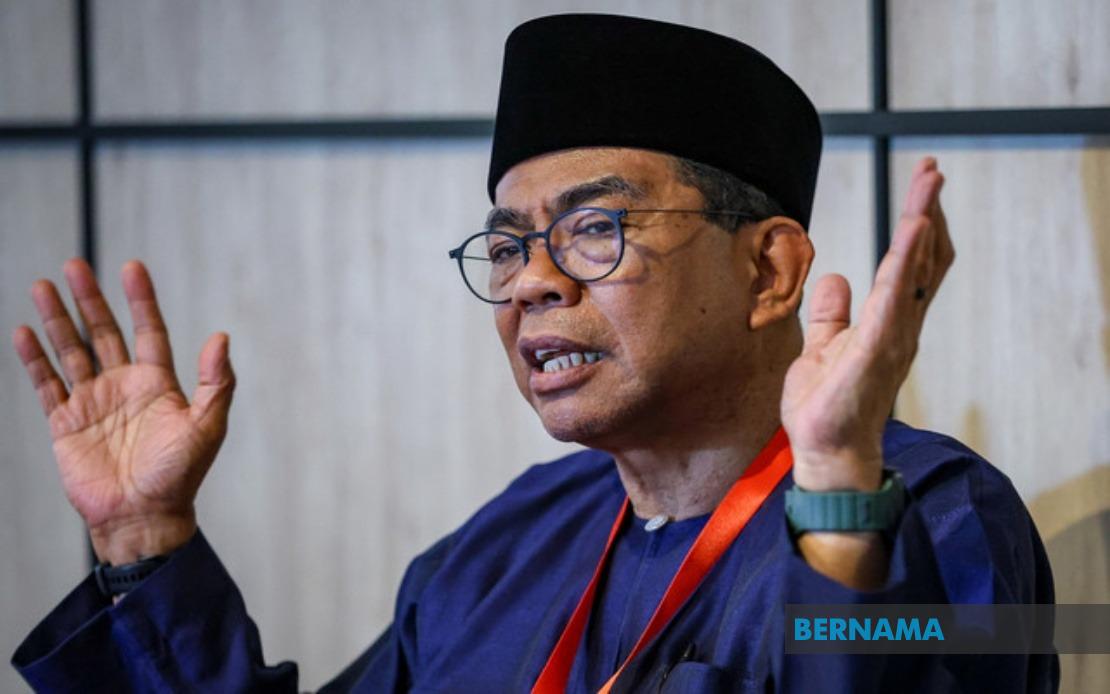
Malaysia's Defence Minister Datuk Seri Mohamed Khaled Nordin has restated the government's unwavering commitment to its non-recognition policy towards Israel, justifying recent enforcement actions against Israeli nationals as a straightforward application of established protocol. Speaking in Johor Bahru on July 25, Mohamed Khaled emphasised that Malaysia's position remains unchanged and that all administrative measures taken by authorities reflect the consistent implementation of this long-standing diplomatic stance.
The expulsion action that prompted Mohamed Khaled's remarks centred on allegations that Israeli nationals had entered Malaysia in connection with the Network School initiative in Forest City. The Defence Minister characterised the enforcement as a preventive measure designed to ensure no Israeli citizens maintained involvement with the educational project. This incident has triggered international diplomatic tensions, particularly with the United States, where members of Congress have begun questioning the wisdom of continued military cooperation with Malaysia.
Eight members of the US Congress recently sent a letter to Secretary of State Marco Rubio dated July 21, raising concerns about Malaysia's treatment of an Israeli national who allegedly used a passport from another country to circumvent border controls. The lawmakers went further than merely protesting Malaysia's actions, explicitly calling for the administration to review both security and economic partnerships with the country. More significantly, they urged Washington to consider suspending funding under the International Military Education and Training (IMET) programme unless Malaysia reversed its position within a 15-day timeframe—a deadline that places considerable pressure on Malaysian policymakers.
When confronted with questions about potential consequences stemming from the congressional letter, Mohamed Khaled dismissed concerns that Malaysia's principled stance would jeopardise military funding arrangements. He stated categorically that Malaysia's consistent enforcement of its non-recognition policy had not, to date, affected the flow of IMET programme resources. The minister's response reflected confidence in the durability of bilateral military relationships despite the current diplomatic friction, though his public reassurance may obscure underlying tensions within defence cooperation channels.
Mohamed Khaled further deflected responsibility for the congressional pressure, framing it as an internal American matter. He suggested that should members of Congress wish to condition foreign aid on Malaysia's Middle East policy, such decisions represented negotiations between those lawmakers and their own administration rather than matters requiring Malaysia's substantive engagement. This rhetorical stance, while convenient for domestic political consumption, somewhat understates the practical leverage that Congress exercises over military aid appropriations and the genuine complications such pressure can create for defence establishments dependent on American training and equipment support.
Prime Minister Datuk Seri Anwar Ibrahim has reinforced the government's position with equally emphatic language, declaring that Malaysia would not compromise on its non-recognition principle and would continue expelling any Israeli nationals discovered within the country's borders. Anwar's unambiguous commitment signals that the government views this issue as fundamental to Malaysia's foreign policy identity rather than a negotiable position subject to external pressure. His stance carries particular weight given his role as chief executive and his capacity to determine the overall direction of Malaysia's diplomatic engagement.
Simultaneously, all relevant security agencies have been directed to conduct comprehensive investigations into the circumstances surrounding the alleged entry of Israeli nationals in connection with the Network School controversy. This multi-agency approach reflects the seriousness with which the government treats the matter and the potential sensitivity of questions about how foreign nationals, particularly those from countries Malaysia does not recognise, manage to enter and operate within Malaysian territory. The investigation's findings could have implications for immigration protocols and inter-agency coordination.
Malaysia's position on Israel represents one of the clearest and most consistently maintained diplomatic stances in the region. The non-recognition policy extends beyond mere diplomatic formality—it translates into specific enforcement measures, restrictions on travel, and exclusions from official activities. For Malaysian readers, this incident underscores how abstract foreign policy commitments manifest in concrete administrative actions that occasionally generate international friction. The expulsion of Israeli nationals, while aligned with stated policy, has evidently triggered unexpected diplomatic consequences through congressional action.
The congressional pressure on Malaysia also reflects broader American strategic interests in the Indo-Pacific region and concerns that Malaysia's strict Middle East positioning might complicate security cooperation frameworks. The IMET programme, while valuable to Malaysian defence capabilities, represents only one component of broader military partnerships. However, the implicit threat to suspend it carries symbolic significance beyond its direct material value, potentially affecting interoperability, intelligence sharing, and training standardisation between Malaysian and American military institutions.
For Southeast Asia more broadly, Malaysia's resolute stance offers a counterpoint to shifting regional attitudes towards normalisation with Israel. While some countries in the region have moved towards pragmatic engagement with Israeli entities in technology, trade, and security fields, Malaysia has maintained its historical position. This divergence reflects different calculations about national interests, domestic political constituencies, and regional alignment strategies. Malaysia's unwillingness to compromise, even under American pressure, demonstrates the depth of political consensus on this issue within Malaysian society and government.
The timing of the congressional intervention and Malaysia's defensive response occurs against a backdrop of broader geopolitical realignment in the Indo-Pacific. As major powers compete for influence and alignment in the region, issues such as Malaysia's Middle East policy become potential leverage points in larger strategic competitions. The government's emphatic reaffirmation of its position serves both to reassure domestic constituencies concerned about policy consistency and to signal to regional partners that Malaysia remains committed to principles articulated over decades of independent foreign policy.
Looking forward, the outcome of the security agencies' investigation into the Network School incident and the congressional response will likely shape how Malaysia calibrates its enforcement of non-recognition policies against practical diplomatic considerations. While Mohamed Khaled's public statements project confidence that military partnerships will survive this controversy, the underlying dynamic reveals tensions between Malaysia's principled diplomacy and its security interests in maintaining robust partnerships with the United States. How these competing imperatives are resolved in subsequent months will provide important signals about Malaysia's foreign policy flexibility and its willingness to absorb external pressure on matters deemed fundamental to its diplomatic identity.

