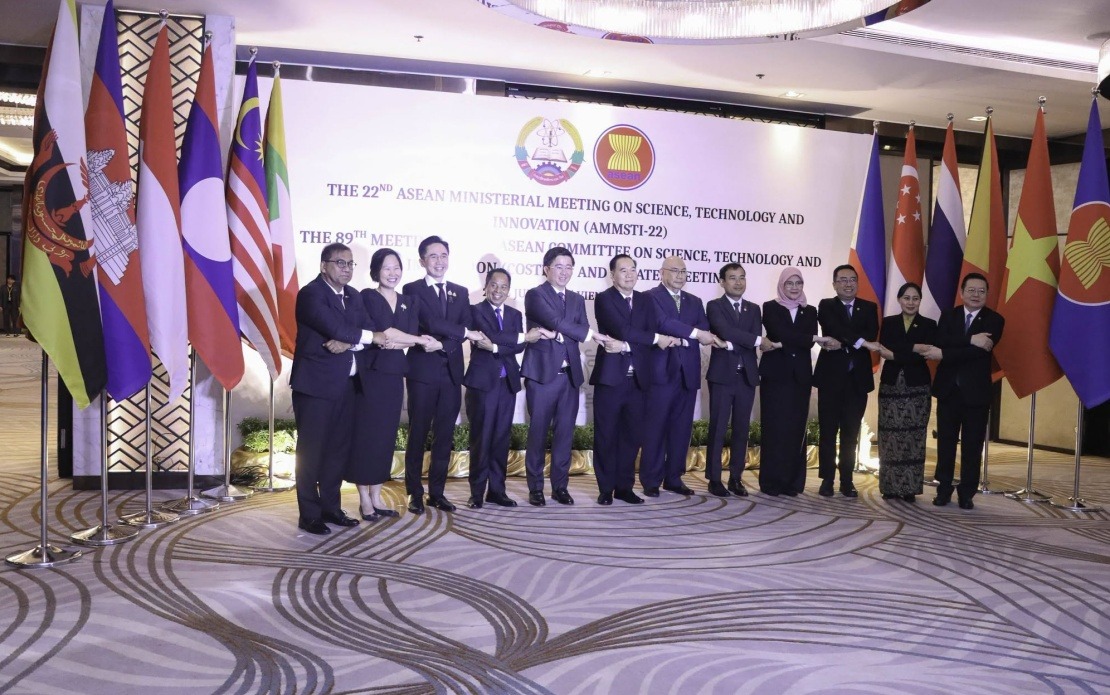
Science, Technology and Innovation Minister Datuk Chang Lih Kang has underscored Malaysia's vision for a cohesive and purpose-driven science and innovation framework across Southeast Asia, presenting the case during the 22nd ASEAN Ministerial Meeting on Science, Technology and Innovation in Vientiane, Laos, last week. The minister's intervention comes at a critical juncture when the region faces converging pressures from climate change, evolving energy demands and agricultural sustainability concerns that no single nation can effectively navigate alone. By advocating for deeper integration rather than isolated national efforts, Malaysia is positioning itself as a thoughtful regional partner capable of recognising that solutions to transnational challenges demand transnational coordination and resource-pooling.
The framework Malaysia envisions encompasses not merely the sharing of scientific findings or collaborative research grants, but a fundamentally restructured approach wherein ASEAN nations align their innovation priorities around shared regional outcomes. Energy transition stands foremost among these priorities, reflecting Southeast Asia's urgent need to balance development imperatives with climate obligations. Food security equally demands integrated attention, particularly given the region's vulnerability to climate volatility and its responsibility to feed over 600 million people. Public health infrastructure and climate resilience form complementary pillars, recognising that disease outbreaks and environmental degradation recognise no borders and require coordinated preparedness across member states.
Crucially, Malaysia's emphasis on translating research into societal benefit reflects a sophisticated understanding that scientific advancement divorced from practical application serves little purpose for developing economies. The minister highlighted the necessity of bridging the persistent gap between laboratory discoveries and real-world implementation, a challenge that continues to plague innovation efforts across the developing world. By insisting that ASEAN's STI agenda remain mission-oriented and society-focused, Malaysia is steering the conversation away from prestige-driven research towards outcomes that directly improve livelihoods, strengthen food systems and enhance resilience to environmental shocks.
Simultaneously, Malaysia is charting an ambitious trajectory for itself within the regional innovation architecture. During bilateral discussions with ASEAN Secretary-General Dr Kao Kim Hourn, the minister outlined preparations for Malaysia to host both the 23rd ASEAN Ministerial Meeting and the 91st Meeting of the ASEAN Committee on Science, Technology and Innovation next year. This hosting responsibility represents more than ceremonial significance; it positions Malaysia as the custodian of the regional STI agenda during a formative period and provides an opportunity to institutionalise frameworks and partnerships that reflect its policy preferences. The early engagement and preparation Chang emphasised signals Malaysia's determination to leverage this chairmanship into concrete institutional changes that will outlast the calendar year.
The bilateral engagements Malaysia conducted with peer ministers from Singapore, Brunei and Thailand reveal the granular diplomacy underlying the broader regional vision. These conversations specifically targeted emerging technology domains that are reshaping global economic competition: artificial intelligence, semiconductors, biotechnology, space technology and nuclear technology. These sectors are not chosen randomly but represent the technological frontiers where Southeast Asian nations must establish capabilities to avoid technological dependency and capture value creation opportunities. AI and semiconductors particularly underpin future manufacturing competitiveness and digital sovereignty, concerns that resonate throughout the region given geopolitical pressures and supply chain vulnerabilities exposed in recent years.
Biotechnology collaboration carries particular resonance for a region with exceptional biodiversity and growing pharmaceutical needs, while space and nuclear technology aspirations reflect the developmental ambitions of larger ASEAN economies. By anchoring bilateral discussions in these specific technology domains, Malaysian officials were simultaneously mapping potential partnership corridors and identifying where complementary national strengths could be leveraged. A Brunei-Singapore partnership in semiconductors might differ substantially from a Malaysia-Thailand collaboration in biotechnology, yet all serve the overarching objective of building indigenous technological capabilities rather than perpetuating technological consumption.
The strategic importance of Malaysia's advocacy becomes clearer when examined against the backdrop of global technological competition and reshaping geopolitical alignments. The United States, China and increasingly India are all competing intensely for influence over Southeast Asian innovation ecosystems and technological trajectories. By advocating for integrated ASEAN approaches, Malaysia is essentially arguing for regional agency and collective bargaining power in technology partnerships and knowledge transfer arrangements. An isolated Malaysian technology sector negotiating with Beijing or Washington operates from fundamental disadvantage; an aligned ASEAN bloc speaking with unified voice and coordinated interests possesses considerably greater leverage.
The emphasis on strengthening regional startup ecosystems deserves particular attention, as this dimension addresses the commercialisation and entrepreneurial dimensions of innovation that remain underdeveloped in much of Southeast Asia. Many ASEAN nations generate respectable scientific research output yet struggle to convert discoveries into viable commercial enterprises that create employment and generate export revenues. By integrating startup support systems regionally, entrepreneurs can access broader talent pools, capital networks and market opportunities than their home countries alone can provide. Cross-border startup communities also facilitate the brain circulation that many developing economies struggle with, retaining talented individuals within the region even if they cannot remain in their birth nations.
The regulatory and institutional harmonisation implied by Malaysia's integrated ecosystem proposal would require substantial ongoing effort. Different ASEAN members operate under varying intellectual property frameworks, research funding mechanisms, university governance structures and technology commercialisation pathways. Bringing these into meaningful alignment demands not merely good intentions but concrete coordination on standards, recognition of qualifications across borders and harmonised incentive structures. Malaysia's forthcoming chairmanship provides a strategic window to advance such harmonisation, though progress will likely prove incremental given the diversity of national circumstances and development levels within ASEAN.
Looking forward, Malaysia's positioning as champion of integrated regional STI architecture should be understood as both idealistic and strategically calculated. The idealism reflects genuine conviction that regional challenges demand regional solutions and that ASEAN possesses sufficient collective capability to address energy, food and health security challenges without external dependency. The strategic calculation recognises that a more cohesive ASEAN technological ecosystem enhances Malaysia's own innovation prospects through access to broader talent, capital and market opportunities. These motivations need not be contradictory; the most durable regional cooperation frameworks typically align national interest with collective benefit, creating positive-sum outcomes that justify the coordination costs and political compromises required.

