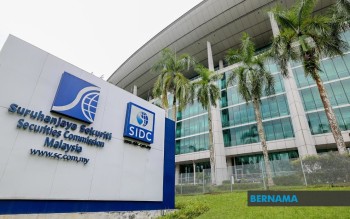
Malaysia is sharpening its international investment strategy by positioning itself as a gateway for Russian capital into the Islamic finance sector, a move that reflects Kuala Lumpur's broader ambitions to cement its status as a leading global hub for faith-based financial services. The government and Securities Commission Malaysia have committed to building a more robust Islamic finance architecture that will appeal specifically to investors from Russia and neighbouring Central Asian markets, signalling a deliberate diversification away from traditional investor bases in the Middle East and Southeast Asia.
The strategic pivot comes as the SC prepares for exploratory missions to the Central Asian region scheduled for 2026 or 2027, designed to assess market conditions and strengthen institutional relationships that could unlock new investment pathways. These reconnaissance visits form part of a coordinated internationalisation initiative under the Islamic capital market agenda, intended to evaluate whether countries in the region possess sufficient market maturity to absorb Malaysian financial products and expertise. By conducting these preliminary assessments, Malaysia aims to avoid costly market-entry mistakes and instead establish tailored engagement strategies that resonate with local regulatory environments and investor preferences.
A significant opportunity has emerged following high-level discussions between Malaysian officials and the Head of the Republic of Tatarstan in May 2025, wherein the Russian region expressed genuine interest in adopting Malaysia's Islamic finance development framework. This openness suggests that Tatarstan views Malaysia's institutional experience as a valuable blueprint for building its own shariah-compliant financial sector. The prospect is particularly noteworthy given Tatarstan's substantial Muslim population and its geographic position as a potential bridge between European and Asian Islamic finance markets, creating commercial incentives for Malaysian service providers to establish deeper footholds in the region.
Beyond capital investment itself, Malaysia is aggressively marketing its accumulated shariah expertise as an exportable commodity. The country intends to offer a comprehensive suite of professional services encompassing shariah advisory guidance, management consultancy, specialised training programmes and targeted capacity-building initiatives to Russian and Central Asian institutions seeking to develop or enhance their own Islamic financial capabilities. This service-export approach transforms Malaysia from merely a destination for foreign money into an intellectual-property exporter, generating recurring revenue streams while simultaneously elevating the nation's soft power in the Islamic finance sector.
The foundation for these ambitious plans rests on existing diplomatic and institutional groundwork. The SC has conducted a series of bilateral engagements with Russia's Central Bank and the Saint Petersburg International Mercantile Exchange spanning 2023 and 2025, creating communication channels and mutual understanding between Malaysian regulators and their Russian counterparts. These interactions have served to demystify Malaysian regulatory approaches and demonstrate the sector's operational viability, thereby reducing perceived risk barriers that might otherwise deter Russian institutional investors from exploring Malaysian opportunities.
Under the Capital Market Masterplan 2026-2030, Malaysia plans to sharpen its competitive positioning through three interconnected levers: strengthened regulatory frameworks that meet international standards, continuous innovation in Islamic financial products tailored to emerging investor preferences, and deepened cross-border partnerships that expand market reach. The masterplan essentially signals that Malaysia recognises competition from other Islamic finance hubs—particularly Saudi Arabia, the United Arab Emirates, and Bahrain—and intends to differentiate itself through regulatory sophistication and product diversity rather than reliance on incumbency.
The government has signalled its openness to legitimate and productive Russian investments, provided such capital flows comply with Malaysia's domestic legal framework and conform to international standards. This carefully calibrated messaging reflects Malaysia's desire to be viewed as both welcoming and scrupulous about capital provenance, particularly important given heightened global scrutiny of investment flows and the need to maintain international credibility on anti-money laundering and sanctions compliance.
For Malaysian readers and regional observers, this strategy carries several implications. First, it demonstrates that Malaysian policymakers view Islamic finance not merely as a sectoral specialisation but as a vehicle for broader geopolitical engagement and economic diversification. Second, it underscores Malaysia's confidence in its institutional capabilities—both in financial services and in knowledge transfer—suggesting that the country sees itself less as a follower in the Islamic finance space and more as an originator of best practices worthy of replication elsewhere. Third, it hints at Malaysia's longer-term positioning in global realignments, as Kuala Lumpur develops economic bridges to regions and markets beyond its traditional spheres of influence.
The Russian engagement is particularly strategic given Central Asia's growing economic importance, its vast energy resources, and the region's historical ties to Islamic financial traditions that predate modern Islamic banking. By establishing footholds in countries like Tatarstan, Malaysia positions itself to tap into cross-border capital flows that may increasingly seek compliance with shariah principles as investor sophistication in the region deepens. Moreover, Malaysian financial institutions that successfully penetrate these markets gain experience managing regulatory complexity and investor heterogeneity, capabilities transferable to other expansion markets throughout Central and Eastern Europe, the Caucasus, and potentially beyond.
Malaysia's approach to Russian investors also reflects pragmatism about the global financial landscape. Rather than waiting passively for international capital to arrive at Malaysian shores, the country is actively identifying promising markets, building relationships with decision-makers, and designing tailored value propositions that address specific regional needs. This proactive stance—combining investment attraction with knowledge export and regulatory leadership—positions Malaysia to capture disproportionate gains from the projected expansion of Islamic finance beyond its traditional Middle Eastern strongholds, provided the country can maintain its institutional credibility and deliver on the promises embedded in the Capital Market Masterplan.

