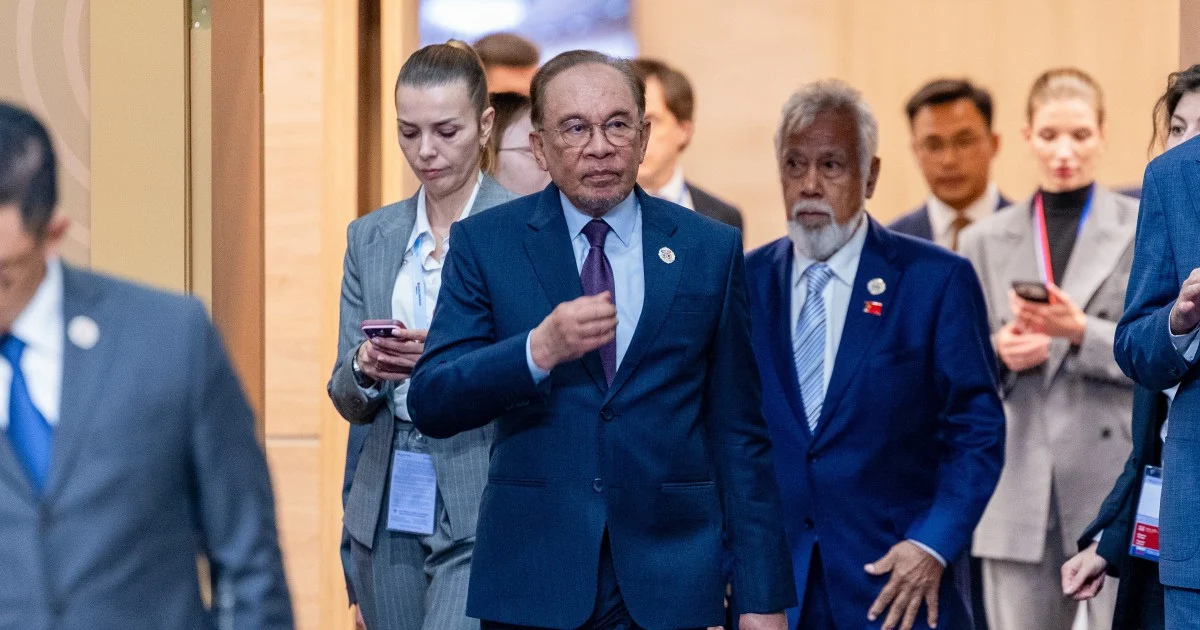
Prime Minister Anwar Ibrahim has called for Malaysia to pursue a more assertive and decisive strategy in cultivating economic relationships with Russia and the wider Central Asian region, territories he views as presenting substantial untapped commercial opportunities for Malaysian businesses. Speaking in Kazan, Anwar underscored the necessity for Malaysian policymakers and the private sector to move beyond cautious engagement and embrace bolder initiatives that could unlock new avenues for trade, investment, and economic cooperation across this geographically vast and resource-rich part of the world.
The Prime Minister's remarks reflect a broader strategic recalibration in Malaysia's foreign economic policy, one that acknowledges the changing global landscape and the need to diversify partnerships beyond traditional markets. Rather than remaining heavily reliant on established trade corridors and familiar economic partners, Malaysia faces mounting pressure to explore emerging markets where competitive advantages exist and demand for Southeast Asian goods and services continues to grow. The Central Asian region, encompassing nations with significant hydrocarbon reserves, agricultural production capacity, and expanding consumer bases, represents precisely the kind of frontier market that could benefit Malaysian exporters and investors seeking growth beyond saturated conventional markets.
Russia's geopolitical position and its historical role as a gateway to both European and Asian markets have made it an enduring economic actor despite international sanctions and diplomatic tensions. For Malaysia, a country with significant interests in maintaining non-aligned diplomacy and fostering relationships across ideological boundaries, Russia presents a pragmatic avenue for diversification. The country's vast natural resources, technological capacity in certain sectors, and growing interest in South and Southeast Asian trade partnerships create genuine commercial potential that Malaysian enterprises have only partially exploited. Anwar's emphasis on aggression in pursuing these ties signals an understanding that competitors from other Asian nations and beyond are similarly eyeing these opportunities, and Malaysia risks falling behind if it does not move with greater urgency.
The Central Asian countries—including Kazakhstan, Uzbekistan, Turkmenistan, Tajikistan, and Kyrgyzstan—collectively represent a population exceeding 70 million people with increasing purchasing power and infrastructural development. These nations have undergone significant economic transformation over the past three decades, with substantial investments in connectivity projects, industrial diversification, and special economic zones designed to attract foreign investment. Malaysian companies active in manufacturing, logistics, technology, and services sectors could find receptive markets in these economies, particularly as supply chain diversification becomes a priority for regional and global corporations. The absence of deep Malaysian economic presence in Central Asia suggests untapped potential rather than insurmountable obstacles, making Anwar's call for aggressive engagement strategically sound.
Geopolitical considerations inevitably influence Malaysia's economic outreach to Russia and Central Asia. As Western nations maintain various forms of economic restrictions on Russia, Malaysia's willingness to deepen ties—provided such engagement remains within international legal frameworks—could position the country as a valuable intermediary and partner in these regions. This approach aligns with Malaysia's longstanding foreign policy principle of maintaining equidistant relationships with major powers and avoiding rigid alignment with any particular bloc. By strengthening economic connections with Russia and Central Asia, Malaysia reinforces its status as a pragmatic, independent actor in global affairs while simultaneously pursuing legitimate commercial interests.
The Malaysian private sector's engagement with these markets remains comparatively underdeveloped despite the regions' potential. Malaysian financial institutions, trading companies, and manufacturers have established footholds in Europe, China, Japan, and the United States far more comprehensively than in Russia or Central Asian states. This imbalance reflects partly historical patterns and partly the perception that these markets present higher operational risks or lower returns. However, first-mover advantages in emerging markets often accrue to early entrants willing to invest in market research, relationship-building, and long-term commitment. Anwar's call to aggression implicitly challenges Malaysian business leaders to reconsider their risk calculations and strategic priorities regarding these regions.
Trade facilitation mechanisms and government support will prove essential to realizing Anwar's vision of strengthened economic engagement. Malaysia's diplomatic missions in these countries, export credit agencies, trade associations, and business chambers must coordinate more effectively to reduce barriers facing Malaysian enterprises entering these markets. Investment promotion agencies should identify specific sectors and opportunities where Malaysian competitive advantages—whether in halal products, Islamic finance, manufacturing expertise, or digital services—can create compelling value propositions for Russian and Central Asian counterparts. Without concerted institutional effort and strategic support from government, even well-intentioned private sector initiatives may falter when confronting unfamiliar regulatory environments and market conditions.
Infrastructure connectivity has improved substantially across the Eurasian landmass in recent years, with new transportation corridors, digital networks, and trading platforms facilitating commerce between Asia and Europe through Central Asian hubs. Malaysia's strategic location within Southeast Asia, combined with its developed port facilities and financial infrastructure, positions the country well to serve as a regional hub for businesses seeking to expand into Russian and Central Asian markets. Conversely, Central Asian and Russian suppliers could utilize Malaysian logistics and trading platforms to access Southeast Asian and broader Asian markets. This reciprocal advantage creates genuine mutual benefit, strengthening the foundation for deeper engagement.
Anwar's emphasis on bold action resonates with Malaysia's broader aspiration to become a high-income nation by 2050. Incremental improvements in established markets will not generate the growth acceleration required to achieve this transformation. Instead, strategic pivots toward emerging markets with substantial populations, resource wealth, and industrialization momentum represent the kind of calculated risk-taking that can deliver meaningful economic expansion. Russia and Central Asia, despite their distance and relative unfamiliarity to many Malaysian businesses, offer precisely these characteristics. The Prime Minister's call therefore extends beyond diplomatic courtesy or regional courtesy—it represents a substantive policy direction that Malaysian decision-makers, in both government and the corporate sector, must take seriously and implement through concrete initiatives and resource allocation.

