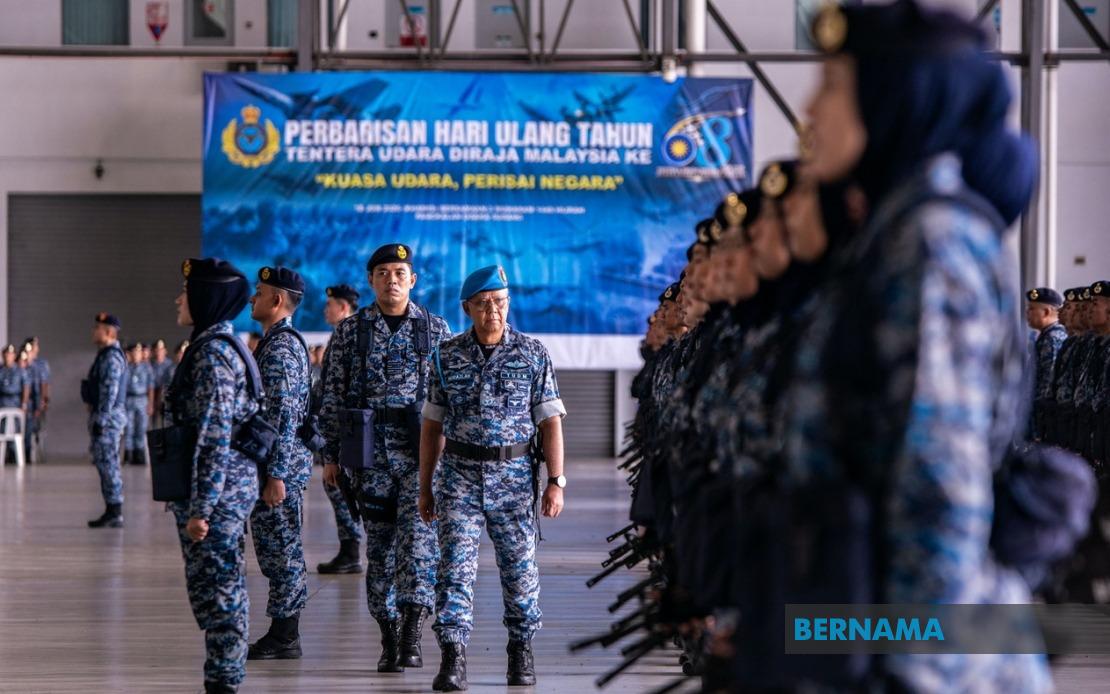
Malaysia is moving to significantly enhance its air defence infrastructure through a coordinated deployment of cutting-edge radar systems at multiple strategic locations, according to announcements made during the Royal Malaysian Air Force's 68th Anniversary Parade in Subang on June 18. The initiative represents a substantial investment in the country's long-term military modernisation roadmap and reflects growing regional security considerations affecting Southeast Asia and its vital trade corridors.
The radar modernisation programme will establish air defence installations at three terrestrial locations: Bintulu in Sarawak, Bukit Puteri in Terengganu, and Bukit Lunchu in Johor. Additionally, the air force intends to commission an air surveillance radar facility on Pulau Layang-Layang, the Malaysian-controlled island in the disputed South China Sea. These deployments are strategically distributed across Malaysia's peninsula and East Malaysia, indicating an attempt to create comprehensive coverage of the nation's vast airspace and territorial waters. The choice of these specific locations suggests planners are prioritising surveillance gaps in areas with significant maritime traffic, resource extraction activity, and geopolitical sensitivity.
Chief of Air Force General Tan Sri Muhamad Norazlan Aris explained that these radar projects constitute the first phase of the RMAF Capability Development Plan 2055, an ambitious two-decade programme designed to ensure the air force remains technologically competitive and strategically capable amid evolving security threats. The 2055 framework acknowledges that Malaysia faces a rapidly changing security environment requiring sustained investment in surveillance, detection, and response systems. By structuring modernisation across multiple decades, the plan attempts to secure consistent funding and institutional commitment regardless of political transitions or budgetary pressures.
The air force chief emphasised that these capabilities are essential for achieving early warning detection and eliminating surveillance blind spots that could compromise national security. Enhanced radar coverage enables rapid identification of unidentified aircraft and maritime objects approaching Malaysian airspace, providing authorities with critical reaction time to investigate or intercept potential threats. For a nation with Malaysia's geography—spanning 330,000 square kilometres including extensive coastlines and maritime exclusive economic zones—comprehensive surveillance coverage has always been technically challenging and resource-intensive.
Muhamad Norazlan contextualised Malaysia's defence investments within the broader regional security landscape, particularly referencing ongoing tensions in West Asia and their international ramifications. Disruptions to shipping through the Strait of Hormuz have demonstrated how regional instability can ripple across global energy markets and supply chains, creating economic consequences far beyond the immediate conflict zone. Malaysia, as a major trading nation and hub for regional commerce, remains acutely vulnerable to such disruptions, making the maintenance of secure sea lines of communication essential to national prosperity.
The air force chief further underscored Malaysia's dependence on freedom of navigation through two critical maritime corridors: the Strait of Malacca and the South China Sea. Both passages handle enormous volumes of international shipping and are crucial to Malaysia's trading relationships and economic growth. The Strait of Malacca alone facilitates approximately one-third of global maritime trade. Any disruption or instability in these waters would directly threaten Malaysia's commercial interests and regional stability, highlighting why enhanced maritime and air surveillance represents a strategic priority for Malaysian planners.
The current geopolitical context in the South China Sea—marked by competing territorial claims, increased military activities, and occasional confrontations between naval forces—has intensified Malaysian concerns about maintaining effective surveillance and awareness in adjacent waters. The installation of air surveillance capability on Pulau Layang-Layang demonstrates Malaysia's commitment to asserting presence and gathering intelligence in this contested region. Enhanced radar coverage enables Malaysian authorities to monitor aircraft movements, detect unauthorised incursions, and maintain accurate records of activities affecting Malaysian interests.
The 68th Anniversary Parade itself served as a public demonstration of institutional readiness and capability. The event involved 288 personnel across four distinct units, including the RMAF Special Forces (PASKAU), Ground Defence Force (HANDAU), and composite flights representing women service members and multi-trade personnel. This composition reflects contemporary military staffing practices emphasising inclusivity and diversity while maintaining operational effectiveness. The parade commander, Lieutenant Colonel Mohd Nazree Mansor, coordinated the display of aerial and ground formations designed to project organisational competence and morale to civilian audiences and government officials.
General Tan Sri Muhamad Norazlan also presented ceremonial medals and commendation certificates to 17 personnel during the parade, recognising service contributions across various domains. These recognitions underscore the air force's emphasis on honouring individual and collective achievements while maintaining institutional culture and esprit de corps. The participation of former air force chiefs in the proceedings reflected the service's institutional continuity and tradition, connecting contemporary modernisation efforts to established command lineages and professional standards.
The radar modernisation programme must be understood within Malaysia's broader defence budget constraints and competing priorities. Military expenditure competes with healthcare, education, and infrastructure funding, requiring defence planners to justify significant technology investments through demonstrated strategic value and cost-effectiveness. The RMAF Capability Development Plan 2055 represents a structured attempt to prioritise acquisitions and spread costs across multiple fiscal years, making the programmes more politically sustainable and financially manageable. The emphasis on surveillance rather than offensive systems also reflects Malaysia's strategic posture as a nation prioritising deterrence and awareness over power projection.
The timing of these announcements coincides with increased regional military modernisation across Southeast Asia, as neighbouring nations similarly upgrade defence capabilities and surveillance infrastructure. Thailand, Indonesia, Vietnam, and Singapore have all undertaken significant military technology acquisitions in recent years, creating a regional military modernisation dynamic. Malaysia's radar deployments should be understood partly as efforts to maintain relative military balance and ensure the air force remains capable of fulfilling its surveillance and territorial defence responsibilities within this competitive environment.
Looking forward, the implementation of these radar systems will require sustained funding, technical expertise, and international partnerships with manufacturers and defence technology providers. Malaysia will likely depend on foreign suppliers for advanced radar systems and supporting infrastructure, necessitating ongoing diplomatic engagement with technology-providing nations. The successful commissioning of these facilities will enhance Malaysia's intelligence gathering capabilities and contribute to regional maritime security awareness, though their effectiveness ultimately depends on integration with broader command and control systems and responsive operational forces capable of acting on detected threats.