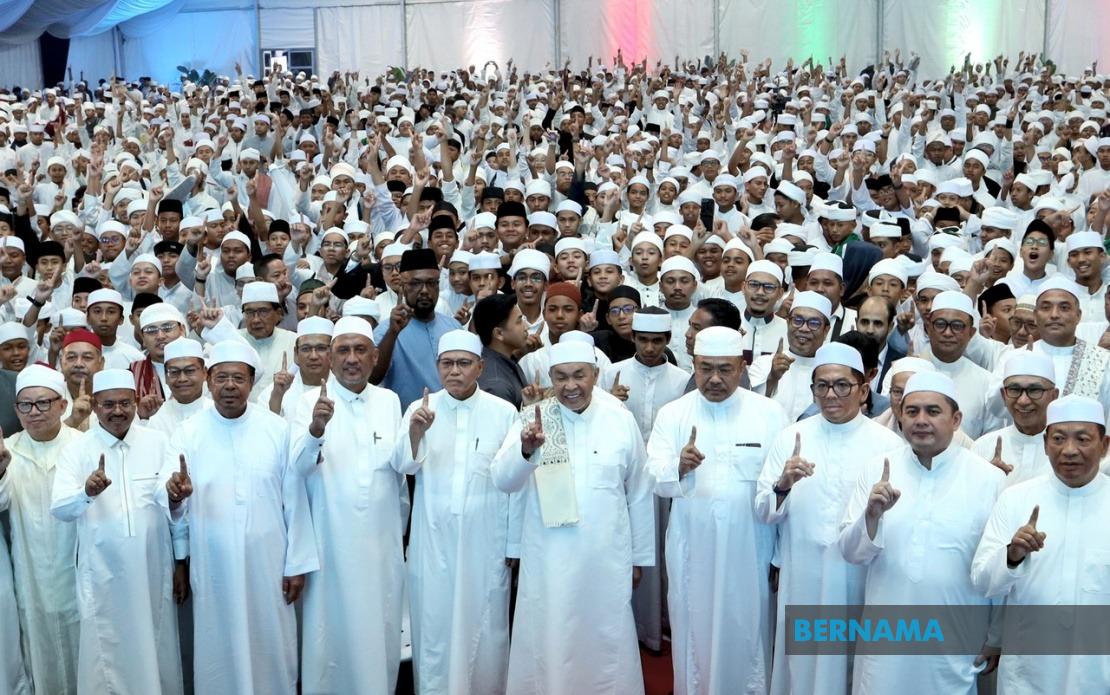
Malaysia's cabinet has given final approval to establish a National Tahfiz Council, a significant institutional development intended to professionalise and standardise Quranic memorisation education across the country. Deputy Prime Minister Datuk Seri Dr Ahmad Zahid Hamidi announced the decision at the Pahang State Huffaz Gathering 2026 in Kuantan, where he revealed that Prime Minister Datuk Seri Anwar Ibrahim has appointed him to lead the council. The approval, formalised at a recent Cabinet meeting, represents a watershed moment for tahfiz education in Malaysia, signalling government commitment to elevating Islamic learning from a traditional pursuit to a structured, credentials-bearing educational pathway.
The establishment of the council addresses a longstanding structural challenge within Malaysia's education ecosystem. Historically, tahfiz institutions—madrasahs and pesantrens where students memorise the Quran—have operated somewhat parallel to the mainstream education system, creating ambiguity about their academic standing and career prospects for graduates. Ahmad Zahid articulated the council's core mission: to integrate tahfiz education seamlessly into the broader education architecture, allowing students to transition from memorisation-focused programmes into university degree programmes without losing momentum or facing credential recognition barriers. This institutional reform could substantially reshape pathways for an estimated tens of thousands of Malaysian youths pursuing Islamic education annually.
The Pahang gathering itself demonstrated the scale of tahfiz education in Malaysia, attracting more than 5,000 huffaz—individuals who have memorised the entire Quran—from across a single state. This turnout underscores the deep cultural and religious significance of tahfiz education within Malaysian Muslim communities and illustrates the existing infrastructure of institutions already nurturing this specialised knowledge. However, quantity alone has not translated into systematic recognition or integrated career progression, creating a gap that the council aims to bridge. The formation of a centralised coordinating body suggests the government now perceives tahfiz education as strategically important to national educational and social development.
Ahmad Zahid's vision extends beyond mere institutional recognition. He emphasised that tahfiz students should gain the ability to progress from traditional madrasah settings to university education, and critically, from specialised religious knowledge to practical, marketable professional skills. This framing represents a subtle but important shift: rather than positioning tahfiz as an alternative to technical or vocational training, the council will seek to synthesise both dimensions. Students who have invested years memorising the Quran should, under this model, be able to leverage that discipline and intellectual achievement to access skilled professions, whether in Islamic finance, education, governance, law, or technology sectors where Islamic expertise increasingly commands premium value.
Pahang's existing tahfiz ecosystem provides a template and testing ground for this integrated approach. The state has already pioneered early-childhood initiatives, including Tadika Tahfiz Negeri Pahang—a state-supported kindergarten programme designed to instil Quranic learning from the earliest ages—and has constructed a more comprehensive educational continuum extending to international-level standards. This sequential approach, beginning in early childhood and progressing through structured stages to tertiary and professional levels, demonstrates that tahfiz education need not remain confined to traditional institutional forms. By drawing on Pahang's experiences and those of other pioneering states, the National Tahfiz Council can develop evidence-based standards and replicable models for implementation nationwide.
The council's mandate encompasses several concrete policy initiatives already in motion or under development. These include TVET Tahfiz—integration of technical and vocational education within tahfiz programmes—and the Malaysian Tahfiz Certificate 2.0, which aims to establish nationally recognised qualifications for students at different mastery levels. The Graded Hafazan Certification system will differentiate achievement levels, much like conventional educational credentials, allowing employers and universities to understand precisely what knowledge and discipline a tahfiz graduate possesses. Meanwhile, the Huffaz Financing Scheme addresses a critical barrier to participation: the financial capacity of families to support multi-year memorisation programmes. These bundled reforms suggest a comprehensive rather than piecemeal institutional overhaul.
The Malaysian Tahfiz Recognition Standard represents perhaps the most consequential element, as it will determine how tahfiz qualifications map onto mainstream education frameworks. Without such standardisation, a tahfiz graduate's credentials remain opaque to employers unfamiliar with Islamic education systems, perpetuating underutilisation of their intellectual investments. Recognition standards will need to account for variations in teaching methodologies, memorisation accuracy thresholds, and accompanying secular knowledge content across different institutions, while maintaining quality benchmarks credible to universities and professional bodies. Successfully implementing such standards across Malaysia's diverse tahfiz sector—encompassing government-supported institutions, religious endowment schools, private academies, and informal settings—will prove technically and politically complex.
Strategic partnerships formalised at the Pahang gathering illustrate how the council will operationalise its mission. A memorandum of understanding signed by Yayasan Pahang, the Community Development Department (KEMAS), and Majlis Amanah Rakyat (MARA) commits these major government bodies to coordinate tahfiz education development with skills training expansion. MARA, in particular, holds considerable capacity to integrate tahfiz students into vocational training, entrepreneurship support, and professional placement programmes. KEMAS brings grassroots community development expertise essential for sustaining participation among lower-income families. This multi-agency approach acknowledges that professionalising tahfiz education requires coordination across educational, community development, and economic empowerment portfolios.
For Southeast Asian regional context, Malaysia's formalisation of tahfiz education carries significance beyond national borders. Several other Muslim-majority countries in the region—Indonesia, Brunei, and increasingly Thailand—grapple with similar questions about integrating traditional Islamic education into modern credentialing systems. Malaysia's National Tahfiz Council, if successful, may establish a replicable model that other nations examine and adapt. Moreover, Malaysia's positioning of tahfiz education as compatible with modern professional pathways—rather than oppositional to them—offers a counternarrative to polarised debates about religious education in Muslim societies.
The council's success will ultimately depend on implementation rigour and sustained political will across multiple government agencies and education sectors. Creating pathways is easier on paper than in practice; universities must genuinely value tahfiz qualifications, employers must recognise their significance, and institutions must maintain quality while expanding capacity. Ahmad Zahid's statement that he will lead the council with broad support suggests awareness of these challenges, but execution will test whether the backing materialises when difficult trade-offs arise. For Malaysia's tahfiz students and their families, however, the formal institutional acknowledgment alone represents meaningful progress toward fuller educational and professional recognition.

