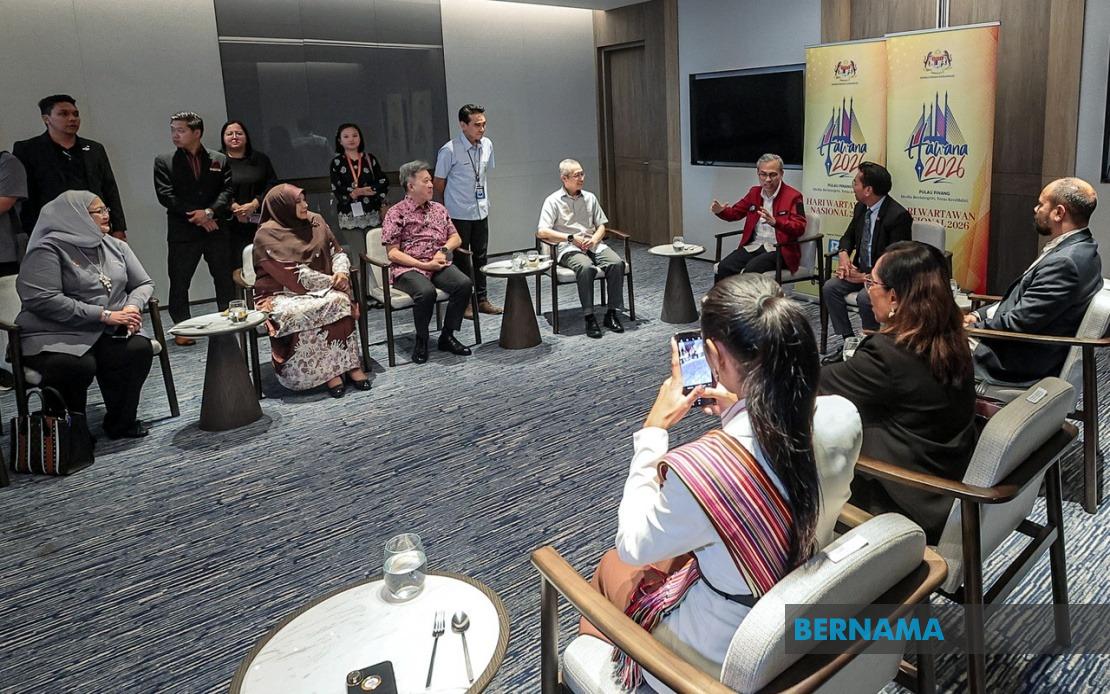
Malaysia is moving to establish closer media partnerships with Timor-Leste, with Communications Minister Datuk Fahmi Fadzil signalling his intention to broaden collaboration between the two nations' broadcasting and news agencies. The initiative was outlined during discussions in Butterworth between Fahmi and a delegation from Timor-Leste led by Secretary of State for Social Communication Expedito Loro Dias Ximenes, alongside senior figures from the country's national news agency and broadcasting sector.
The proposal centres on leveraging Malaysia's established media infrastructure to support Timor-Leste's development ambitions. Fahmi indicated that the Malaysian National News Agency, known as Bernama, and Radio Televisyen Malaysia, or RTM, would serve as the primary vehicles for enhanced bilateral cooperation. Beyond institutional partnerships, he has suggested that the Tun Abdul Razak Broadcasting and Information Institute, commonly abbreviated as IPPTAR, could host training initiatives designed to build capacity among Timor-Leste's journalism workforce. Such programmes would allow professional development exchanges and knowledge transfer in areas ranging from reporting standards to editorial practices.
During the meeting, both officials discussed regional media freedom metrics and comparative performance indicators. Timor-Leste has achieved recognition in the World Press Freedom Index compiled annually by Reporters Without Borders, a Paris-based international watchdog. The small Southeast Asian nation currently ranks first within the region and 30th globally out of 180 countries assessed, a standing that drew admiration from Fahmi and became a focal point for discussion. Malaysia, by contrast, ranks second in Southeast Asia and lower globally, positioning it behind its smaller neighbour in this particular measure of journalistic independence and press freedom.
The discussion of rankings reflects a strategic priority for Malaysia's current administration. The MADANI Government has made press freedom improvements part of its policy agenda, and Fahmi acknowledged that Malaysia has registered measurable gains over the past three to four years compared to the previous governance period. However, he candidly recognised that further progress remains necessary to achieve the government's aspirations within international media freedom assessments. This represents a notable shift in tone from earlier administrations, suggesting a deliberate recalibration of official attitudes toward independent journalism and institutional openness.
The bilateral engagement occurred during the sixth iteration of HAWANA, a major regional media conference convening approximately 1,000 journalists, broadcasters, media managers and communications professionals from across Malaysia and internationally. Held at the PICCA Convention Centre in the Butterworth Arena, the event operated under the thematic banner 'Media Integrity Strengthens Credibility', positioning ethical journalism as central to institutional and societal trust. Prime Minister Datuk Seri Anwar Ibrahim was scheduled to formally inaugurate proceedings, lending political weight to discussions about the future of regional media development and partnership frameworks.
Timor-Leste's presence at the conference reflects its emerging role within Southeast Asian media networks and its integration into regional professional communities. The delegation's participation and the bilateral discussions underscore how smaller nations in the region are increasingly engaging in structured dialogue about journalistic standards, training, and institutional cooperation. For Timor-Leste, partnerships with established players like Malaysia offer pathways to professionalise media institutions and benchmark practices against more developed systems, while Malaysia gains opportunities to position itself as a regional media partner and thought leader.
The timing of these overtures carries significance within broader Malaysia-Timor-Leste relations. Both nations have expanded bilateral engagement across multiple sectors in recent years, and media cooperation represents a relatively new frontier for formalised partnership. Unlike trade agreements or security arrangements, media collaboration often proceeds through institutional relationships rather than government-to-government protocols, allowing for flexibility and incremental development. The proposed training initiatives through IPPTAR exemplify this approach, offering concrete mechanisms for capacity building without requiring major legislative or policy changes.
The involvement of high-ranking Malaysian communications officials in the discussions, including Communications Ministry secretary-general Datuk Abdul Halim Hamzah and Bernama leadership, signifies institutional commitment to the agenda. Bernama, as Malaysia's primary news agency with long-standing international relationships, holds particular significance in such arrangements. Its leadership, including chairman Datuk Seri Wong Chun Wai and chief executive officer Datin Paduka Nur-ul Afida Kamaludin, were present to underscore the agency's openness to expanded regional engagement and capacity-sharing initiatives.
From a regional perspective, Malaysia's initiative reflects broader Southeast Asian trends toward strengthening media interconnectedness and professional standards harmonisation. As nations within ASEAN grapple with challenges including misinformation, digital disruption, and evolving audience expectations, informal partnerships and training exchanges provide valuable mechanisms for addressing shared concerns. Timor-Leste's relatively strong World Press Freedom Index ranking suggests it has established frameworks worth studying and potentially adapting, even as Malaysia considers how to enhance its own standing.
The discussion of World Press Freedom Index rankings also hints at evolving Malaysian official attitudes toward external assessments and international media standards. Rather than dismissing such metrics or challenging their methodology, as some governments might do, Fahmi engaged substantively with the data and positioned improvement as a legitimate policy objective. This approach suggests confidence in Malaysia's trajectory and willingness to be measured against international benchmarks, a posture that could influence how the country is perceived within global media and diplomatic circles.
Looking forward, the concrete outcomes of these discussions will likely emerge gradually through institutional channels. Training programmes at IPPTAR would represent the most tangible initial steps, allowing Timor-Leste journalists to benefit from Malaysian expertise while building relationships that could support longer-term collaborations. Deeper operational partnerships between Bernama and Timor-Leste's news agency could follow, potentially including news exchange arrangements, joint coverage of regional events, or coordinated reporting initiatives. Such developments would inscribe Malaysia's media institutions more deeply within Southeast Asian professional networks.

