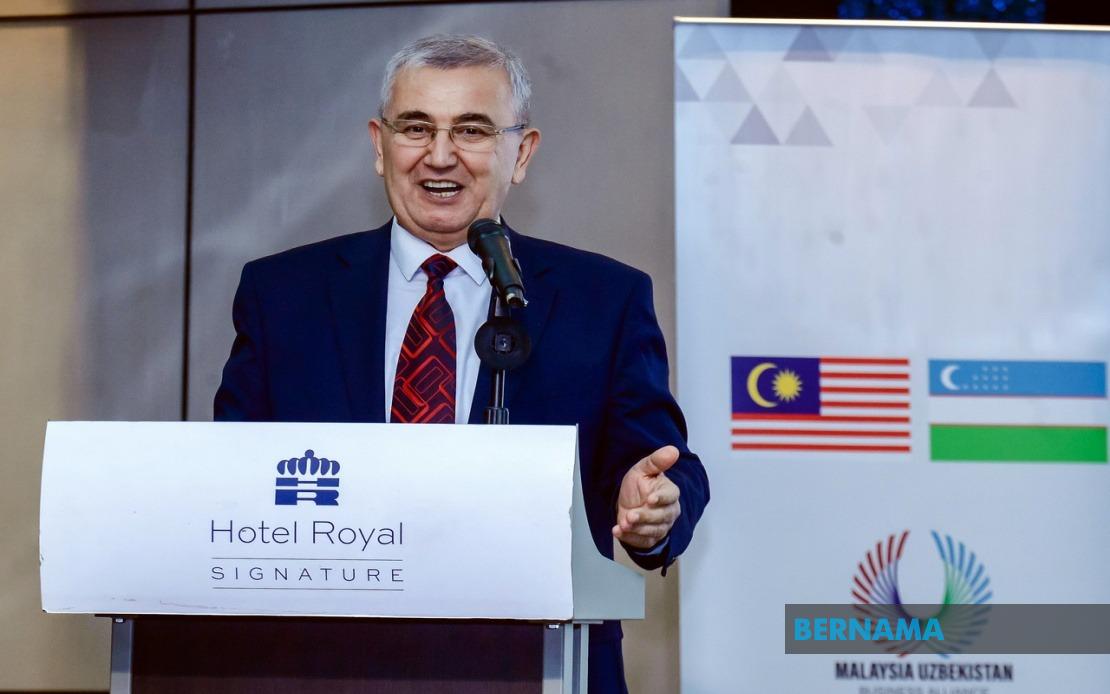
Malaysia and Uzbekistan are positioning themselves to become strategic partners in agriculture and food security, leveraging complementary strengths in technology and farming expertise to address regional food challenges. Uzbekistan Ambassador to Malaysia Dr Karomidin Gadoyev outlined the ambitious bilateral agenda during a recent media appearance, emphasizing how the two nations can combine Malaysia's technological prowess with Uzbekistan's extensive agricultural heritage to create mutual benefits across Central and Southeast Asia.
The partnership has gained momentum following high-level political engagement between the nations. Discussions on agricultural cooperation featured prominently during Malaysian Prime Minister Datuk Seri Anwar Ibrahim's visit to Uzbekistan in May 2024 and President Shavkat Mirziyoyev's trip to Malaysia in February of the previous year, signaling sustained government commitment to the sector. Most significantly, the recent official visit by Malaysia's Agriculture and Food Security Minister Datuk Seri Mohamad Sabu to Uzbekistan marked what Ambassador Gadoyev described as a transformative moment, catalyzing concrete institutional arrangements and business-level engagement between the two agricultural sectors.
The complementary nature of each country's agricultural capabilities forms the foundation of this cooperation. Malaysia brings established expertise in paddy cultivation, aquaculture operations, fisheries management, precision farming techniques, and agricultural research infrastructure through institutions like the Malaysian Agricultural Research and Development Institute (MARDI). Uzbekistan, conversely, possesses sophisticated energy-efficient irrigation technologies refined through centuries of managing water resources in an arid Central Asian environment, alongside developed horticulture systems and agri-food processing capabilities. This division of strengths means neither nation duplicates the other's efforts but instead fills existing gaps in their respective agricultural ecosystems.
Digital agriculture and artificial intelligence have emerged as central pillars of the partnership, reflecting global trends toward technology-driven food production. Both nations recognize that incorporating smart technologies and AI-driven solutions can significantly boost agricultural yields, enhance resilience against climate variability, and optimize resource use amid mounting international concerns about food supply stability. Uzbekistan has explicitly signaled its intention to absorb Malaysian experience and expertise in these domains, positioning Malaysia as a knowledge partner in its digital agricultural transformation. This technological transfer is not merely theoretical; Malaysian agricultural drone manufacturer Miracule has already established its first showroom in Uzbekistan, with plans to escalate drone usage across Uzbek agricultural fields and potentially establish local assembly operations for advanced agricultural drones.
Aquaculture represents a particularly promising avenue for collaboration given Uzbekistan's demographic and geographic circumstances. With a population approaching 40 million people and landlocked status creating a dependency on imported seafood products, Uzbekistan faces structural food security challenges that Malaysian expertise can directly address. Malaysian companies have developed and proven biofloc technology systems that reduce aquaculture feed costs by up to 30 percent while simultaneously increasing productivity and lowering overall production expenses. Malaysian firms have already begun investigating investment opportunities in Uzbek shrimp farming and fisheries projects, suggesting that the sector transition from discussion to implementation is advancing rapidly.
Bilateral trade data illustrates the relationship's existing scale and untapped potential. Agri-food commerce between the two countries reached RM338 million in 2025, with palm oil and palm oil derivatives forming the dominant component of Malaysia's export portfolio to Uzbekistan. However, Ambassador Gadoyev articulated an ambitious vision of multiplying this trade volume two to threefold within the next five to ten years, contingent upon deepening supply chain integration and market access initiatives. Malaysia has identified Uzbekistan as a potential regional processing hub for crude palm oil destined for Central Asian markets, allowing Malaysian producers to serve a broader geographic footprint without establishing additional refineries. Concurrently, Uzbek companies could leverage improved market access to distribute premium fresh fruits, dried fruit products, and processed food items throughout Southeast Asia via Malaysian distribution networks.
The partnership's institutional scaffolding is strengthening through multiple channels beyond diplomatic engagement. MARDI's collaboration with Uzbek agricultural institutions on innovation development signals commitment to sustained research cooperation and knowledge exchange. Malaysia's invitation for Uzbekistan to participate in the Malaysia Agriculture, Horticulture and Agrotourism Exhibition (MAHA) 2026 provides an important commercial platform for Uzbek agricultural sectors to establish connections with Malaysian businesses and consumers. Ambassador Gadoyev characterized MAHA 2026 as a critical opportunity to showcase Uzbekistan's agricultural capabilities and processed food products while reinforcing the bilateral cooperation agenda among private sector stakeholders who will ultimately drive implementation.
Regional significance extends beyond bilateral commerce to broader Central Asian food security architecture. As a double-landlocked nation surrounded by other continental countries, Uzbekistan's agricultural development has implications for the stability and prosperity of the entire Central Asian region. Malaysia's engagement with Uzbekistan in this domain positions Southeast Asia more actively in Central Asian affairs and creates potential for broader trilateral or multilateral arrangements involving other nations in both regions. The technology transfer and capacity-building dimensions could establish a template for agricultural cooperation between other Southeast Asian nations and Central Asian partners facing similar food security imperatives.
Looking forward, Ambassador Gadoyev expressed confidence that Malaysia and Uzbekistan will achieve genuine complementarity in agriculture and food security by synthesizing Malaysia's technological innovation capabilities with Uzbekistan's farming experience and resource endowments. This vision transcends simple export-import relationships to encompass joint ventures, technology licensing arrangements, shared research initiatives, and potentially integrated supply chains spanning both regions. The convergence of political commitment, institutional support through MARDI and other agencies, and early private sector investment activity suggests the partnership possesses substantive foundations rather than remaining aspirational rhetoric. For Malaysian stakeholders, Uzbekistan represents an expanding market for agricultural technology, processed food products, and agri-business expertise, while offering access to Central Asian supply chains and agricultural products that complement Southeast Asian production profiles.

