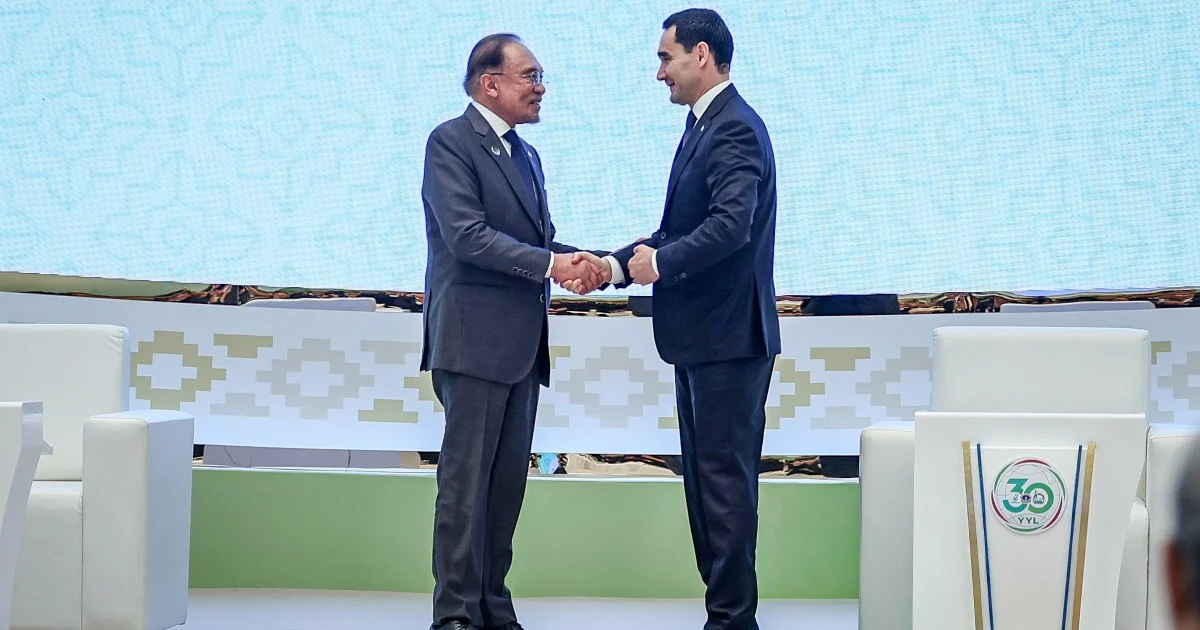
Malaysia and Turkmenistan have mapped out an ambitious agenda to strengthen their partnership across multiple economic and strategic dimensions, with energy cooperation emerging as a central pillar. The commitment comes in the wake of Prime Minister Datuk Seri Anwar Ibrahim's official visit to the Central Asian nation, marking a significant warming of relations between Kuala Lumpur and Ashkhabad at a time when both nations are recalibrating their international economic engagement.
The energy sector represents the most immediate area of potential collaboration between the two nations. Turkmenistan, one of the world's largest natural gas reserves holders, possesses resources that could prove increasingly valuable as Malaysia navigates its own energy transition while maintaining reliable supplies for both industrial and residential consumption. The agreement to deepen cooperation in this domain suggests discussions around potential liquefied natural gas arrangements, technical expertise sharing, and possible investments in downstream energy infrastructure that could benefit both economies.
For Malaysia, engagement with Turkmenistan offers a diversification opportunity in energy sourcing at a time when regional energy markets are experiencing significant structural shifts. The Southeast Asian nation has been actively exploring partnerships beyond its traditional suppliers and trading blocs, and Central Asian natural gas markets represent an underutilised avenue for risk mitigation. Turkmenistan's geographic position along ancient silk road trading routes also positions it as a potential transit hub for broader regional commerce, a consideration not lost on Malaysian trade planners.
Beyond the energy sector, the bilateral framework encompasses expanded collaboration in trade and investment flows. Both nations recognise that deepening commercial ties can generate mutual prosperity and create platforms for private sector engagement. Malaysian enterprises operating in sectors ranging from manufacturing to telecommunications have begun exploring opportunities in Turkmenistan's emerging markets, while Turkmen investors have shown interest in Southeast Asian financial services and real estate sectors. The formal broadening of this framework provides institutional backing for what might otherwise remain sporadic commercial interactions.
Transportation and logistics cooperation forms another strategic dimension of the renewed engagement. Turkmenistan's position in Central Asia, combined with Malaysian expertise in port management and maritime logistics derived from its substantial shipping industry, creates complementary capabilities that could benefit both nations. Enhanced connectivity through air transport, rail partnerships, and maritime routes would facilitate not only bilateral trade but also position both countries as bridge economies within their respective regions. Such infrastructure developments carry spillover benefits for the wider Southeast Asian and Central Asian communities.
Educational exchanges represent an often-overlooked but crucial element of lasting bilateral relationships. The agreement to expand cooperation in education opens pathways for Malaysian institutions to establish partnerships with Turkmen universities, enabling student mobility and academic staff exchanges. These human-to-people connections build familiarity and understanding that typically translate into long-term business relationships and cultural appreciation. Malaysian higher education institutions, increasingly recognised for quality in engineering, business, and technology disciplines, stand to benefit from exposure to Central Asian markets and talent pools.
Technological cooperation carries particular significance given Malaysia's aspirations as a regional technology hub. The framework creates opportunities for joint research initiatives, digital infrastructure development, and knowledge transfer in emerging fields such as renewable energy, telecommunications, and artificial intelligence. Turkmenistan's commitment to modernising its economy makes it a receptive partner for Malaysian tech companies seeking regional expansion beyond Southeast Asia.
Prime Minister Anwar Ibrahim's personal engagement in this visit underscores how Malaysian leadership views the relationship as strategically important beyond immediate commercial returns. His presence signals that Kuala Lumpur sees Central Asia as integral to a balanced, multipolar approach to international relations and economic partnerships. This aligns with Malaysia's broader foreign policy orientation of maintaining relationships with diverse partners across different regions and development trajectories.
The timing of this engagement proves significant given broader geopolitical realignments affecting Central Asia. As traditional great powers recalibrate their influence, opportunities emerge for medium-sized economies like Malaysia to establish meaningful partnerships without becoming entangled in great power competition. This positioning allows Malaysia to pursue interests in Central Asian energy and markets while maintaining the regional focus that has historically defined its prosperity.
For Turkmenistan, collaboration with Malaysia offers access to Southeast Asian markets and expertise in areas where development challenges persist. Malaysian companies bring track records of successfully operating in diverse regulatory environments and building profitable ventures in emerging markets. The bilateral framework thus represents not merely symbolic diplomatic courtesy but pragmatic recognition of complementary capabilities and mutual benefit. Both nations stand to gain from sustained engagement across multiple sectors rather than isolated transactions.
The concrete implementation of these agreements now becomes the decisive test. Both governments must translate rhetorical commitment into institutional mechanisms, removing bureaucratic obstacles and creating incentives for private sector participation. Business chambers, joint commissions, and sector-specific working groups will determine whether this diplomatic opening translates into the expanded trade volumes and investment flows that both nations seek.
Looking forward, the Malaysia-Turkmenistan partnership framework may serve as a template for how Southeast Asian nations can deepen engagement with Central Asia. As global supply chains fragment and economies seek resilience through diversification, partnerships spanning different geographic regions become increasingly valuable. Malaysia's early movement in this direction positions it advantageously within broader restructuring of international economic relationships.

