%22%2F%3E%3C%2Fpattern%3E%3C%2Fdefs%3E%3Crect%20width%3D%22100%25%22%20height%3D%22100%25%22%20fill%3D%22url(%23ph4182yg)%22%2F%3E%3Crect%20width%3D%22100%25%22%20height%3D%22100%25%22%20fill%3D%22url(%23ph4182yp)%22%2F%3E%3Ctext%20x%3D%2250%25%22%20y%3D%2250%25%22%20text-anchor%3D%22middle%22%20dominant-baseline%3D%22central%22%20fill%3D%22rgba(255%2C255%2C255%2C0.95)%22%20font-family%3D%22Georgia%2C%20'Times%20New%20Roman'%2C%20serif%22%20font-weight%3D%22700%22%20font-size%3D%22170%22%20letter-spacing%3D%22-0.02em%22%3EMalaysia%3C%2Ftext%3E%3C%2Fsvg%3E)
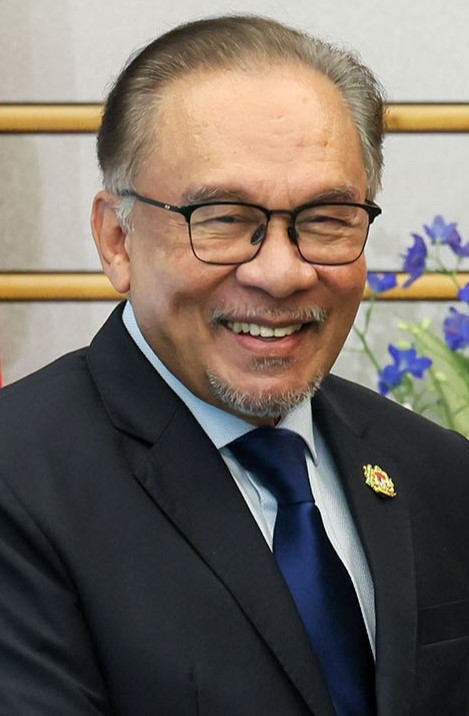
Prime Minister Datuk Seri Anwar Ibrahim has outlined a broad agenda for deepening Malaysia's relationship with the Republic of Tatarstan, identifying multiple avenues where both regions can benefit from enhanced partnership. The development comes as Anwar continues Malaysia's diplomatic engagement across Russia and the broader Eurasian region, reflecting Kuala Lumpur's efforts to diversify its international partnerships beyond traditional Southeast Asian circles.
During a bilateral meeting with Rustam Minnikhanov, the Rais or Head of Tatarstan, Anwar highlighted cooperation possibilities spanning trade, investment, educational initiatives, tourism promotion, the halal industry, technological advancement and workforce development. The discussions took place shortly after Anwar's arrival in Kazan on Tuesday, where he was received as part of an official working visit to attend the ASEAN-Russia Commemorative Summit. The timing of these talks underscores Malaysia's strategic positioning as it seeks to leverage ASEAN's enhanced relationship with Russia for mutual economic gain.
Energy cooperation emerged as a particularly significant focus area given Tatarstan's status as one of Russia's premier oil-producing regions. Anwar, who concurrently holds the Finance Minister portfolio, emphasised that downstream activities, refining and petrochemical operations represent immediate avenues for joint ventures and technology transfer. This focus reflects Malaysia's longstanding expertise in petroleum refining and petrochemical processing, sectors where collaboration could yield competitive advantages for both sides while supporting energy security objectives in the Asia-Pacific region. The convergence of Malaysian technical capabilities with Tatarstan's resource abundance creates a compelling foundation for industrial partnerships.
Beyond energy, Anwar and Minnikhanov explored the potential of the Kazan Forum as a catalyst for strengthening business networks and identifying investment opportunities. The discussions encompassed innovation hubs, digital economy initiatives and strategic capital deployment across various sectors. For Malaysian enterprises, Tatarstan's position as a technological and industrial hub within Russia offers access to Central Asian markets and European networks that remain underexploited by Malaysian businesses. The diplomatic focus on innovation suggests both sides recognise that competitive advantage increasingly derives from technological integration rather than traditional commodity exchange.
Anwar extended particular recognition to Kazan's designation as the Islamic World Cultural Capital 2026 by the Islamic World Educational, Scientific and Cultural Organisation. This designation carries implications for Malaysia's halal industry, positioning the country to leverage its certification standards and halal value chain expertise with a region increasingly central to Islamic cultural and economic discourse. The recognition also reflects Kazan's historical significance as an Islamic scholarly centre, creating opportunities for knowledge exchange in Islamic finance, education and cultural programming that align with Malaysia's regional aspirations.
The Prime Minister also acknowledged President Vladimir Putin's establishment of a Strategic Vision Group designed to serve as a bridge between Russia and the Islamic world. This institutional framework suggests that Moscow views enhanced engagement with Muslim-majority nations as strategically important, creating openings for Malaysia to deepen bilateral relations within a broader context of Russia-Islamic world cooperation. The existence of such mechanisms indicates sustained commitment from the Russian government to relationship-building beyond transactional diplomacy.
Anwar's delegation to Kazan reflects Malaysia's deliberate approach to high-level diplomatic engagement, with the entourage including Investment, Trade and Industry Minister Datuk Seri Johari Abdul Ghani and Economy Minister Akmal Nasrullah Mohd Nasir. This composition signals that the visit encompasses both political and economic dimensions, with ministerial-level attendance ensuring that discussions translate into concrete policy frameworks and departmental action plans. The inclusion of relevant economic ministers suggests Malaysia intends to operationalise cooperation outcomes through existing institutional channels.
The ASEAN-Russia Commemorative Summit itself represents a milestone in regional diplomacy, serving as the highest-level engagement platform between the regional grouping and Moscow. Russia's evolution from dialogue partner in 1991 to full ASEAN Dialogue Partner in 1996 and Strategic Partner in 2018 demonstrates a trajectory of deepening commitment. This multilateral dimension provides essential context for bilateral Malaysia-Tatarstan discussions, as cooperation frameworks established at the regional level create enabling conditions for sub-national and sectoral partnerships to flourish without contradicting broader ASEAN consensus positions.
Kazan's geographic and historical significance extends beyond its contemporary status as an industrial centre. Positioned at the confluence of the Volga and Kazanka rivers approximately 800 kilometres east of Moscow, with a population approaching 1.3 million, the city functions as Russia's unofficial third capital after Moscow and Saint Petersburg. Its more than millennium-old history and recognition as a paramount centre of Islamic culture within Russia create natural affinity with Malaysia's own Islamic heritage and contemporary positioning as a moderate Islamic nation. For Malaysian diplomats and business leaders, Kazan represents a gateway not merely to Tatarstan but to broader Eurasian market access.
The strategic importance of Malaysia-Tatarstan cooperation extends beyond immediate commercial benefit, as successful partnerships could demonstrate the viability of ASEAN-Russia engagement models at the sub-national level. Positive outcomes from Kazan could encourage other ASEAN members to pursue comparable relationships with Russian federal subjects and regional administrations, potentially multiplying the bilateral dividends for all ASEAN states. This represents a significant departure from traditional bilateral diplomacy that operates primarily through central governments, instead leveraging regional autonomy structures to create parallel channels of cooperation that enhance overall relationship depth.
For Malaysian stakeholders, the emphasis on halal industry cooperation deserves particular attention given Malaysia's positioning as a global halal certification leader and the economic potential of the Islamic world's expanding consumer base. Tatarstan's recognition as Islamic Cultural Capital 2026 creates a unique window for Malaysian halal certification bodies, Islamic finance institutions and halal-focused enterprises to establish regional headquarters or operational bases within Russia's most Islamically significant city. This geographic positioning could facilitate market penetration across Central Asia and the Caucasus, regions where Malaysian halal products currently face limited market presence.
Anwar's characterisation of the relationship as one between friends signals a commitment to moving beyond purely transactional engagement toward substantive partnership grounded in mutual respect and shared interests. The diplomatic language employed suggests Malaysian leadership views Tatarstan not as a peripheral Russian region but as a significant partner capable of advancing Malaysian interests across multiple dimensions. As Malaysia continues calibrating its international positioning amid evolving geopolitical dynamics, deepening ties with Russia's resource-rich regions and technologically advanced cities reflects pragmatic statecraft aimed at maximising options and opportunities across the Eurasian landscape.