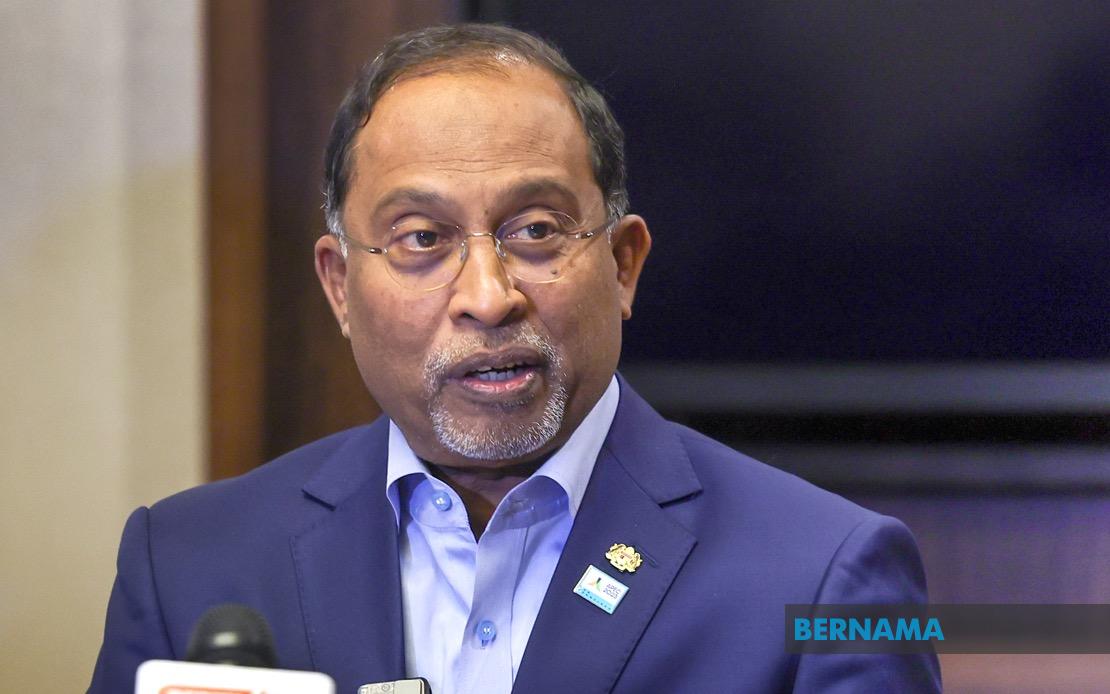
Malaysia has pledged to strengthen its higher education cooperation with Palestine as part of broader efforts to support the Palestinian people's development through knowledge and academic advancement. The commitment was articulated by Higher Education Minister Datuk Seri Dr Zambry Abd Kadir during a meeting with Palestinian Ambassador to Malaysia Jehad Alqedra, reflecting the two nations' shared interest in leveraging education as a transformative tool.
The discussion between the minister and the ambassador centred on multiple dimensions of academic collaboration, with particular emphasis on sustaining assistance programmes for Palestinian students pursuing education in Malaysia. This initiative reflects Malaysia's longstanding role as a destination for international scholars, particularly from the Middle East and Muslim-majority nations, and underscores the country's willingness to extend educational access to those from conflict-affected regions.
Dr Zambry framed education as a foundational instrument for nation-building and recovery, articulating Malaysia's philosophical approach to international engagement. His statement that "education is a bridge of hope, peace and the future" encapsulates a broader vision wherein academic institutions serve not merely as centres of learning but as catalysts for societal transformation and cross-cultural understanding. This positioning aligns with Malaysia's historical diplomatic posture of using soft power channels to advance humanitarian objectives.
The engagement signals Malaysia's intention to explore concrete mechanisms for deepening ties between Palestinian and Malaysian universities. Such institutional partnerships typically encompass student exchange programmes, faculty mobility, joint research initiatives, and capacity-building workshops. These frameworks enable knowledge transfer while fostering networks that transcend geopolitical boundaries and contribute to Palestinian institutional strengthening.
For Malaysian educational institutions, expanded Palestinian engagement offers opportunities to enhance their international profiles and demonstrate commitment to inclusive, globally-minded education. Universities across the country have increasingly positioned themselves as regional hubs for academic excellence, and partnerships with Middle Eastern and Palestinian counterparts reinforce this trajectory while building soft diplomatic relationships.
The timing of this initiative reflects Malaysia's consistent advocacy for Palestinian causes within multilateral forums and reflects domestic political support for such positions. Strengthening educational links serves multiple purposes simultaneously: it provides tangible support to Palestinians seeking advancement through learning, demonstrates Malaysian commitment to its stated principles of supporting developing nations, and reinforces Malaysia's positioning as a bridge-builder within the Muslim world and beyond.
Palestinian students already form a visible community within Malaysian universities, with many pursuing degrees across engineering, medicine, business, and social sciences. Enhanced cooperation frameworks would likely expand these numbers while improving support structures available to Palestinian learners, including scholarships, mentorship programmes, and career guidance aligned with Palestinian reconstruction needs.
The ambassador's courtesy visit represents standard diplomatic engagement but carries significance given the current global focus on Palestinian circumstances and education's role in development. Such meetings typically conclude with commitments to continue dialogue, establish joint working groups, and explore funding mechanisms for expanded cooperation. The minister's public commitment via social media amplifies the announcement's reach among Malaysian stakeholders invested in international development and education.
For Southeast Asia more broadly, Malaysia's move illustrates how regional nations leverage educational cooperation as a diplomatic tool, particularly when bilateral relations operate within constrained political environments. By emphasizing education rather than political dimensions, countries can sustain engagement and maintain dialogue channels even amid complex international circumstances.
The initiative aligns with Malaysia's existing scholarship programmes and educational partnerships across the Muslim world, suggesting this represents evolution of established practice rather than novel departure. However, the explicit public commitment from the Higher Education Minister elevates the partnership's profile and potentially signals intent to expand it beyond current scope.
Moving forward, concrete manifestations of this cooperation will likely emerge through formal agreements between Malaysian and Palestinian institutions, expanded quota allocations for Palestinian students in Malaysian universities, and perhaps financial mechanisms supporting such exchanges. The success of these arrangements will depend on sustained institutional commitment and adequate resource allocation beyond rhetorical endorsement.

