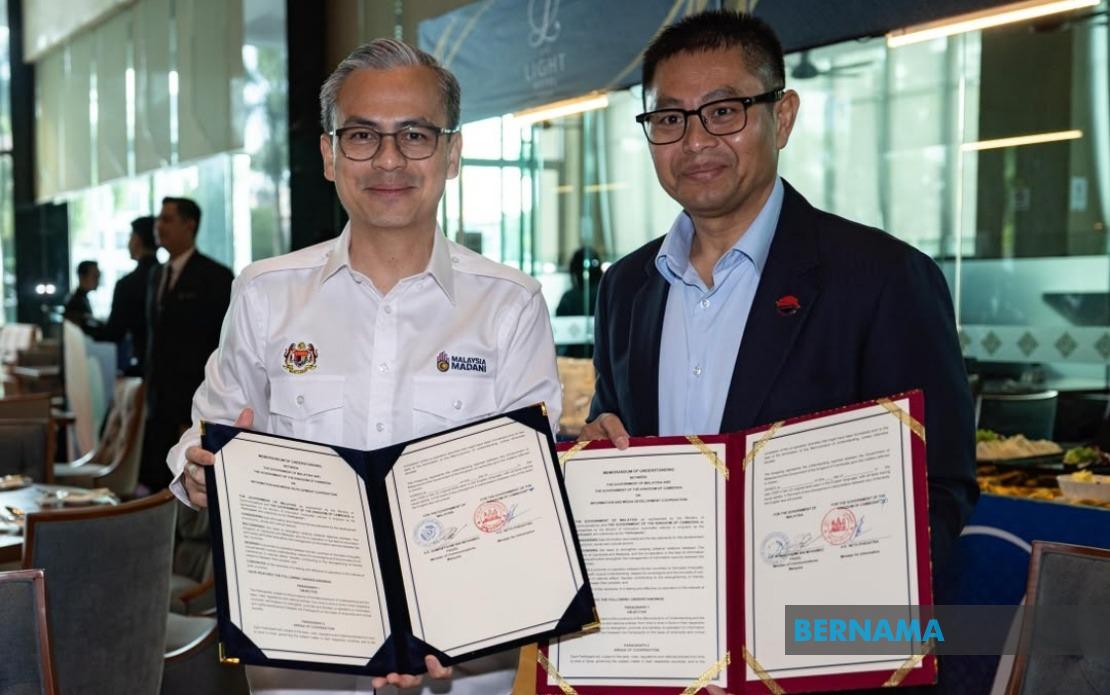
Malaysia and Cambodia have taken a substantial stride in deepening their bilateral partnership by formalising a memorandum of understanding focused on media and information development. The agreement, signed at the Light Hotel in Butterworth on June 20, was executed ad referendum by Communications Minister Datuk Fahmi Fadzil, while the Cambodian delegation was represented by Under Secretary of State Prak Thaveak Amida, acting on behalf of Information Minister Neth Pheaktra. This accord demonstrates both governments' recognition of the strategic importance of media collaboration in the contemporary geopolitical landscape.
The MoU establishes a comprehensive framework addressing multiple dimensions of the media and communications sector. The agreement encompasses provisions for systematic exchange of news and information, collaborative arrangements in radio and television broadcasting, joint initiatives in printing and publishing, and structured programmes for developing human capital within the industry. Beyond traditional media operations, the partnership extends to emerging areas including film and documentary production, media cybersecurity protocols, information policy harmonisation, and regulatory best practices—reflecting the evolving nature of modern communications ecosystems.
Critically, the agreement recognises innovation as a central pillar of future collaboration. Both nations have committed to exploring new technologies and methodologies that will enable their respective media sectors to remain competitive and responsive to audience demands. This forward-looking dimension is particularly significant for Southeast Asia, where digital transformation is reshaping how news organisations operate and how citizens consume information. The partnership thus positions Malaysia and Cambodia as collaborative partners in navigating the complex challenges and opportunities presented by technological disruption in media.
The timing of this agreement is noteworthy, coinciding with the National Journalists' Day (HAWANA) 2026 grand finale being held concurrently at the PICCA convention centre in Butterworth. The sixth edition of this biennial gathering, attracting approximately 1,000 media professionals from across Malaysia and internationally, carries the thematic emphasis "Media Integrity Strengthens Credibility." This context underscores the deeper purpose behind the Malaysia-Cambodia MoU: establishing institutional mechanisms through which both countries can collectively address challenges to media credibility and professional standards that affect the entire Southeast Asian region.
For Malaysian readers and media professionals, this development carries practical implications. The structured exchange of knowledge and expertise outlined in the agreement creates opportunities for Malaysian journalists, broadcasters, and media technicians to engage with Cambodian counterparts, fostering cross-border professional networks. Conversely, Cambodian media practitioners gain access to Malaysian institutional experience and regulatory frameworks that have been refined over decades of democratic practice. This bidirectional knowledge transfer has the potential to elevate professional standards across both countries.
The emphasis on media cybersecurity within the agreement addresses a pressing concern throughout Southeast Asia, where media organisations increasingly face sophisticated cyber threats targeting journalistic operations and news distribution infrastructure. By establishing collaborative security protocols, Malaysia and Cambodia can share threat intelligence, develop joint best practices for protecting digital assets, and coordinate responses to coordinated attacks. This dimension of the partnership extends beyond commercial considerations to encompass the protection of democratic institutions and public access to information.
Prime Minister Datuk Seri Anwar Ibrahim is scheduled to officially inaugurate the HAWANA event at 3 pm, signalling the government's commitment to supporting this gathering. His participation, alongside Penang Chief Minister Chow Kon Yeow and senior Communications Ministry officials, reflects the high priority accorded to media sector development within Malaysia's policy agenda. The attendance of Bernama leadership, including Chairman Datuk Seri Wong Chun Wai and Chief Executive Officer Datin Paduka Nur-ul Afida Kamaludin, underscores the role of Malaysia's national news agency as a central institutional player in these diplomatic and sectoral initiatives.
The broader significance of this MoU extends beyond bilateral relations to encompass regional stability and cohesion. As Southeast Asia navigates an era of heightened information competition—marked by the proliferation of misinformation, competing narratives from external actors, and challenges to journalistic independence—strengthened cooperation between national media sectors represents a modest but meaningful counterweight. Coordinated approaches to information policy and regulatory harmonisation can help establish regional standards that protect both professional journalism and public discourse from manipulation.
For media organisations operating across Southeast Asia, the Malaysia-Cambodia partnership may establish precedent for similar multilateral arrangements. If successfully implemented, this MoU could demonstrate the viability of deeper media cooperation throughout the region, potentially leading to tripartite or broader multilateral frameworks involving Thailand, Vietnam, Laos, and other ASEAN members. Such expanded cooperation could address shared challenges more effectively than individual national efforts, particularly in areas like combating disinformation and establishing professional standards.
The commitment to human capital development deserves particular attention, as it acknowledges that sustainable improvements in media quality depend fundamentally on investing in journalism education, technical training, and professional development. By creating structured mechanisms for Malaysian and Cambodian media organisations to collaborate on training programmes, the MoU addresses a chronic constraint facing many Southeast Asian newsrooms: limited resources for developing journalistic skills and understanding evolving technological platforms. Joint training initiatives could yield efficiency gains while raising professional standards.
From a Malaysian perspective, this agreement also reflects the government's broader regional diplomacy objectives under Datuk Seri Anwar Ibrahim's leadership, which has emphasised strengthening ties with neighbouring nations and positioning Malaysia as a constructive player in regional affairs. The media cooperation initiative demonstrates that bilateral engagement need not focus exclusively on trade or security matters; cultural and professional exchanges in the information sector represent equally valuable dimensions of statecraft.
Implementation success will ultimately determine whether this MoU translates rhetoric into tangible institutional changes and professional benefits. Both governments will need to establish dedicated coordination mechanisms, allocate resources to joint initiatives, and ensure that relevant media organisations actively participate in collaborative activities. The test of this partnership will come in the months and years ahead, as specific joint projects move from conception to execution, and as both nations' media sectors demonstrate measurable improvements in areas targeted by the agreement.

