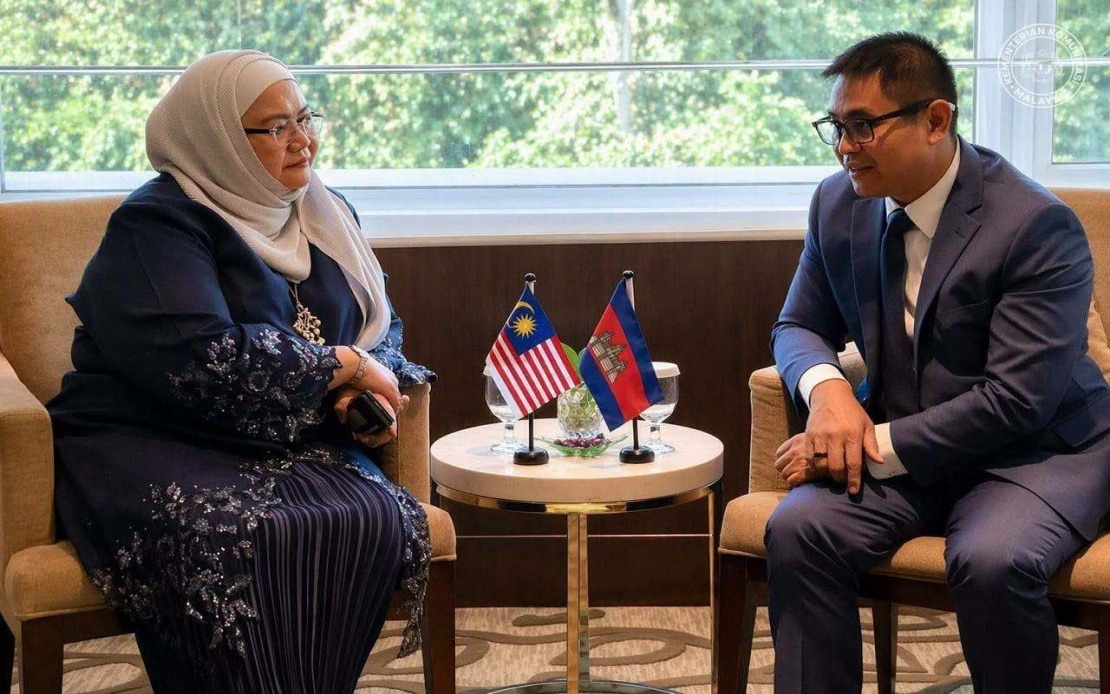
Malaysia and Cambodia have moved forward with implementing a bilateral cooperation framework on information and media development, holding substantive discussions at a senior regional forum in Brunei this week. The two nations are working to operationalise the memorandum signed in Penang last month, reflecting a strategic pivot toward deepening institutional ties in the rapidly evolving communications sector across Southeast Asia.
The bilateral meeting took place on the sidelines of the 23rd ASEAN Senior Officials Responsible for Information conference in Bandar Seri Begawan on Wednesday. The Malaysian delegation was led by Deputy Secretary-General Datuk Bahria Mohd Tamil from the Ministry of Communications, while Cambodia was represented by Secretary of State Prak Thaveak Amida from its Ministry of Information. The venue and timing underscore both nations' commitment to coordinating media policy within the broader ASEAN framework, where information governance has become increasingly central to regional stability and development.
The foundation for this partnership was laid on June 20 when Communications Minister Datuk Fahmi Fadzil and Amida signed the Memorandum of Understanding on Information and Media Development Cooperation on behalf of Cambodian Information Minister Neth Pheaktra. The agreement encompasses a broad spectrum of media and communications disciplines, signalling an ambition to move beyond traditional information sharing into more sophisticated collaboration on modern challenges. For Malaysian policymakers, the timing reflects growing recognition that regional media cooperation is essential amid fragmented digital landscapes and cross-border information flows.
During the Brunei discussions, both delegations concentrated on several interconnected priorities. Information exchange mechanisms were revisited to ensure efficient flow of authentic news and data between the two capitals, a priority that has gained urgency given misinformation challenges across Southeast Asia. Media development cooperation formed another pillar, with both nations exploring capacity-building initiatives, journalist training programmes, and institutional strengthening that could benefit smaller media houses struggling with digitalisation. The agenda also touched on digital transformation pathways, acknowledging that media organisations in both countries face similar pressures to innovate while maintaining editorial standards and financial viability.
Information integrity emerged as a defining theme in the bilateral conversation. Both Malaysia and Cambodia have grappled with disinformation campaigns and the erosion of trust in traditional information sources, particularly during election cycles and periods of political tension. By establishing collaborative mechanisms to combat false narratives and coordinate fact-checking responses, the two countries are attempting to model a pragmatic approach to media resilience that neither compromises press freedom nor leaves communities vulnerable to coordinated manipulation. This represents a delicate balance in Southeast Asia, where governments must navigate genuine security concerns against legitimate demands for transparency.
The Ministry of Communications characterised the partnership as reflecting Malaysia's commitment to advancing regional information and media sectors while simultaneously strengthening bilateral relations with Cambodia. This language signals that media cooperation is being framed as a win-win proposition rather than a mechanism for political control—a positioning that carries weight given sensitivities around government involvement in media across the region. For Malaysian stakeholders including news organisations, broadcasters, and digital platforms, the partnership opens potential pathways for collaborative content production, technical expertise sharing, and market integration.
The strategic context matters considerably for understanding why this cooperation gains importance now. Cambodia's media environment has faced scrutiny from international observers, while Malaysia continues refining its approach to balancing media freedom with public order concerns following recent political transitions. Joint initiatives on information integrity and digital transformation allow both governments to demonstrate commitment to modern governance while supporting their respective media industries against market consolidation and the challenge of online-only competitors. For regional media companies operating across multiple ASEAN markets, clearer bilateral frameworks reduce regulatory friction.
The conference in Brunei also positioned Malaysia within the broader ASEAN conversation on information policy, where consensus-building remains elusive but necessary. The 23rd SOMRI meeting provided a multilateral context for bilateral advancement, allowing Malaysia to present its Cambodia partnership as part of a coherent ASEAN-wide vision rather than a bilateral arrangement. This multilayered approach is characteristic of how Southeast Asian nations manage both bilateral relationships and regional integration obligations.
Looking ahead, the operational success of this MoU will depend on translating broad cooperation principles into concrete mechanisms. Joint working groups on digital transformation, media literacy, and fact-checking infrastructure will likely emerge as implementation progresses. Both countries will need to establish clear timelines, budget allocations, and performance indicators to move beyond symbolic agreements. For Malaysian communications professionals, the partnership represents both opportunity—access to Cambodian markets and expertise—and responsibility, as Malaysia's larger media infrastructure and technological sophistication position it as a potential knowledge leader in the arrangement.
The initiative also reflects broader geopolitical currents in Southeast Asia, where middle powers like Malaysia seek to strengthen regional integration while maintaining strategic autonomy. By partnering with Cambodia on information governance, Malaysia reinforces ASEAN solidarity while addressing shared vulnerabilities to external information warfare and domestic disinformation. This dual purpose—deepening bilateral trust while contributing to regional resilience—will likely define how Malaysia approaches similar partnerships with other Southeast Asian neighbours in coming years.
For stakeholders across Malaysia's media ecosystem, the cooperation framework signals that digital age journalism requires institutional support beyond the traditional market. Government-to-government partnerships on media development, when structured with appropriate transparency and independence safeguards, can facilitate resource sharing and best practice exchange that smaller news organisations might otherwise lack. The challenge lies in ensuring that such cooperation genuinely serves public interest journalism rather than becoming a vehicle for controlling information flow.

