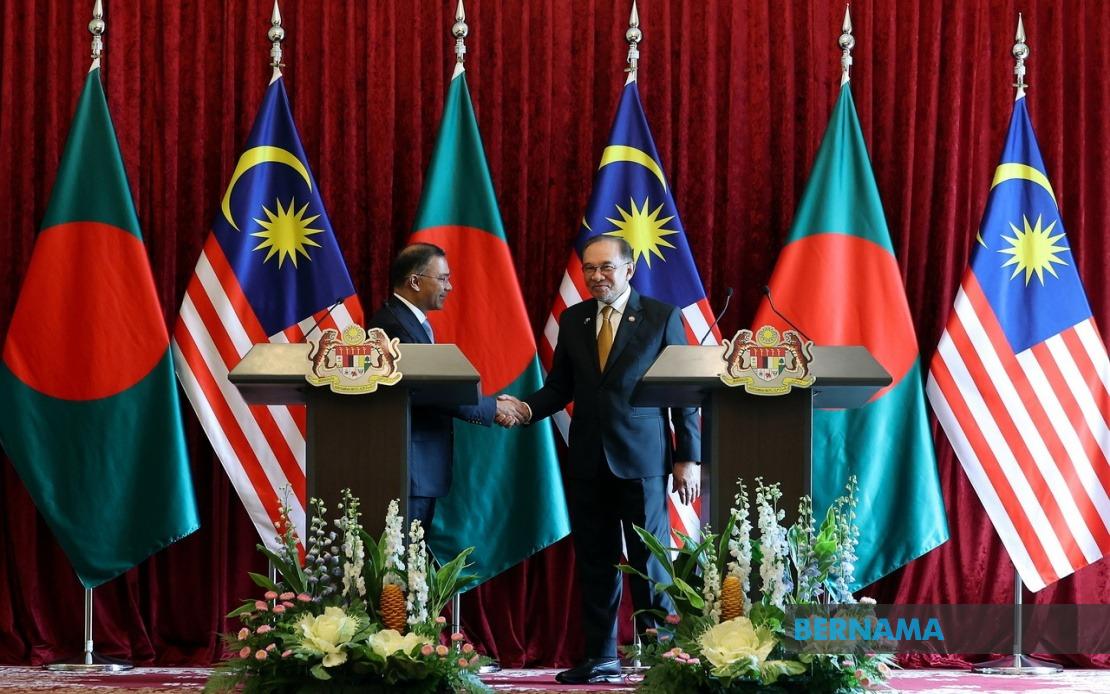
Malaysia and Bangladesh have reaffirmed their determination to eradicate the exploitation and mistreatment of migrant workers, with both nations pledging joint efforts to establish fairer labour practices. Prime Minister Datuk Seri Anwar Ibrahim underscored this commitment during a bilateral meeting with Bangladesh Prime Minister Tarique Rahman in Putrajaya on June 22, emphasising that transparent recruitment mechanisms and equitable treatment must become the foundation of cross-border labour arrangements between the two countries.
The bilateral engagement addressed one of Southeast Asia's most persistent challenges: the welfare vulnerabilities of migrant labourers who migrate for economic opportunity but frequently encounter exploitation, wage theft, unsafe working conditions, and inadequate regulatory oversight. Malaysia hosts one of the region's largest migrant worker populations, with Bangladeshi nationals forming a substantial portion of the workforce across construction, manufacturing, domestic service, and agriculture sectors. The acknowledgment by both prime ministers that systemic reforms are necessary reflects growing international scrutiny of labour conditions and mounting pressure from civil society organisations documenting abuses.
Anwar highlighted the paradox inherent in Malaysia's reliance on foreign labour: while migrant workers have become indispensable to sustaining economic growth and filling critical labour shortages, their integration into the Malaysian economy has simultaneously generated significant humanitarian concerns and reputational challenges. He stated that both governments must take the lead in preventing what he termed "excesses" within recruitment and employment systems, recognising that unchecked malpractices undermine development objectives and violate fundamental human dignity.
The Prime Minister's emphasis on transparency represents a departure from conventional practices in recruitment networks, which have historically operated through opaque intermediaries and informal channels. Standardising recruitment procedures, establishing clear contractual terms in workers' native languages, and implementing independent verification mechanisms would create accountability structures currently absent in many arrangements. Malaysia's construction and domestic work sectors have witnessed repeated scandals involving fraudulent recruitment fees, contract substitution, and withholding of documentation—practices that render workers vulnerable to trafficking and modern slavery dynamics.
Anwar further stressed that protecting the families of migrant workers extends the welfare consideration beyond individual labourers to their dependents in origin countries. Bangladeshi workers frequently remit substantial portions of earnings to support relatives, making their financial security and workplace stability critical to household stability across Bangladesh. This family-centred perspective aligns with international labour standards frameworks and acknowledges migration's cascading social effects across both source and destination economies.
Bangladesh Prime Minister Tarique Rahman, addressing Malaysia's temporary restrictions on new Bangladeshi worker recruitment that followed various labour disputes and regulatory tightening, urged the reopening and expansion of Malaysia's labour market for Bangladeshi nationals. Bangladesh faces significant unemployment pressures and relies heavily on overseas remittances as a foreign exchange source, making labour export markets vital to national economic stability. Rahman's request signals Bangladesh's eagerness to normalise recruitment flows once both countries establish credible protections and monitoring mechanisms.
The temporary closure of Malaysia's labour markets to certain nationalities, while intended to prevent exploitation and enforce compliance with new regulations, has created economic hardship for recruitment agencies and workers across Bangladesh seeking employment opportunities. Reopening pathways requires confidence-building measures from both governments, including bilateral agreements specifying worker rights, employer obligations, enforcement procedures, and dispute resolution mechanisms. The joint commitment signals a willingness to move beyond temporary restrictions toward sustainable, regulated frameworks.
For Malaysia, strengthening labour governance carries significant implications for its international standing and long-term workforce stability. The nation competes with regional rivals for investment and talent, and persistent reports of worker mistreatment risk damaging its reputation and attracting negative regulatory attention from trading partners and international labour organisations. Conversely, establishing exemplary recruitment standards could position Malaysia as a regional model for ethical labour migration management, potentially attracting higher-quality workers and stabilising employment relationships.
The agreement also reflects broader regional dynamics within ASEAN, where labour migration intersects with geopolitical relationships and economic interdependencies. Bangladesh's strategic importance to Malaysian labour supply chains, combined with growing consumer awareness of supply chain ethics, incentivises genuine reform rather than performative commitment. Both nations recognise that sustainable labour migration arrangements require simultaneous attention to recruitment practices, workplace monitoring, wage protection systems, and accessible grievance mechanisms.
Implementing these commitments will require translating political declarations into operational changes. This necessitates strengthening bilateral labour attaché offices, establishing joint task forces for investigating exploitation allegations, creating portable benefits systems protecting workers across employers, and ensuring that recruitment agencies maintain adequate insurance and bonding guarantees. Malaysia's Ministry of Human Resources and Bangladesh's Bureau of Manpower Employment and Training must coordinate closely to develop and enforce standards that both countries can credibly monitor.
The joint commitment also carries implications for migrant workers already employed in Malaysia. Enhanced protections and transparent procedures should improve working conditions and earnings security for existing labourers, whilst establishing clearer pathways for future recruits from Bangladesh. However, translating high-level agreements into ground-level protections remains challenging without adequate resourcing for labour inspectorates, meaningful penalties for violations, and worker access to legal remedies.
Moving forward, the test of this bilateral commitment will be measured through concrete indicators: measurable reductions in documented exploitation cases, increased workplace inspections, higher complaint resolution rates, and demonstrable improvements in worker earnings and safety standards. Both governments must signal commitment through institutional reform and budgetary allocation rather than relying solely on diplomatic rhetoric, ensuring that migrant workers experience tangible improvements in their employment conditions and family security.

