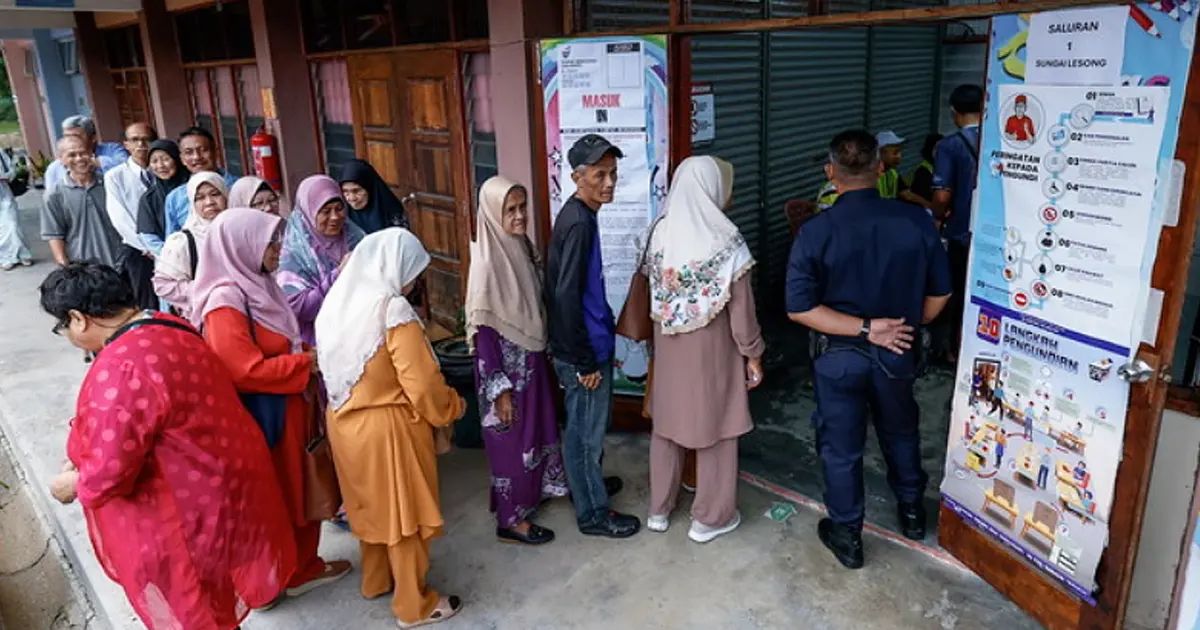
The relentless emphasis on religious and racial matters risks draining the political energy of Malay voters, according to a senior academic observer, who warns that the electorate's patience with such discourse may soon reach breaking point. Awang Azman Pawi from Universiti Malaya has raised concerns about the cumulative psychological impact of sustained debate around the so-called 3R issues—race, religion, and royalty—suggesting that voter fatigue could fundamentally reshape how Malays evaluate their political choices.
The analyst's perspective comes amid a political landscape where these identity-based questions have featured prominently in recent discourse and electoral campaigns. Rather than serving as mobilising forces indefinitely, Awang Azman contends that perpetual recourse to such issues may paradoxically weaken their electoral currency by exhausting the attention and goodwill of voters who increasingly harbour other pressing concerns. This observation carries implications far beyond academic debate, potentially signalling a strategic shift in how political parties may need to court Malay support in future contests.
Awang Azman emphasises that political parties will ultimately be evaluated based on tangible outcomes and their capacity to tackle concrete problems affecting citizens' daily lives. The assessment suggests a fundamental disconnect between the substance of ongoing political discourse and the priorities that actually occupy voters' minds when they enter the ballot box. This gap between what politicians emphasise and what voters care about represents a critical vulnerability for parties that remain wedded to identity politics as their primary tool.
Among the most pressing concerns for ordinary Malaysians is the sharp acceleration in living costs, which has placed unprecedented strain on household budgets across income levels. The rising price of essential goods, utilities, transportation, and housing has created tangible hardship for families regardless of their ethnic or religious background. This shared economic burden potentially transcends traditional identity-based cleavages, creating space for issue-based political competition rather than identity-driven appeals.
The cost of living crisis carries particular significance in Malaysia's political context because it affects citizens across all demographics while remaining resistant to symbolic or rhetorical solutions. Unlike debates that can be managed through clever messaging or appeals to historical narratives, the cost of a bowl of noodles or monthly rent payments cannot be wished away through political speeches. Parties demonstrating credible plans to address these immediate economic pressures may gain electoral advantage over those focusing primarily on cultural or religious grievances.
Awang Azman's analysis suggests that Malay voters are not monolithic in their concerns despite their shared ethnic identity. While some segments of the Malay electorate certainly prioritise 3R issues, an apparently substantial portion judges political performance through the lens of economic delivery. This heterogeneity within the Malay voting bloc creates both opportunity and danger for political parties seeking to construct winning coalitions.
The warning about emotional fatigue implies a saturation point where continued emphasis on race and religion questions may trigger voter irritation rather than enthusiasm. Psychological research on messaging suggests that repetitive appeals to the same themes eventually produce diminishing returns and may generate backlash, particularly among voters exposed to competing messages or those who have experienced genuine material hardship. A voter struggling with inflation and uncertain employment prospects may view endless 3R debates as disconnected from their reality.
For Malaysia's political ecosystem, this analysis introduces a complication into conventional strategic calculations. Parties accustomed to mobilising support through appeals to ethnic and religious interests must now grapple with the possibility that such strategies have a temporal limit. The rise of economic grievances as a primary voter concern reflects both objective changes in material conditions and potentially generational shifts in how voters evaluate political choices. Younger voters particularly may weigh economic competence more heavily than older cohorts.
The tension between identity politics and performance politics will likely shape Malaysian elections for years ahead. Parties ignoring the 3R constellation risk losing support among core constituencies, yet those relying exclusively on such appeals risk appearing tone-deaf to genuine economic challenges. The political parties that successfully balance both dimensions—acknowledging identity concerns while demonstrating concrete economic solutions—may secure competitive advantages in increasingly contested electoral contests.
Awang Azman's cautionary observation also reflects broader trends visible across Southeast Asia, where economic pressures have driven voters toward performance-based evaluations regardless of traditional ethnic or religious alignments. Thailand, Indonesia, and the Philippines have all witnessed significant voter shifts driven by economic grievances, suggesting Malaysia may not be immune to similar political realignments. The emotive power of identity issues remains real, but its exclusive dominance over electoral outcomes appears to be waning.
The path forward likely requires Malaysian political parties to develop more sophisticated approaches that integrate economic solutions with cultural recognition rather than treating these dimensions as competing priorities. Credible policies addressing inflation, unemployment, and wage stagnation coupled with respect for religious and cultural values could prove more electorally potent than either approach deployed in isolation. The analyst's warning ultimately suggests that Malaysian politics is entering a phase where voter sophistication and material desperation combine to demand substantive rather than purely symbolic responses.

