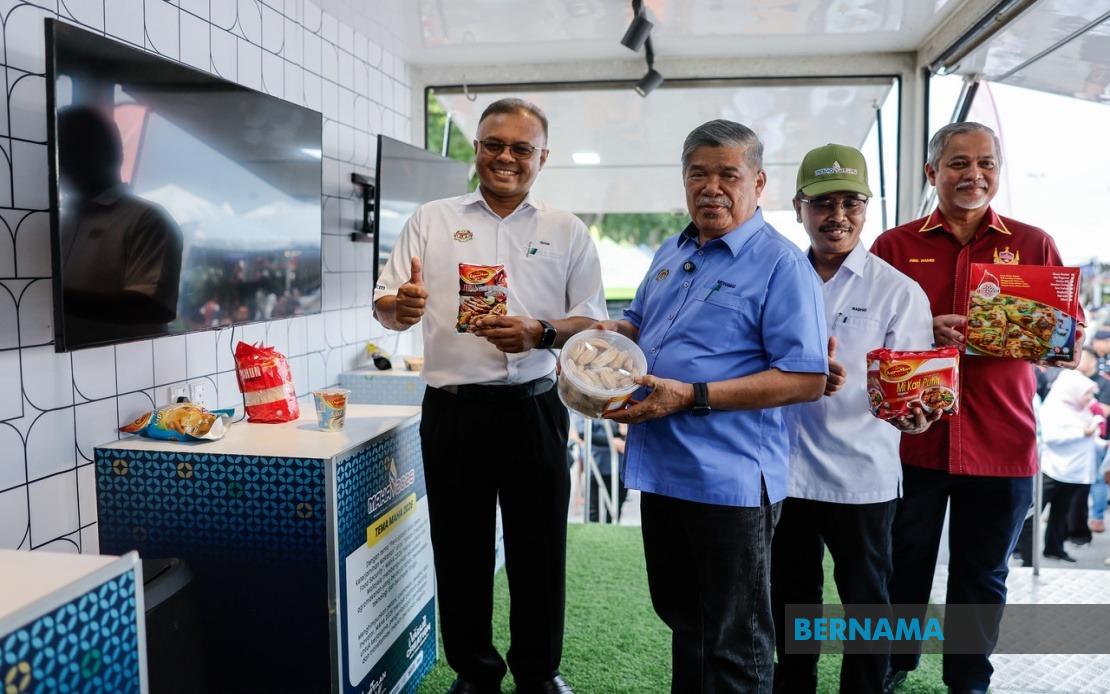
Malaysia's premier agricultural showcase, MAHA 2026, is preparing to significantly expand its global footprint by inviting international exhibitors to participate for the first time, marking a substantial shift in the biennial event's direction. Agriculture and Food Security Minister Datuk Seri Mohamad Sabu announced at a press conference in Shah Alam on June 20 that the expanded participation reflects growing recognition that food security challenges transcend national borders and require coordinated international responses. This strategic opening to foreign exhibitors represents an evolution in how Malaysia positions itself within regional and global agricultural networks.
Seven countries and regions have already confirmed their involvement in the 2026 edition, demonstrating strong international interest in Malaysia's agricultural landscape. Brazil, China, the United States, Japan, South Korea, Hungary, and China's Guangxi region have committed to participating, while Uzbekistan has also expressed its intention to join the showcase. Several additional nations remain in discussions regarding their participation, suggesting the final roster of international exhibitors may expand further as the event approaches. This geographic diversity spanning the Americas, Europe, Asia, and Central Asia underscores the universal significance of agricultural innovation and trade opportunities that MAHA represents.
The inclusion of international participants carries profound implications for Malaysia's agricultural development trajectory. By introducing foreign exhibitors, the event creates a platform for knowledge transfer and technological exchange that can catalyse innovation within the domestic farming sector. Datuk Isham Ishak, secretary-general of the Agriculture and Food Security Ministry, emphasised that this international dimension will enable local participants to access cutting-edge agricultural technologies and methodologies practised in leading farming nations. Such exposure proves invaluable for Malaysian farmers seeking to enhance productivity and competitiveness in an increasingly demanding global market.
Beyond technical knowledge acquisition, the 2026 show promises tangible commercial benefits for both local and visiting participants. Business matching sessions scheduled during the event will facilitate direct negotiations between Malaysian exhibitors and international counterparts, creating pathways for export expansion and supply chain partnerships. Local participants gain opportunities to market their products to foreign buyers while simultaneously exploring the offerings of international suppliers. This bidirectional trade dynamic transforms MAHA from primarily a domestic agricultural showcase into a regional trading hub where significant commercial transactions can materialise.
The Minister articulated a broader philosophical perspective underpinning this international expansion, emphasising that food security represents an interconnected global challenge rather than an issue any single nation can resolve in isolation. When agricultural disasters, climate shocks, or supply disruptions affect one country, neighbouring and distant nations experience ripple effects through international commodity markets and trade networks. By fostering direct engagement among agricultural stakeholders across continents, MAHA 2026 acknowledges this interdependence and creates mechanisms for collaborative problem-solving and mutual support among farming communities worldwide.
Parallel to expanding international participation, the Malaysian government has taken significant steps to strengthen its domestic agricultural monitoring infrastructure. The launch of the Surveillance and Intervention Supply Demand Agrofood system, commonly abbreviated as SISDA, represents a substantial technological investment designed to enhance food security governance. This sophisticated platform integrates big data analytics, machine learning algorithms, and predictive early warning systems to provide government agencies with comprehensive visibility into agricultural supply chains, demand fluctuations, and price movements across the economy.
SISDIA's development addresses a critical governance gap in Malaysia's food security apparatus. By systematically monitoring supply conditions and demand patterns, the system enables policymakers to make evidence-based interventions that stabilise food availability and maintain affordable prices for consumers. Simultaneously, the platform generates market intelligence that helps agricultural producers and agribusiness enterprises optimise their operations and pricing strategies. This balance between consumer protection and producer viability has long challenged food security policymakers in developing economies, where price controls can discourage production while unregulated markets may exclude low-income populations from nutritious food.
The technical architecture of SISDA demonstrates Malaysia's commitment to adopting advanced information technologies for agricultural governance. Machine learning models can identify emerging supply shortages weeks or months before they materially affect market prices, providing governments with lead time to implement targeted interventions. Early warning capabilities enable authorities to address incipient price spikes before they impose hardship on vulnerable populations. For agricultural exporters, the system's market data becomes invaluable competitive intelligence supporting export promotion and value-added product development.
For Malaysian farmers and agribusiness operators, SISDA's data transparency creates opportunities to align production decisions with anticipated market conditions. Rather than operating in information asymmetry, participants in the agricultural sector can access officially validated supply and demand assessments that inform investment and planting decisions. This democratisation of agricultural market intelligence particularly benefits smallholder farmers who typically lack resources for independent market research and forecasting.
The convergence of MAHA 2026's international expansion and SISDA's deployment reflects a comprehensive strategy to position Malaysia as a modern, technologically sophisticated agricultural economy. By simultaneously opening domestic markets to international best practices while implementing advanced monitoring systems, Malaysia addresses both the supply-side challenge of boosting productivity and the governance challenge of managing agricultural markets effectively. This dual approach acknowledges that food security requires simultaneous attention to production capacity and market coordination.
For Southeast Asian competitors and partners, Malaysia's trajectory offers important lessons. The region's agricultural sector faces mounting pressure from climate change, demographic shifts, and changing dietary patterns. Countries seeking to enhance food security while maintaining farmer incomes increasingly recognise that technological solutions and international cooperation prove more effective than protectionist policies alone. Malaysia's willingness to welcome international exhibitors while strengthening domestic monitoring systems suggests a confidence in local agricultural competitiveness that may inspire similar initiatives across the region.
The pathway to MAHA 2026 also carries implications for Malaysia's positioning within global agricultural value chains. International exhibitors will evaluate the sophistication of Malaysia's agricultural infrastructure, the quality of local produce, and the receptiveness of Malaysian partners to foreign collaboration. A successful 2026 edition showcasing both international excellence and domestic capability could attract foreign agricultural investments, technology partnerships, and market access agreements that extend well beyond the duration of the event itself.
As preparations accelerate for the 2026 edition, Malaysia's agricultural stakeholders—from smallholder farmers to multinational agribusiness corporations—should recognise this moment as pivotal. The converging forces of international participation and technological modernisation create an environment where strategic positioning and capability enhancement can yield substantial returns. Whether as exhibitors, visitors, or supply chain participants, engagement with MAHA 2026 represents an opportunity to participate in Malaysia's evolving agricultural renaissance.

