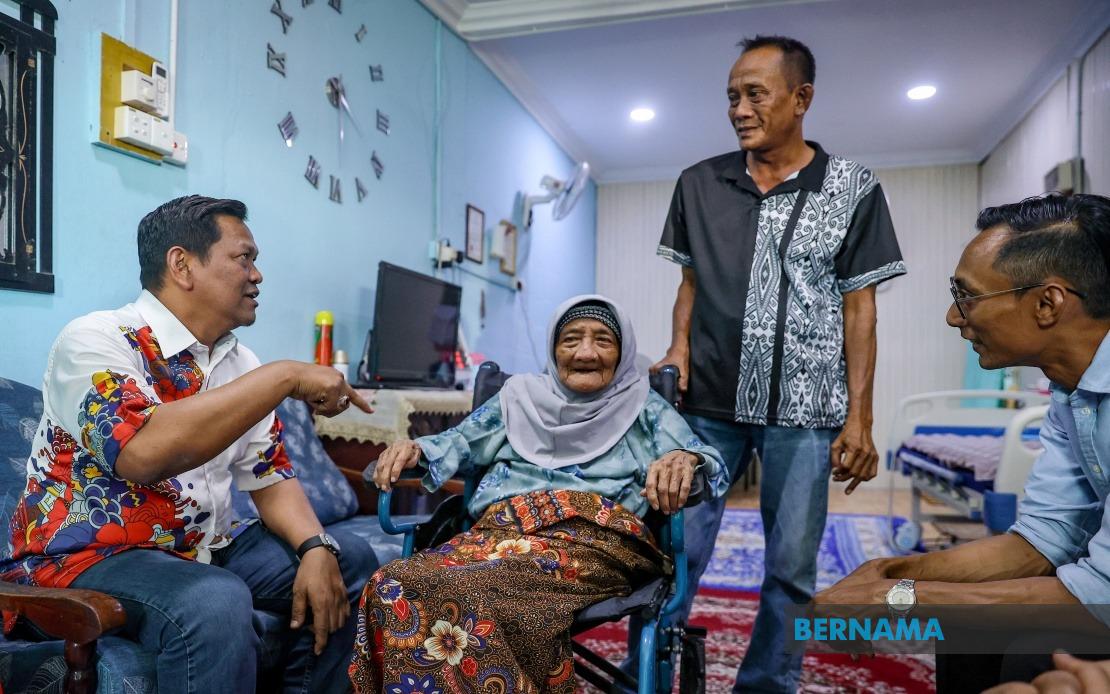
The MADANI administration has reaffirmed its dedication to the Ziarah Kasih initiative, a targeted assistance scheme designed to reach Malaysia's most vulnerable populations through regular, direct engagement. Speaking at a community event in Mersing, Pahang, Abdullah Izhar Mohamed Yusof, political secretary to the Communications Minister, outlined how the programme forms a cornerstone of the government's Malaysia MADANI vision, which places human welfare at the centre of policymaking. The initiative operates through a structured identification process involving the Department of Information and Komuniti MADANI, ensuring that assistance reaches those genuinely facing hardship rather than being distributed indiscriminately.
The programme's approach reflects a shift toward more personalised, ground-level governance. Rather than relying solely on institutional mechanisms, Ziarah Kasih creates direct contact between government representatives and citizens, allowing officials to assess needs firsthand and deliver both financial aid and practical resources. This hands-on strategy serves dual purposes: it provides immediate relief to struggling families while simultaneously allowing policymakers to gather first-hand insights into community challenges that might not surface through conventional bureaucratic channels. For Malaysian readers, this represents a departure from traditional welfare distribution models, emphasising human connection over administrative distance.
The Mersing event illustrated the programme's practical impact through the stories of individual beneficiaries. Hamdan Abd Latif, a 71-year-old bedridden resident, and his wife Meriam illustrate the profound challenges faced by elderly Malaysians managing chronic illness without sufficient support systems. Hamdan's journey from a catastrophic fishing accident in 2011 that exposed a brain tumour, through subsequent surgery and recovery, culminating in a recent stroke that left him bedbound, demonstrates the compounding medical crises that can devastate families. His wife Meriam, now 66, abandoned her income-generating activities—sewing work that had previously supplemented household earnings—to provide full-time care. This situation, repeated across thousands of Malaysian households, reveals the hidden costs of disability and illness that extend beyond medical expenses to encompass lost livelihoods and emotional strain.
Meriam's testimony carries particular weight for understanding how Malaysia's informal support structures can buckle under sustained pressure. Before the government assistance, the family faced an impossible arithmetic: medical expenses competing with basic living costs, whilst Meriam's sacrificed income meant the household had contracted rather than expanded its resources. The healthcare equipment and contributions delivered through Ziarah Kasih address immediate needs but also acknowledge a broader societal responsibility to care for citizens who have contributed to the nation throughout their lives. For many Malaysian families in similar circumstances, such government engagement represents not merely financial relief but also social recognition of their struggles.
Another beneficiary, Zainon Ibrahim, aged 91, represents an equally compelling case of family sacrifice and intergenerational responsibility. Her son Jamaluddin Ismail, 64, departed from the workforce approximately two years ago to become his mother's full-time caregiver. Though his siblings provide support, Jamaluddin bears primary responsibility for Zainon's daily needs—a decision that, whilst reflecting strong Malaysian family values, has rendered him economically vulnerable and dependent on informal household arrangements. His background as a supervisor suggests he possessed stable employment before caregiving duties interrupted his career trajectory, a common pattern among middle-aged Malaysians forced to choose between workplace advancement and family obligations.
The government assistance programme acknowledges that Malaysia's rapidly ageing population creates caregiving burdens that individual families cannot sustainably manage alone. As the nation ages, more Malaysians will face scenarios similar to Jamaluddin's, where choosing between personal economic security and family care becomes unavoidable. The Ziarah Kasih programme's expansion may serve as a bridge solution, reducing some financial pressure whilst society develops more comprehensive long-term care infrastructure. For policymakers, such beneficiary stories provide essential data about demographic pressures that statisticians and demographers have long forecast but that remain abstract until personalised through individual narratives.
The identification methodology for Ziarah Kasih recipients, operating through the Department of Information and Komuniti MADANI, represents an attempt to systematise compassion whilst avoiding the bureaucratic rigidity that can exclude genuinely needy citizens. By combining formal institutional knowledge with community-level assessment, the programme aims to navigate the persistent challenge in welfare distribution: reaching those too vulnerable or isolated to navigate official application processes. For Mersing residents and communities across Malaysia, this decentralised approach signals that government assistance does not require applicants to navigate complex procedures, but instead comes to them.
The programme's positioning within the broader Malaysia MADANI framework carries significance beyond immediate assistance. By linking direct aid to a stated national aspiration centring on people's wellbeing, the government frames welfare provision not as charity or dependency-creation, but as a fundamental expression of national values. This framing matters for programme sustainability and social acceptance. Malaysian citizens who receive Ziarah Kasih support understand themselves not as supplicants or welfare recipients in traditional charitable frameworks, but as participants in a national commitment to mutual care. This reframing can reduce social stigma associated with receiving assistance—a significant factor affecting elderly Malaysians who may hesitate to seek help due to dignity concerns.
The Jiwa@Komuniti MADANI Sembang Santai events through which the programme operates serve to normalise government engagement with vulnerable populations. By integrating assistance delivery into broader community gatherings, often organised around popular cultural events like the World Cup edition mentioned in the Mersing occasion, Ziarah Kasih avoids the formal, potentially humiliating context of traditional welfare office visits. This approach acknowledges that elderly citizens and vulnerable families possess social dignity that ought not to be compromised by assistance-seeking processes. For Malaysian policymakers, such innovations in welfare delivery methodology offer lessons applicable across broader social services.
The sustainability question remains crucial as Malaysia confronts demographic and economic challenges. Whilst Ziarah Kasih demonstrates genuine commitment to vulnerable populations, the programme's expansion depends on consistent resource allocation as government budgets face pressures. The stories of Hamdan and Meriam, of Jamaluddin caring for his elderly mother, will likely multiply as Malaysia ages. Whether Ziarah Kasih evolves into a comprehensive care infrastructure or remains a valuable but modest intervention will determine its long-term significance. For Malaysian readers, particularly those approaching the vulnerable years that Hamdan and Zainon now navigate, the programme represents both genuine present relief and an indicator of future governmental responsibility for ageing citizens. The commitment expressed in Mersing will be tested by whether such assistance becomes universal, predictable, and sufficient to address the staggering scope of care needs emerging across Malaysian society.

