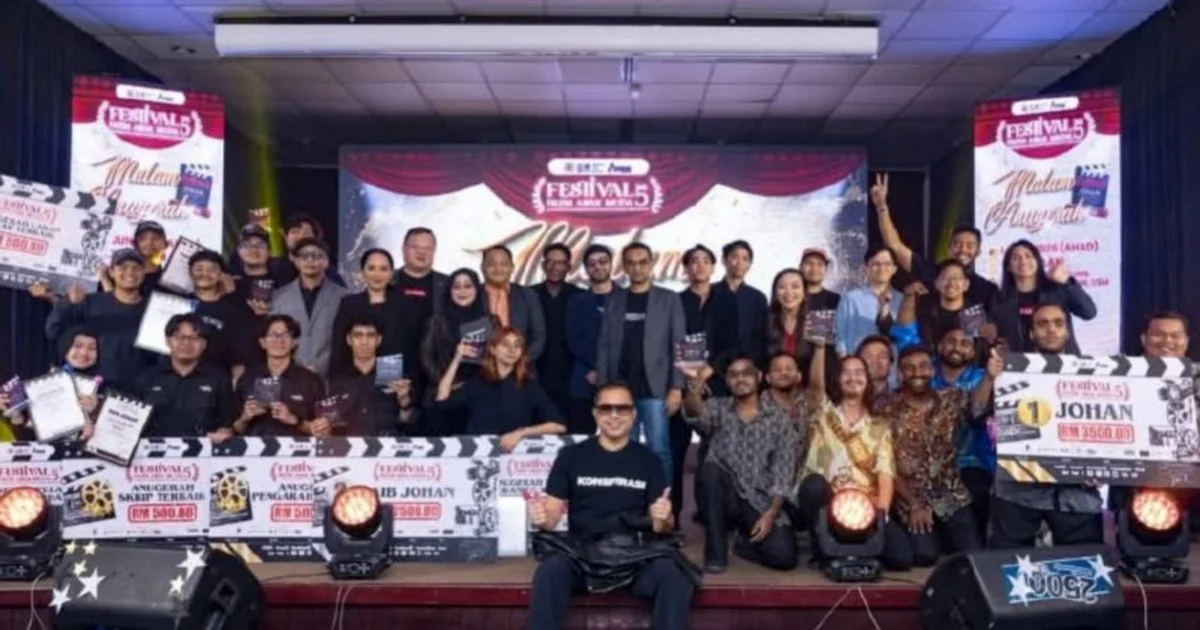
The Malaysian Anti-Corruption Commission has chosen a novel approach to combat corruption among Malaysia's youth, pivoting toward the creative arts rather than relying solely on traditional enforcement and lecture-based awareness campaigns. By playing a central role in organizing the 5th Youth Film Festival (FFAM) at Universiti Sains Malaysia in Penang, the MACC signals a recognition that young people respond more effectively to narratives and visual storytelling than conventional messaging. This partnership represents a deliberate strategy to embed integrity principles into the consciousness of university students and emerging adults during formative years when civic values are still being shaped.
Film festivals have long served as platforms for social commentary and cultural dialogue in Southeast Asia, and the MACC's involvement in FFAM taps into this established influence. By positioning itself as a supporter of youth creativity rather than merely an enforcement body, the commission aims to reframe anti-corruption work as something integral to authentic storytelling rather than a dry regulatory concern. This approach acknowledges that corruption and institutional integrity are human issues—stories about betrayal, moral compromise, and the courage to do right—rather than abstract legal matters that fail to resonate with audiences.
The significance of hosting this initiative at Universiti Sains Malaysia should not be overlooked. Universities serve as incubators for future leaders across government, business, civil society, and academia. By engaging students during their tertiary education, the MACC is investing in a cohort that will carry these values into their professional lives. Penang's selection as the venue also carries weight, given the state's historical importance in Malaysia's political and social landscape and its reputation as a center of learning and innovation.
Creative approaches to anti-corruption messaging have shown measurable success in other Southeast Asian contexts. When young people see themselves reflected in stories about standing against wrongdoing, or understand the real consequences of systemic corruption on ordinary lives, the message penetrates more deeply than statistics about conviction rates or lecture slides on governance. Film, in particular, allows filmmakers to explore moral ambiguity and the complexity of institutional corruption in ways that might be difficult to convey through official channels.
The festival framework also democratizes participation in anti-corruption discourse. Rather than positioning the MACC as a top-down authority delivering lessons, the structure invites young filmmakers to interpret and articulate their own understanding of integrity, justice, and institutional accountability. This participatory model may generate creative works that challenge viewers and filmmakers alike to confront uncomfortable truths about corruption in Malaysian society—from petty bribery in everyday transactions to systemic abuse of power in government and private institutions.
For Malaysia's anti-corruption agenda more broadly, this initiative reflects lessons learned from decades of enforcement work. Criminal prosecutions remain important, but without genuine cultural change around integrity, prosecutions alone cannot transform institutional behavior. The MACC's decision to invest in youth messaging through art suggests recognition that long-term progress requires shifting social attitudes, particularly among generations that will shape Malaysia's future governance.
The Youth Film Festival also provides a strategic platform for the MACC to counter public perceptions of institutional weakness or selective enforcement. By demonstrating commitment to education and engagement across multiple platforms, the commission reinforces its role as a guardian of national integrity rather than merely a reactive investigative agency. This narrative-building is particularly important in contexts where public trust in institutions has been tested by high-profile cases and where concerns about political interference in enforcement remain.
Universiti Sains Malaysia's role as a partner institution adds academic credibility to the endeavor. University engagement legitimizes anti-corruption work as an intellectual and cultural endeavor, not simply a policing matter. This positioning may encourage broader intellectual engagement with questions of institutional design, transparency, and accountability within Malaysia's governance frameworks—themes that resonate throughout the region as Southeast Asian democracies grapple with similar challenges.
The 5th edition of the festival suggests this is an established platform with growing reach. By embedding anti-corruption messaging into an already-popular student event, the MACC maximizes audience penetration among a demographic that might otherwise avoid government-sponsored awareness campaigns. The overlay of MACC engagement enhances the festival's credibility while allowing the commission to access thousands of young minds in an environment where they are primed for critical thinking.
Looking forward, this model could inform how other regional institutions approach integrity-building among youth. As Malaysia and its Southeast Asian neighbors confront persistent corruption challenges, creative and culturally resonant approaches may prove more effective than enforcement-heavy strategies alone. The Youth Film Festival partnership demonstrates that combating corruption need not be confined to courtrooms and investigation offices—it can flourish in spaces where young people naturally gather to create, explore ideas, and imagine different futures for their society.