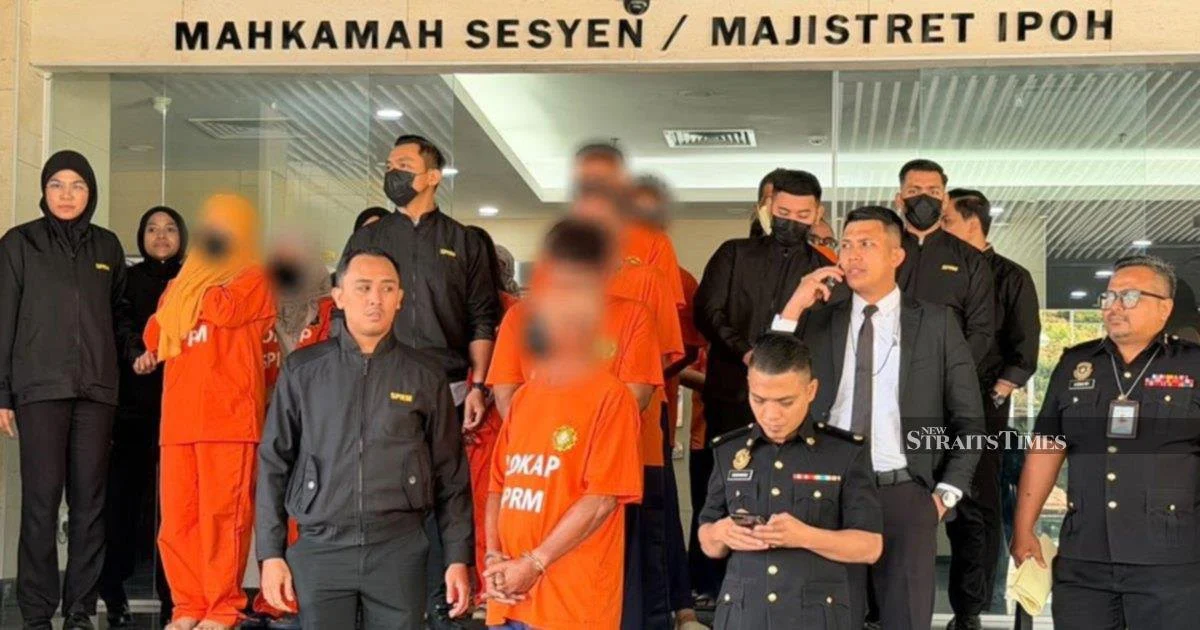
The Malaysian Anti-Corruption Commission's arrest of 13 individuals in Ipoh, including both current and former leadership of a government agency, represents a significant escalation in the country's ongoing fight against institutional corruption. Among those remanded are a sitting director and his predecessor at an unnamed agency, alongside 11 other suspects implicated in what investigators characterize as a systematic scheme to solicit and pocket approximately RM2.5 million in illicit payments. The timing and scale of the operation underscore growing concerns about corruption penetrating the upper echelons of the public sector, where procurement decisions worth tens or hundreds of millions of ringgit hinge on the integrity of senior officials.
The investigation's focus on contract awards suggests a pattern where bribes were allegedly exchanged to influence which companies received lucrative government work. This form of corruption—often termed procurement corruption—represents one of the most damaging categories in the public sector because it diverts resources away from legitimate suppliers, inflates project costs, and frequently compromises quality. When officials responsible for evaluating and recommending contractors accept payments from bidders, the entire competitive tendering process becomes compromised, effectively making the contract award predetermined rather than merit-based. For a government agency, such breaches of trust can persist undetected for extended periods if proper oversight mechanisms are weak.
The involvement of a current director in the allegations raises particular alarm, as it indicates the corruption may have been occurring recently and potentially while the individual held active authority over procurement decisions. The presence of a former director in the remand list complicates the narrative further—it suggests either continuity of corrupt practices across different administrations of the same agency, or alternatively, that the current leadership discovered irregularities from the previous period and initiated formal complaints. MACC's decision to remand both figures simultaneously hints that investigators may be examining whether corrupt relationships and mechanisms persisted or evolved between the two directors' tenures.
The RM2.5 million quantum, while substantial, may represent only the detected portion of larger illicit flows. In sophisticated corruption schemes within government procurement, the detected amount often reflects only those transactions that investigators could substantiate through documentary evidence, financial records, or witness testimony. Additional unreported payments, undeclared benefits, or favours extended beyond cash transfers might exist but remain unquantified at the remand stage. This distinction matters for understanding the true scope of the alleged scheme and its potential impact on government spending and project delivery.
The involvement of 11 additional suspects beyond the two agency directors suggests a broader conspiracy rather than isolated wrongdoing by individual officials. These suspects likely include contractors or their representatives who allegedly made the payments, intermediaries who facilitated transfers, and possibly other government employees complicit in the scheme. In typical procurement corruption cases, the network encompasses not only the corrupt officials but also business associates, family members, or trusted representatives who serve as conduits for payments, enabling the principal actor to maintain some distance from direct evidence of bribery. MACC's approach to detaining this cross-section of suspects simultaneously limits opportunities for coordination of stories or destruction of evidence.
The geographical location of the arrests in Ipoh suggests the affected government agency may be based in or have significant operations in Perak state. This regional context matters because it affects the institutional landscape and oversight environment in which the corruption allegedly occurred. State-level agencies often operate with less intense scrutiny than federal entities, particularly when their procurement budgets, though significant, remain below the threshold that triggers ministerial-level attention. Additionally, some state agencies may have weaker internal audit functions or governance structures compared to equivalent federal bodies, creating environment more permissive to corrupt practices.
From a procedural standpoint, MACC's decision to remand these individuals rather than immediately charging them suggests the investigation remains in its evidence-gathering phase. Remand detention allows investigators extended time to conduct interviews, cross-examine suspects against documentary evidence, and potentially secure additional admissions or evidence. However, remand periods in Malaysia are subject to judicial oversight and time limits, typically renewable in 4-day tranches up to maximum thresholds. The number of remand extensions granted may provide an indirect indication of investigation complexity and the strength of initial evidence.
The incident carries implications for Malaysia's institutional reputation and investor confidence. Foreign companies and international observers often view corruption at the procurement level as indicative of broader governance problems. When senior agency officials are implicated in bribery schemes, it reinforces perceptions that the system remains vulnerable to corruption despite anti-corruption agency efforts. This can affect Malaysia's competitiveness in attracting foreign direct investment and international contracts, as companies may demand premium risk premiums or additional safeguards when working with Malaysian government entities.
The remand operation also reflects MACC's increased operational capacity and investigative sophistication. Simultaneously arresting 13 suspects across presumably multiple locations requires coordination with police, potentially immigration authorities if anyone is foreign, and careful management of evidence chains. The scale suggests MACC dedicated significant resources to this investigation, indicating either a major operation uncovered through intelligence or a substantial complaint with sufficient merit to justify extensive deployment of investigative personnel.
Looking ahead, the case will test MACC's ability to prosecute complex corruption schemes involving multiple actors and substantial sums. Success will require assembling documentary evidence, securing witness cooperation, and establishing clear chains of causation between payments and contract decisions. Failure to prosecute effectively could undermine confidence in anti-corruption efforts and send unfortunate signals about accountability for high-level officials. The case will likely receive considerable public attention, particularly if the unnamed agency serves functions critical to the public interest such as infrastructure development, healthcare, or social services.