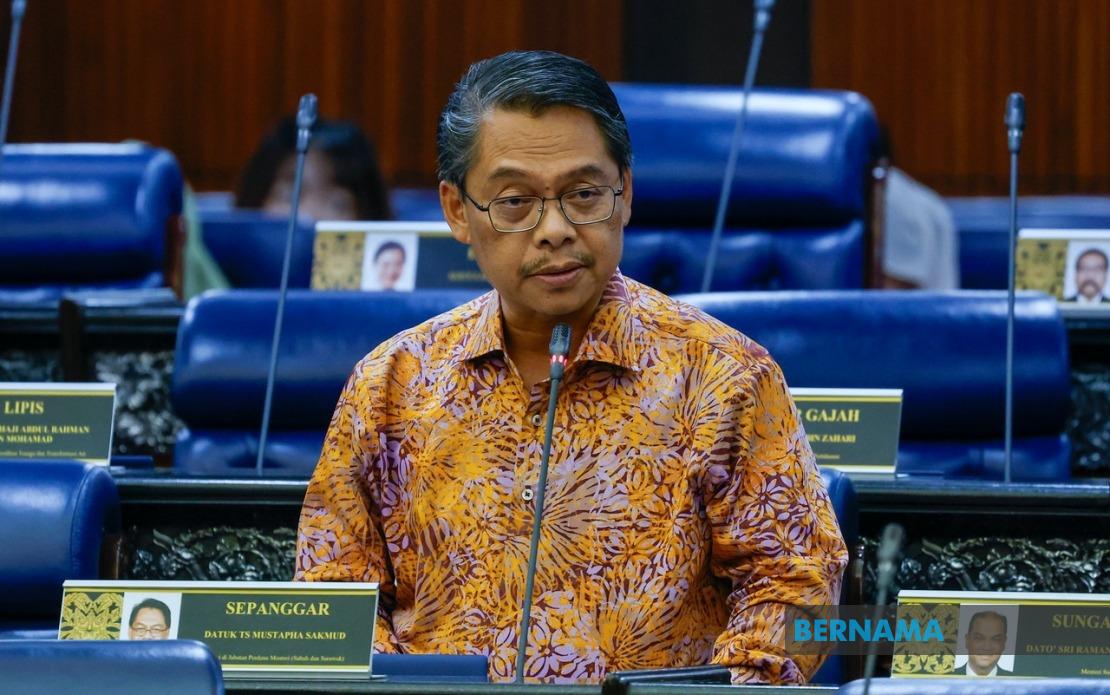
Progress in the Malaysia Agreement 1963 (MA63) negotiations has accelerated, with government officials confirming that nearly half of the outstanding matters have now reached either full or partial resolution. Datuk Mustapha Sakmud, the Minister in the Prime Minister's Department overseeing Sabah and Sarawak Affairs, announced during parliamentary proceedings that 13 of the 29 issues originally tabled for discussion have been completely settled, while a further five have achieved interim or partial consensus through a series of technical committee deliberations. This represents a meaningful advance in what has historically been one of Malaysia's most complex constitutional and administrative negotiation processes.
The resolution of these matters signals renewed momentum in federal-state relations concerning the two East Malaysian states. The March 2 technical committee meeting, which Sakmud cited as the basis for the current progress assessment, appears to have catalysed several breakthroughs across critical policy domains. The framework governing these negotiations has proven more effective than earlier phases, partly because discussions now operate through specialized working groups focused on discrete policy areas rather than attempting wholesale constitutional review. This compartmentalization has allowed negotiators to isolate complex issues and develop sector-specific solutions without allowing disagreements in one domain to derail progress elsewhere.
Among the five matters designated as achieving interim resolution, four involve particularly sensitive and administratively complex areas. Article 112 of the Federal Constitution, which governs the composition and management of state public services, forms the basis for negotiations surrounding the expansion of positions available within Sabah and Sarawak's civil service structures. This issue carries significant employment and economic implications for the states, as increases in public sector capacity directly affect job creation and local procurement opportunities. The discussions also encompass the broader concept of Borneonisation—the long-standing principle that federal public service positions operating within Sabah and Sarawak should be allocated to qualified residents of those states. This concept remains foundational to ensuring that eastern Malaysian states derive tangible benefits from federal government presence on their soil.
Education and health policy have emerged as particularly substantive areas of negotiation, reflecting the constitutional division of powers between federal and state governments in these sectors. The interim resolutions achieved in these fields likely involve clarification of funding mechanisms, curriculum implementation protocols, and jurisdictional boundaries that have historically created friction. Education remains a critical area given ongoing debates about medium of instruction, examination standards, and resource allocation between federal and state educational institutions. Health sector discussions probably address similar jurisdictional questions regarding the operation of federal facilities within state territories and the harmonization of public health standards across Malaysia.
The remaining 11 outstanding matters continue to receive careful monitoring through the Sabah and Sarawak Affairs Division (BHESS), which operates as the secretariat for these negotiations. The division coordinates input from stakeholders at both federal and state government levels, ensuring that technical expertise informs discussions and that decisions reflect operational realities rather than abstract constitutional principles. This collaborative approach, while time-consuming, has proven necessary given the technical complexity of many MA63 implementation questions and the genuine differences in perspective between federal technocrats and state officials regarding optimal policy approaches. Regular monitoring prevents issues from stalling indefinitely while creating pressure for incremental progress.
One issue that remains conspicuously unresolved involves the long-standing demand to increase parliamentary representation for Sabah and Sarawak to achieve a 35 per cent quota in the Dewan Rakyat. This question, raised during parliamentary discussion by Isnaraissah Munirah Majilis from Warisan-Kota Belud (Kota Belud), illustrates the intersection of constitutional law, electoral mechanics, and political balance-of-power considerations. The demand reflects a consistent position from East Malaysian political actors that their states' populations warrant greater federal legislative representation, though the quantum of increase necessary to reach a 35 per cent benchmark would require redistribution of seats from Peninsular constituencies. For Malaysian readers, this represents a fundamental question about regional equity within the federal parliament.
The resolution of the parliamentary seats question faces multiple institutional and legal barriers that Mustapha outlined to parliament. Electoral redistribution can only proceed following completion of an eight-year census cycle, meaning that even if political consensus were achieved immediately, implementation would face procedural delays. More significantly, the Electoral Commission (EC) possesses exclusive authority over such matters under the Thirteenth Schedule and Article 113 of the Federal Constitution. This concentration of authority in a technically-focused institution insulates redistricting from direct political pressure, though it also means that changes require bureaucratic consensus rather than simple legislative majorities. The technical and allegedly non-partisan nature of EC decision-making, while theoretically neutral, creates practical constraints on rapid implementation of politically-driven demands.
Beyond procedural obstacles, any increase in parliamentary seats for Sabah and Sarawak would require constitutional amendment affecting the composition of the Dewan Rakyat under Article 46 of the Federal Constitution. Constitutional amendments in Malaysia demand a two-thirds supermajority in the lower house, a threshold that has historically proven difficult to achieve. This means that even with unanimous support from all Sabah and Sarawak members of parliament, the proposed change would require substantial backing from Peninsular Malaysian members. The political economy of achieving such support remains uncertain, given that Peninsular states would effectively lose relative representation under any redistribution scheme. This structural challenge explains why the parliamentary seats issue remains categorized as unresolved despite multiple years of negotiation and public advocacy.
The distinction between fully resolved matters, interim resolutions, and outstanding issues reflects the hierarchical complexity of MA63 implementation. Fully resolved matters presumably represent situations where technical analysis has been completed, financial implications assessed, and bureaucratic mechanisms established for implementation. Interim resolutions likely indicate political commitment to particular approaches, though details regarding implementation timelines or specific mechanisms remain under development. Outstanding matters apparently involve situations where fundamental disagreements persist regarding either the desirability of change or the optimal mechanism for achieving mutually acceptable outcomes. This tripartite categorization provides important transparency regarding the actual status of negotiations, moving beyond simplistic claims of progress or deadlock.
For Malaysian observers and particularly stakeholders in Sabah and Sarawak, the current progress trajectory offers grounds for cautious optimism while highlighting that genuine constitutional negotiations operate at a necessarily deliberate pace. The resolution of matters touching on public service expansion, Borneonisation principles, and education and health coordination represents substantive achievements affecting real institutional capacity and resource distribution. Simultaneously, the persistent unresolved status of matters like parliamentary representation demonstrates that federalism in Malaysia, like all federal systems, involves genuine tensions between regional equality and proportional representation. The MA63 negotiation process, despite its incremental progress, continues reflecting these fundamental questions about how Malaysia reconciles competing principles of federalism with the practical requirements of governing a multi-ethnic, geographically dispersed nation.

