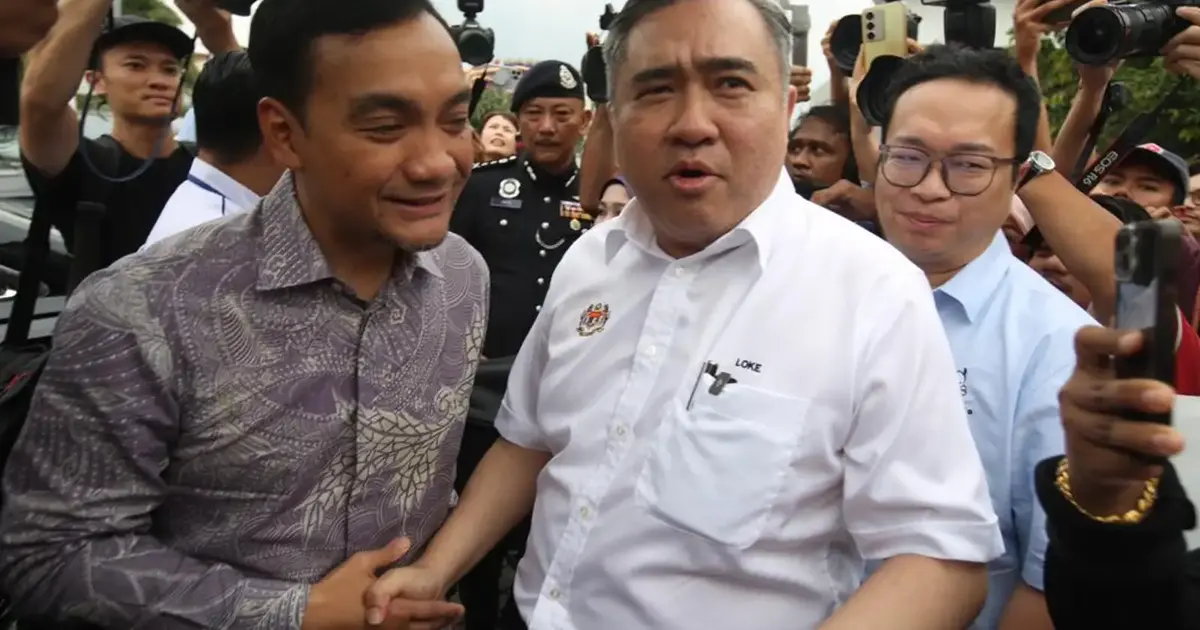
Transport Minister Anthony Loke and Johor Menteri Besar Onn Hafiz Mohamed came face-to-face for the first time since their recent exchange on social media, presenting a measured facade of civility despite underlying tensions between the DAP leader and the Johor state executive. The two political figures managed to keep interactions professional during an official event, signalling that despite their differences, both remain committed to maintaining institutional decorum and cooperative governance mechanisms.
The gathering at a transport ministry function provided the stage for their initial encounter since the online dispute. While both leaders appeared committed to keeping the atmosphere businesslike, the meeting was not without pointed moments. The dynamics between federal and state leadership in Malaysia's second-largest state by population have long been complex, particularly given the distinct political trajectories and electoral mandates of both figures.
During his remarks at the event, Onn Hafiz made a subtle reference to the circumstances surrounding his attendance, noting that he had been required to rearrange his official schedule on relatively short notice following the ministry's invitation. The comment, while phrased diplomatically, carried an underlying suggestion about the coordination—or lack thereof—between federal and state authorities. Such observations, though clothed in courteous language, reveal the operational friction that can emerge when different political coalitions govern at federal and state levels.
This encounter reflects broader patterns within Malaysia's political landscape, where coalition governments often involve partners with competing interests and distinct power bases. The relationship between the transport ministry and state governments, particularly Johor, touches on multiple jurisdictional concerns including infrastructure planning, port operations, and connectivity initiatives that require seamless coordination. When such working relationships experience strain, the implications ripple across multiple sectors affecting ordinary Malaysians.
For Malaysian observers, the Loke-Onn Hafiz dynamic carries particular significance given Johor's economic importance. The state generates substantial revenue through port operations, manufacturing, and tourism, and infrastructure decisions made at both state and federal levels substantially impact investment flows and business confidence. A deterioration in working relations between key officials could potentially delay critical projects or create inefficiencies in resource allocation.
The online spat preceding their in-person meeting likely stemmed from disagreements over policy direction or resource allocation, though the specific triggers have been subject to varying interpretations across different political commentary channels. Such disputes, when aired publicly, can undermine confidence among stakeholders who depend on stable governance partnerships. The fact that both leaders chose to maintain civility at the event suggests recognition of these broader implications and a pragmatic commitment to preventing personal or partisan disagreements from completely derailing functional cooperation.
Onn Hafiz's reference to the scheduling inconvenience should be understood within the context of state-federal relations in Malaysia. Menteri Besar offices typically maintain considerable autonomy in their schedules and decisions, and last-minute invitations from federal ministries can indeed create coordination challenges. However, the manner in which Onn Hafiz raised this point—through a veiled comment rather than direct criticism—demonstrates the delicate balance political leaders must strike between asserting their authority and maintaining collaborative working relationships.
The transport sector particularly depends on such cooperation, given that major projects involving roads, public transit systems, and port facilities often require coordination across multiple levels of government. Johor's strategic location along major transport corridors linking Malaysia to Singapore and Thailand makes such alignment especially critical for regional economic competitiveness. Any dysfunction in state-federal coordination could complicate these infrastructure initiatives.
Moving forward, the cordial tone adopted at this meeting suggests both leaders recognise the need to compartmentalise personal or partisan disagreements from official duties. This pragmatic approach, while perhaps not addressing underlying political tensions, at least prevents those tensions from immediately compromising critical governance functions. Malaysian businesses and citizens who depend on efficient transport infrastructure and coordinated planning between state and federal authorities will likely view this restraint positively.
The incident also underscores a broader challenge within Malaysia's coalition-based political system: maintaining productive partnerships between leaders who represent different parties with distinct ideologies and constituencies. As Malaysia continues to navigate post-electoral coalition formations, the ability of leaders like Loke and Onn Hafiz to maintain such working relationships becomes increasingly important for governance stability and policy implementation, regardless of underlying political differences.