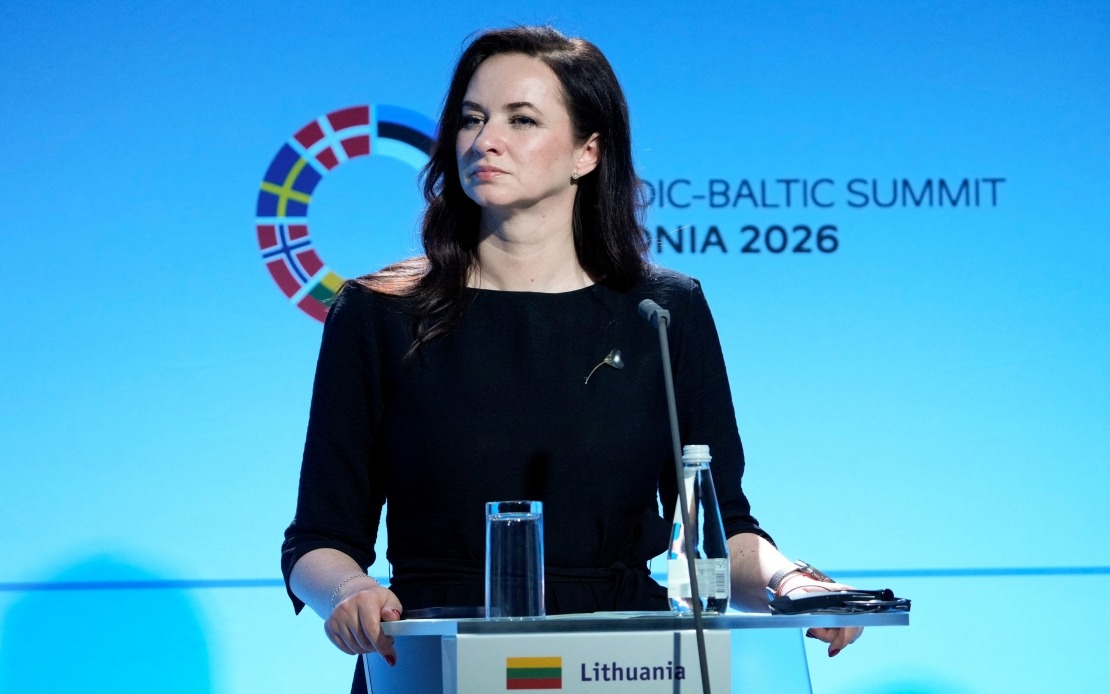
Lithuanian Prime Minister Inga Ruginiene formally announced the resignation of her government on Tuesday, setting in motion a constitutional process that will lead to the establishment of Lithuania's third ruling coalition in less than a year. The resignation marks another significant political transition in the Baltic nation and highlights ongoing realignments within the Social Democratic-led governing bloc following parliamentary elections held in late 2024.
Under Lithuania's constitutional framework, President Gitanas Nauseda now faces a 15-day deadline to nominate a candidate for prime minister. The nominee must subsequently obtain approval from the Seimas, the country's legislative body, before assuming office. Political observers widely anticipate that Mindaugas Sinkevicius, chairman of the ruling Lithuanian Social Democratic Party, will receive the presidential nomination.
Sinkevicius's path to the premiership involves several procedural steps. Once parliament confirms his nomination, he will have a fortnight to assemble his Cabinet and outline his administration's policy agenda. Following that presentation, an additional 15-day period is allocated for him to submit the complete government lineup for legislative approval. This phased approach ensures parliamentary scrutiny at multiple stages of government formation.
The revolving nature of Lithuanian coalition politics becomes evident when examining the government formation timeline. The outgoing administration, which took office in August 2023 following the resignation of former Prime Minister Gintautas Paluckas, will now be succeeded by what analysts characterise as the third coalition arrangement overseen by the Social Democrats since the parliamentary ballot in late 2024. This pattern suggests underlying tensions within the governing structure and competing policy priorities among coalition partners.
President Nauseda responded swiftly to the resignation announcement by formally accepting the government's departure while requesting that the existing Cabinet continue functioning in a caretaker capacity. This transition mechanism ensures governmental continuity during the interval required to establish a fully empowered administration. The outgoing ministers therefore retain limited executive authority during the interim period, preventing a governance vacuum.
During its final full meeting on Tuesday, Ruginiene's Cabinet unanimously approved the resignation resolution, underscoring a degree of consensus regarding the need for political reorganisation. Despite the government's departure from office, Ruginiene characterised the administration's tenure as substantively productive, emphasising accomplishments achieved amid considerable operational difficulties. Her remarks acknowledged the inherent challenges facing any Lithuanian government navigating regional security concerns, economic pressures, and domestic policy demands.
The Lithuanian situation carries broader implications for Baltic and European stability. Coalition instability at the governmental level can complicate long-term strategic planning on defence, energy security, and European Union coordination. For Malaysia and other Southeast Asian nations monitoring European developments, Lithuanian political flux underscores how even small European democracies must manage competing internal pressures while maintaining security commitments within NATO and the EU framework.
The succession timeline places considerable responsibility on incoming Prime Minister Sinkevicius to negotiate coalition agreements rapidly and present coherent policy platforms to parliament. The compressed schedule—just 30 days allocated for Cabinet formation and policy articulation—reflects customary Lithuanian procedures but also places pressure on smooth governmental transition. Any significant delays or parliamentary resistance could create extended periods of diminished executive capacity.
Analysts suggest that the coalition reshuffling reflects ideological or administrative disagreements within the Social Democratic-led governing framework rather than a fundamental rejection of the party's leadership. The succession of three coalitions in such a short timeframe indicates that coalition arithmetic remains challenging in Lithuania's multiparty environment. The country's electoral system, which encourages fragmentation across multiple parties, often necessitates complex coalition negotiations and compromise arrangements.
For the wider region, Lithuania's governmental transitions matter insofar as they might affect the country's contributions to NATO and EU initiatives affecting Eastern European security architecture. Governments in flux may face constraints in implementing ambitious reform programmes or responding rapidly to external developments. Sinkevicius's incoming administration will inherit budgetary commitments, defence spending obligations, and European policy commitments established by predecessors.
The caretaker government arrangement, while constitutionally appropriate, typically operates with reduced initiative and defers significant new policy launches until a fully empowered Cabinet assumes office. This interim period thus represents a transitional moment where routine administration continues but transformative decision-making remains suspended pending parliamentary confirmation of the new government.

